Mount to Coast: The Hong Kong Brand Reshaping Ultra Running
PublishedThis content may contain affiliate links. If you make a purchase through these links, we may earn a commission.
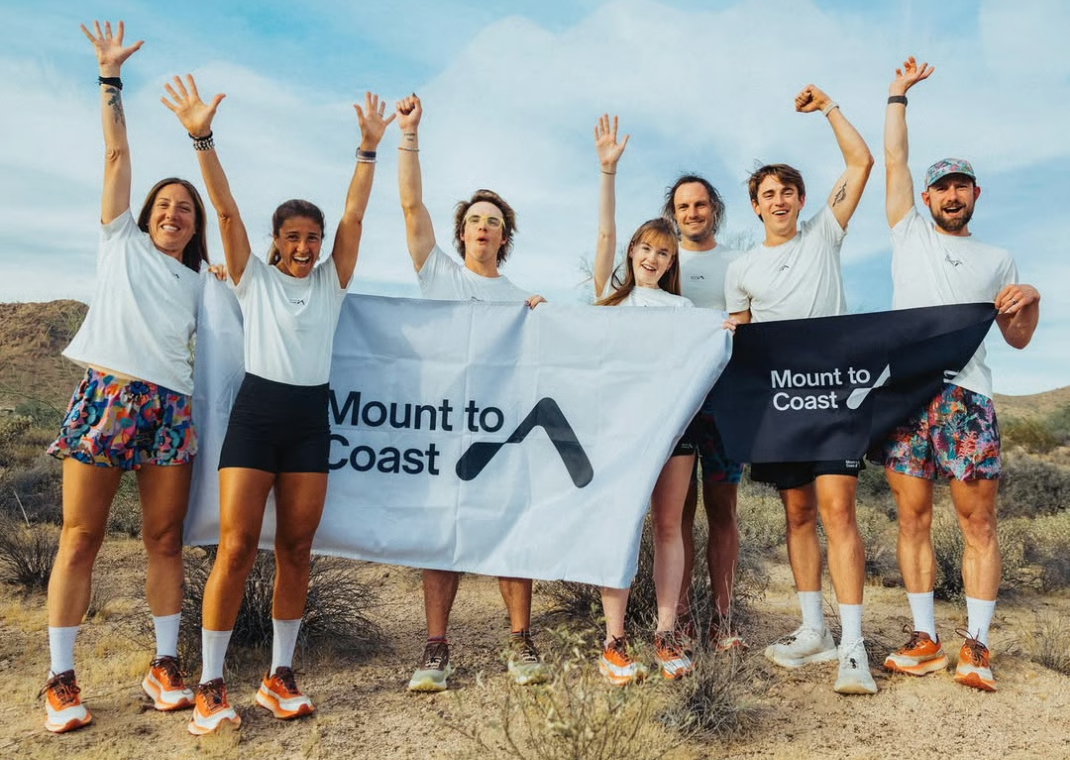
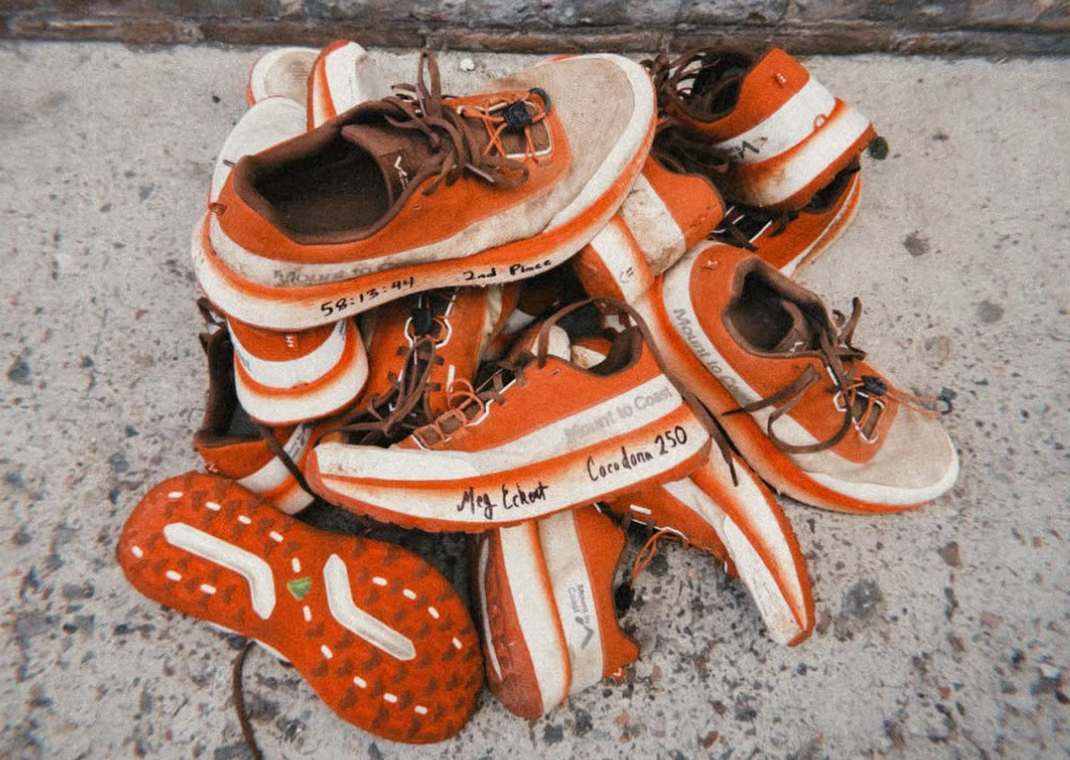
When six of the top ten finishers at the Cocodona 250 crossed the line in variants of the same shoe, they drew a lot of chatter about a new challenger brand in the space. The shoe they wore was the H1, and the brand behind it was Mount to Coast. The Hong Kong-based footwear company only launched in the US in April 2024, but they had an unusually clear-eyed plan: to become the number one ultra running brand in the world by 2030.
We sat down with two of the people driving that ambition: co-founder and product lead Yeti Zhang, and Ben Blankenship, who leads US Sports Marketing and athlete relations. What emerged was a portrait of a brand that treats technology as its native language, refuses to compromise on a tight set of product principles, building its reputation one 2 AM aid station at a time.
Betting the Brand on a Niche
Most new running brands chase the broadest possible runner. Mount to Coast did the opposite, launching in the States with a hyper-specific focus on ultra — a discipline that isn't even an Olympic sport. We asked Yeti why they bet everything on a niche that narrow.
"Ultra runners are super focused," Zhang says. "The philosophy is just running — don't ask why. We wanted to build for those people first, and build the best thing in the world for them, rather than make something average for everyone."
The market response, he admits, has outrun expectations. He's candid about where the brand sits in the pecking order: "We're at the kids' table right now, competing against Nike and Adidas in this space. But we're okay with that. The kids' table is where the interesting conversations happen."
For Blankenship, the line between an ultra brand and "another performance running brand with a long-distance shoe" comes down to where you actually show up.
"You can't fake being an ultra brand," he says. "The community can smell it. You earn the lane by being at the races, at the aid stations, at 2 a.m. when somebody's falling apart — not by putting a long-distance shoe on a wall and calling it a day."
A Tech Company That Happens to Make Shoes
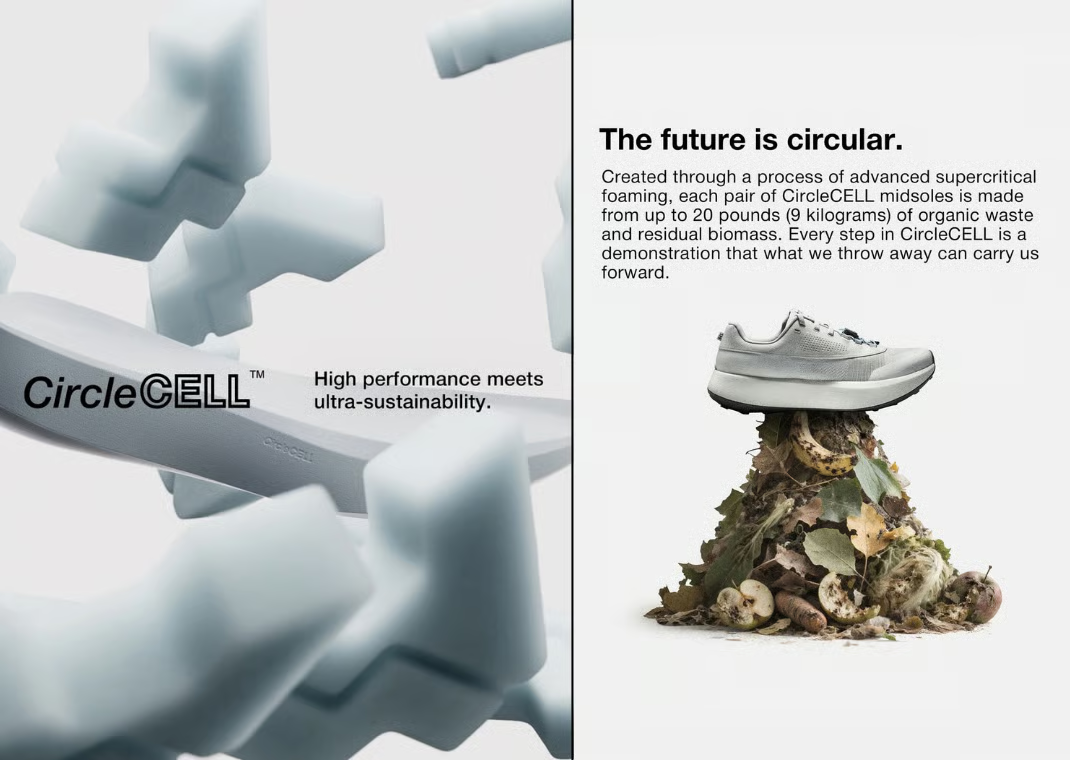
Yeti Zhang approaches footwear like the chemical engineer he is. His background — including time at Brooks in Future Concepts researching new materials and compounds, plus lessons drawn from DuPont and the broader consumer-packaged-goods world, shapes a tech-led philosophy: pull learnings from industries that have nothing to do with running, and apply them to the shoe.
"My instinct isn't 'what color is trending' — it's 'what's the chemistry doing,'" Zhang says. "We spent years thinking about materials and compounds before we thought about footwear. That changes the questions you ask."
Building from scratch in Hong Kong, around a Run Research Lab dedicated solely to long-distance, lets Mount to Coast do something legacy brands structurally can't, he argues. "A big brand has to make a shoe for everyone, so every decision gets diluted. We only have to make the best ultra shoe. That focus is a structural advantage, not a limitation."
That outsider instinct runs all the way through the company. The design team is led by a director who came from the cosmetics and makeup industry with no prior shoe experience — a deliberate choice to keep the brand's thinking unconventional. The differentiator, in Zhang's framing, is technology itself rather than colorways or surface details.
The "iPhone Moment"

The aesthetic that results is intentionally spare. Zhang describes the design philosophy as "less is more," drawing inspiration from Zen and Japanese architecture, and he's blunt about how hard that is to pull off.
"Removing things is much harder than adding them," he says. "Anybody can add a feature, a logo, a panel. The discipline is taking things away until only what matters is left."
Asked how much of the brand's muted tones and restrained branding is product strategy versus a reaction to where loud, maximalist performance running has gone, Zhang frames it as a north star rather than a rebuttal. "We keep asking ourselves: what would an Apple shoe look like? Nobody has had the iPhone moment in footwear yet. That's what we're chasing — the thing that feels obvious only after someone makes it."
The Product Triangle
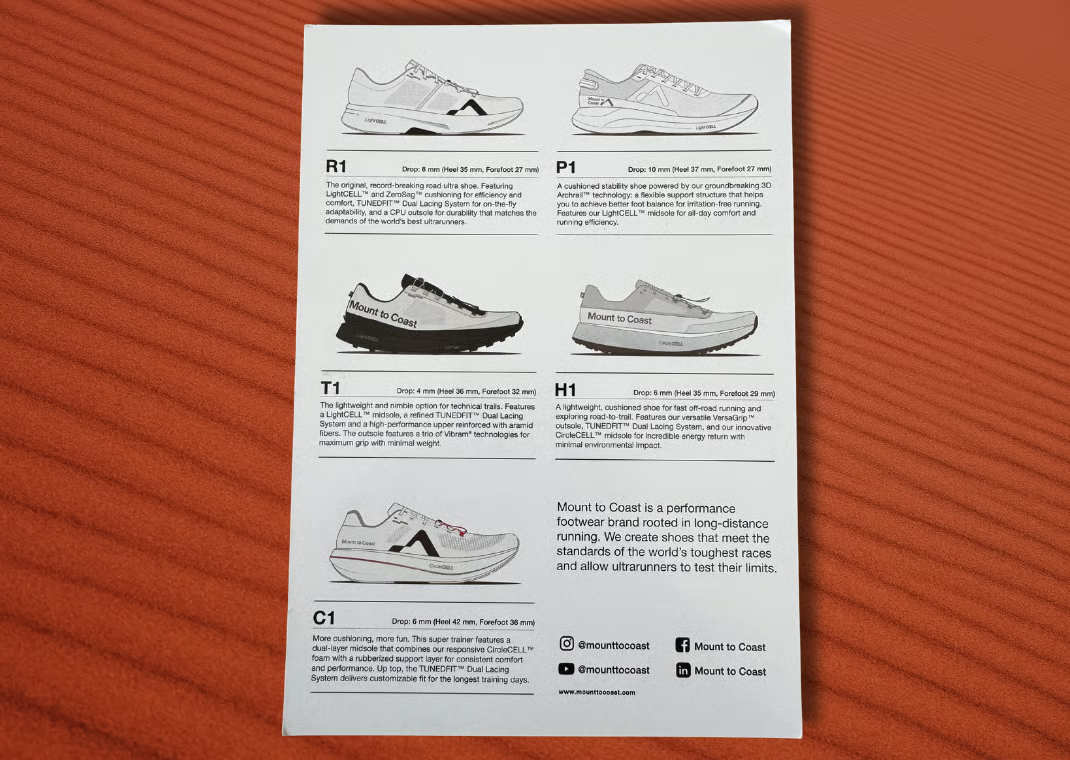
For all the experimentation, there are three things Mount to Coast won't compromise on: comfort, durability, and clean design. That triangle governs every decision, and with six models in two years — the R1, S1, P1, H1, T1, and now the C1 — the cadence is fast for the category. Zhang insists it's measured, not reckless.
"Six models sounds like a lot, but each one answers a specific question for the ultra runner," he says. "We're not releasing for the sake of a release calendar."
The H1 became the brand's breakout. Built for "door-to-trail" versatility rather than pure trail specialization, it found an audience well beyond the ultra community — Blankenship notes it's turned up on soccer moms and casual wearers as readily as on elite finishers.
On the Cocodona result, Blankenship is clear it wasn't a manufactured marketing moment. "That wasn't a strategy call where we put the H1 on everybody," he says. "Athletes chose it. Some rotated models across the race, but the H1 kept winning the decision. It told us where that shoe actually lives — it's the one people reach for when the day is long and unpredictable." In his words, the shoe "became its own storyteller," earning a narrative through performance rather than a script written in advance.
Asked to pick one shoe for the runner who'll never toe an ultra, Blankenship doesn't hesitate on the R1. "The R1, every time. I logged 800 miles in a single pair before I fully bought in — and that's the point. It modernizes what I jokingly call 1999 technology, but it lasts, and it does tempo, long runs, and recovery days without complaint. For someone who just wants one good shoe, that's it."
TUNEDFIT: A Solution That Outgrew Its Problem
One of Mount to Coast's most visually distinctive features started as a fix for a narrow problem. The TUNEDFIT dual lacing system was originally designed for multi-day ultra races, where feet swell and change over the course of an event. The front section adjusts for different foot sizes and widths; the back section locks the foot securely in place.
"We built it for the runner on day three of a stage race, whose foot is not the foot they started with," Zhang says. "Then something we didn't plan for happened."
Regular runners discovered it. The customizable fit turned out to appeal far beyond the multi-day crowd, for reasons the team never designed for. Currently, the tech only appears on some models.
"People with two different-sized feet, people who just like dialing in fit — they adopted it on their own," Zhang says. "Now the feedback we hear most is: put TUNEDFIT on everything."
Showing Up, Not Sponsoring

Mount to Coast's athlete strategy looks almost nothing like a traditional sponsorship program. The emphasis is on authentic presence: showing up at 2 a.m. aid stations with practical help, handing athletes grapefruit or making a Chipotle run when that's what's actually needed — and supporting runners who aren't even wearing the brand's shoes.
"Ultra is a community sport first and retail second," Blankenship says. "Every brand can buy a tent. What you can't buy is being genuinely useful to a runner at the worst moment of their race. We'll crew somebody who's in a competitor's shoes, because that's how you actually belong here."
His own season backs it up. Blakenship is a former OTC Elite athlete with Nike experience and attended more than 50 ultra events in a single season, from Cocodona to Moab. He's frank about how his racing past factors into building athlete trust. "Being a former pro opens the door, but it doesn't keep it open," he says. "Athletes don't care about your PRs. They care whether you understand what they're going through and whether you'll be there. The credibility comes from showing up, not from the résumé."
Co-founder Yeti's hands-on approach is cut from the same cloth: crewing Western States start-to-finish across 24 hours on course, and pushing a rapid-prototyping cycle that gets samples into athletes' hands in weeks rather than months.
Cracking the Code Most Asian Brands Can't
Plenty of Asian footwear brands build excellent product and still fail to land in the West. While the tech translates, the story doesn't. We asked what Mount to Coast figured out.
Part of the answer is that the brand is genuinely hard to geographically pin down, and it leans into that. European media initially assumed the company was UK-based, thanks to its strong presence there; Asian media treats it as a family, local brand. Zhang calls Mount to Coast a "glocal" company — global operations with a local feel wherever it lands.
"We never tried to sell people a 'Hong Kong brand' story," Zhang says. "We let the product be the story, and we let each market meet us where they are. In Europe they thought we were British. In Asia they think we're family. We're happy to be both."
Blankenship adds that the brand resisted the urge to over-explain itself. "A lot of brands coming into the US try to translate their origin story word for word, and it lands flat," he says. "We just put the shoes on the best ultra runners in the country and let the results do the talking."
A Different Path Than the Culture Brands
Mount to Coast is deliberately not chasing the lane occupied by culture-led labels like Satisfy and Bandit. Zhang positions the brand as purely product-focused.
"Those brands are great at culture, and that's a real strategy," he says. "Ours is the opposite end. We want the running to be the culture. If the shoe is the best, that's the story."
That clarity extends to the brand's growth philosophy. Both founders subscribe to a "rising tide" view: trail running is the fastest-growing segment in running, and ultra is the fastest-growing piece within trail. Lifting the whole space lifts Mount to Coast with it.
Their size is part of the pitch. Without World Athletics regulations governing the trail space, Mount to Coast can build custom outsoles for specific events like Barkley and pivot quickly on athlete feedback in ways the giants can't match. "We can build a one-off outsole for a single race," Blankenship says. "Try getting that through a brand with a hundred SKUs and a two-year roadmap."
Retail Strategy
On US retail, the expansion is steady rather than splashy. The brand remains direct-to-consumer at its core while moving selectively into specialty.
"DTC is still the foundation," Blankenship says. "But the right specialty doors matter, because that's where serious runners go for advice." A recently added Marathon Sports account in Boston is an early marker of that approach. Focusing on specialty first, the right stores rather than the most stores.
Where Ultra Footwear Goes Next
Blankenship lived through the supershoe revolution as a miler, which gives him a particular read on where ultra footwear is heading.
"The supershoe changed road racing overnight, and ultra is going to have its own version of that, but it won't look the same," he says. "Distance and terrain change the whole equation. Durability and fit matter more than a single magic number. There's stuff we're working on that I'm dying to talk about and absolutely can't yet — ask me in a year."
The roadmap that is public is ambitious enough. A new recovery model goes into testing in Italy in September 2026 across performance-focused product targeting the running and ultra market launches in the coming month.
The Road to 2030
Five years out, success has a clear shape for Zhang and it isn't about getting bigger for its own sake. The brand will stay the ultra specialist, with no plans to go broad.
"In five years, I want us to be the number one ultra brand in the world," he says. "Not the biggest shoe company, the best ultra one. And the thing I refuse to compromise on as we grow is the triangle: comfort, durability, clean design. The day we trade one of those for growth is the day we stop being Mount to Coast."
New brands know they cannot be everything to everyone but often focus on persona driven marketing or a product gimmick. Mount to Coast just focused on taking the right approach: make the most technical, most relentlessly focused shoe that athletes love.

Cole Townsend is a developer, designer, and Head of Tech at Sole Retriever. He does some writing on top of helping keep Sole Retriever running on web and mobile! In his spare time, you can find him out running. Cole was a graduate from Williams College.