Nike Air Max 1 Sizing, Fit, and Comfort Guide
PublishedThis content may contain affiliate links. If you make a purchase through these links, we may earn a commission.
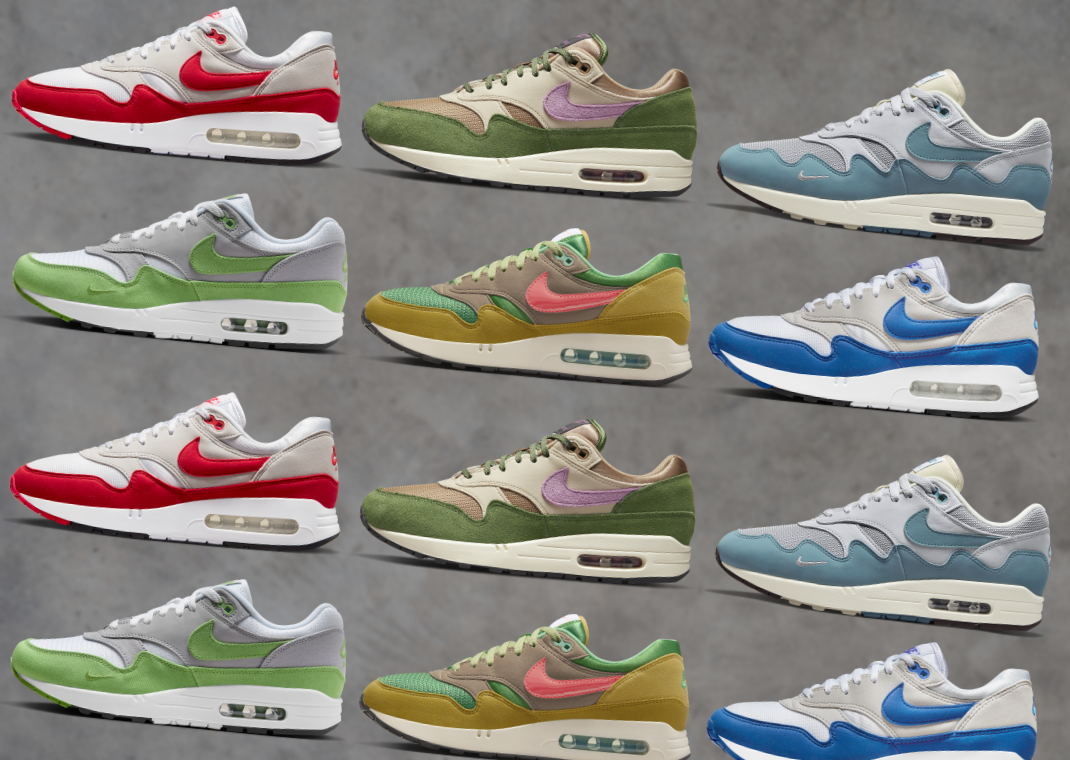
Today, seeing the cushioning system of a sneaker isn’t revolutionary. Basically every brand has a line of models that display what is keeping you comfy all day. But Nike helped pioneer this level of transparency with the legendary Nike Air Max 1. Tinker Hatfield’s trip to the city of Paris helped inspire him to make the Air unit, something that Nike had been using inside of running shoes since the Air Tailwind in the late ‘70s, visible for all to see. More specifically, the “inside-out” aesthetic was inspired by the Centre Pompidou in Paris, a landmark that is constructed with glass to allow visitors to see the guts that keep the building running.
Tinker’s Air Max 1 first hit shelves on March 26, 1987, and from there became a titan of the footwear industry, kicking off the ever-expansive Air Max family of products we know today. It’s still a staple in Nike’s lineup, with the original release date now serving as “Air Max Day,” a celebration of the technology and family of silhouettes.
Its life as a performance runner was short-lived, and it didn’t take long for the Air Max 1 to become a lifestyle staple and a perennial model in the streetwear scene. Tons of brands across the globe have used the AM1 as a canvas for collaborations, beginning in 2002 with the atmos Air Max 1 Safari. A variety of other partners would work on the sneaker, including Patta, Parra, HUF, CLOT, DJ Clark Kent (RIP), and many more.
Today, Nike still releases a variety of new colorways and collabs on the Air Max 1, which means you’re going to want to know all about Air Max 1 sizing. Follow along with our Air Max 1 Sizing Guide to answer all your burning AM1 questions.
Different Types of Air Max 1s
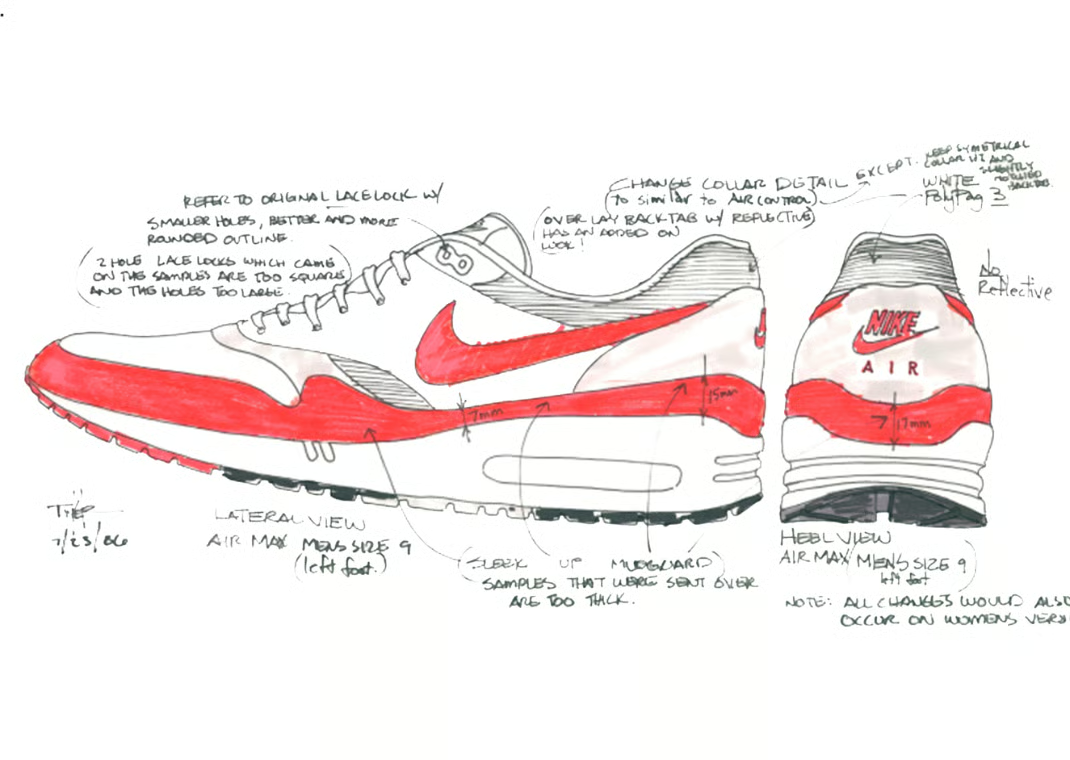
Nike hasn’t given the Air Max 1 a ton of remixes like other silhouettes, but still, the model is no stranger to being reworked. Today, Nike rarely drops different variants of the Air Max 1, but in the past, there were versions like the Ultra, Ultra Moire, Hyperfuse, Lunar, React, and Flyknit. The “Ultra” Air Max 1 is just like the Air Max 95 Ultra in that the model’s materials are reworked to make it lightweight, including a cored-out midsole, while the Lunar and React variants added those cushioning technologies to the model.
The most common variant of the Air Max 1 you’ll encounter today is the “Big Bubble,” which had a string of releases in 2023 and 2024. What is the “Big Bubble” Air Max 1?
Air Max 1 Big Bubble Explained
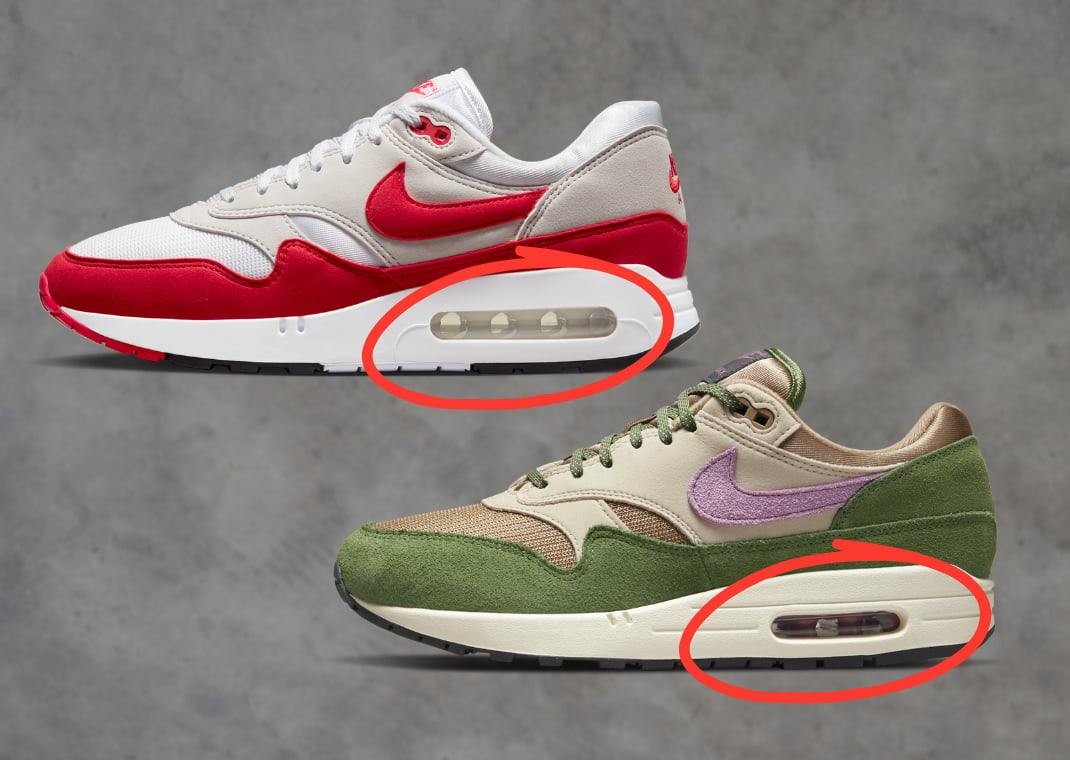
When Tinker Hatfield originally designed the Air Max 1, the model featured a four-pillar Air unit in the heel, larger than the three-pillar unit we see in almost every release today. However, shortly after the original release in 1987, the Air units turned out to be defective in cold-weather climates, with the bubble cracking. Pairs were recalled, and they shrunk the Air unit, fixing the problem.
From then on, those original release pairs were the only Air Max 1s that featured the four-pillar Air unit until Nike revived the design for Air Max Day 2023. The first modern pair of Air Max 1s to feature the “Big Bubble” build was the original Sport Red colorway. It was fairly limited, but Nike would continue to drop AM1s with this retooled sole unit. Nike would call this version of the sneaker the Nike Air Max 1 ‘86 OG.
A slew of colors with this build would hit shelves throughout 2023 and 2024, with 2025 only featuring two releases of the model in the golf-ready version. Since then, Nike has stuck with the Air Max 1 ‘87 build we are all familiar with.
Does the Air Max 1 Fit True to Size?
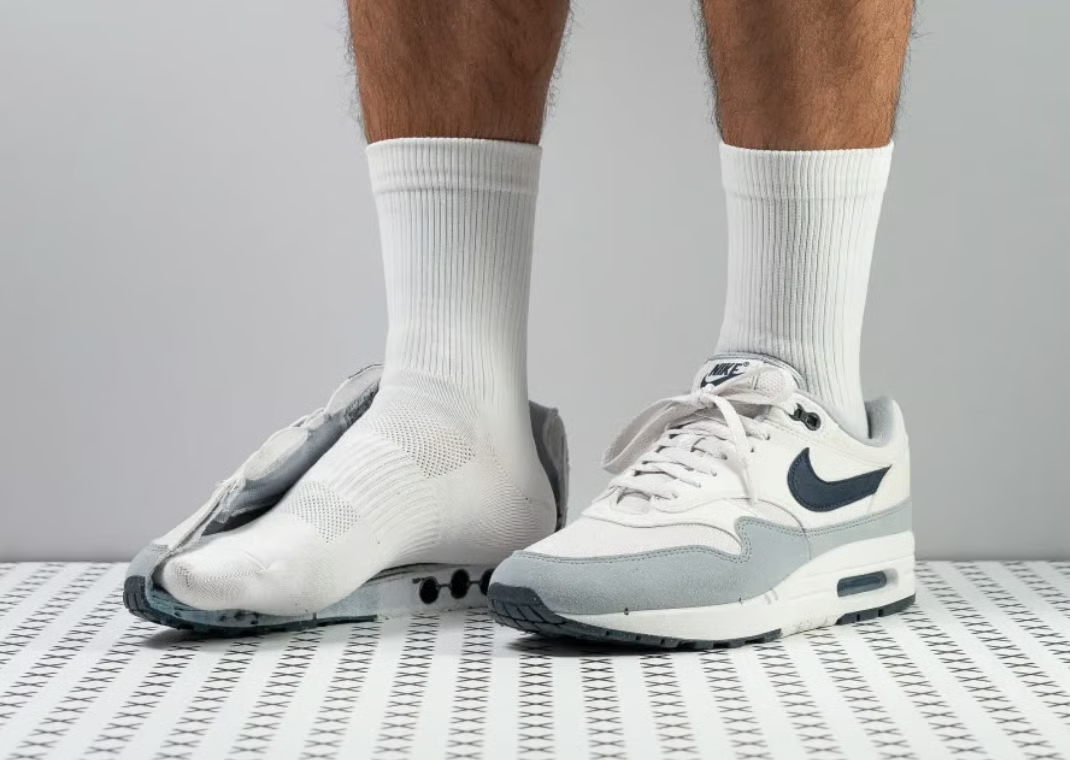
Image via Run Repeat
The Nike Air Max 1 does fit true to size. You can buy the model in the same size you wear in most Nike sneakers. There’s not much of a difference in the fit of the Air Max 1 ‘86 OG (the Big Bubble version) and the ‘87 iteration, so don’t worry if you’re reaching back for an older release.
Is the Air Max 1 Comfortable?
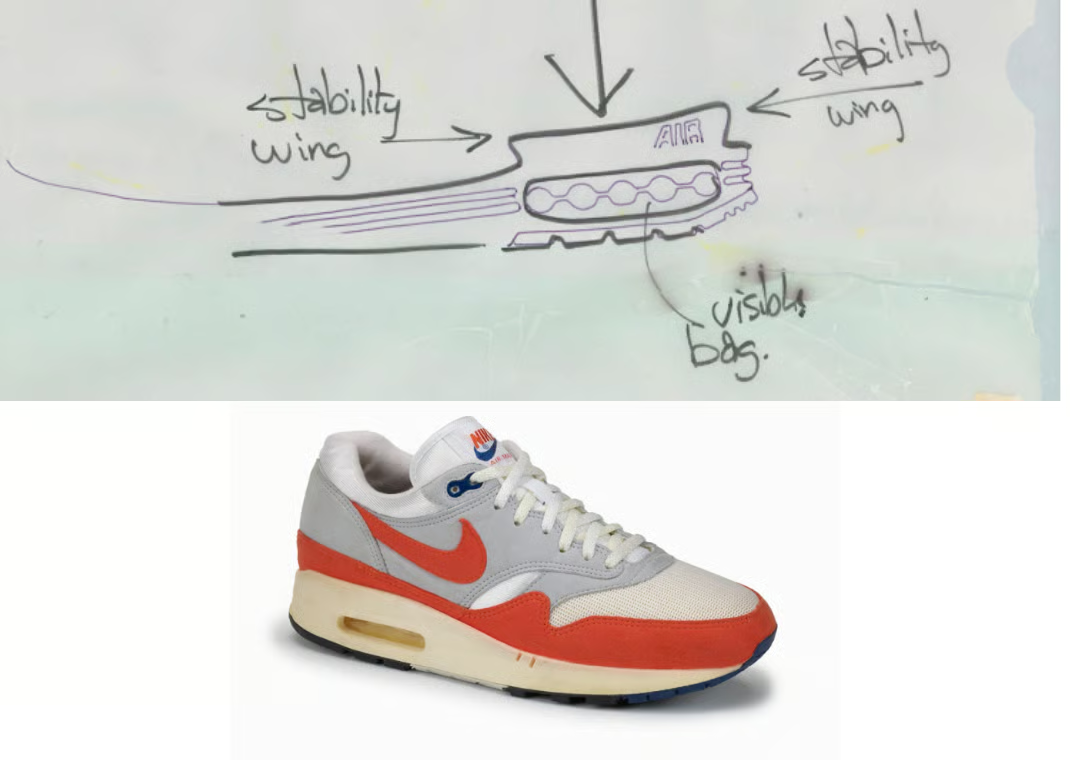
While the Air Max 1 dates back nearly 40 years, the shoe is still pretty comfortable, even when compared to some newer models on the market. However, it’s still technology from decades past, so don’t expect anything revolutionary. The one Air unit in the heel and the foam midsole will hold up for all-day wear. It’s serviceable, but again, there are more comfortable sneakers you can wear today.
Air Max 1 Fit Tips and Recommendations
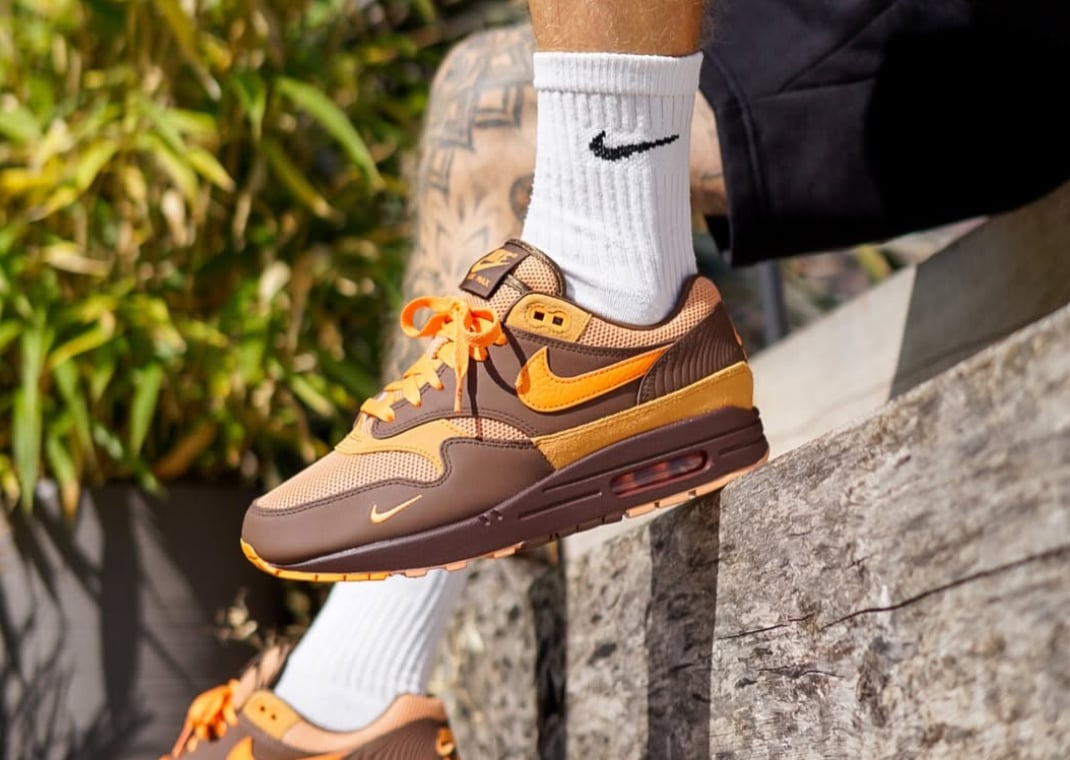
Image via _marshallahsram_
As we said before, the Nike Air Max 1 fits true to size. Some shoes you can get away with going a half size down to loose lace them for a stylish look, but we don’t recommend that for the Air Max 1. It is also a tad bit narrow, so those with wider feet may want to go a half size up. Luckily, the shoe is available at most big box retailers and specialty boutiques, so you won’t have a problem finding a pair to try on in person.
Air Max 1 Sizing Compared
Air Max 90 vs. Air Max 1
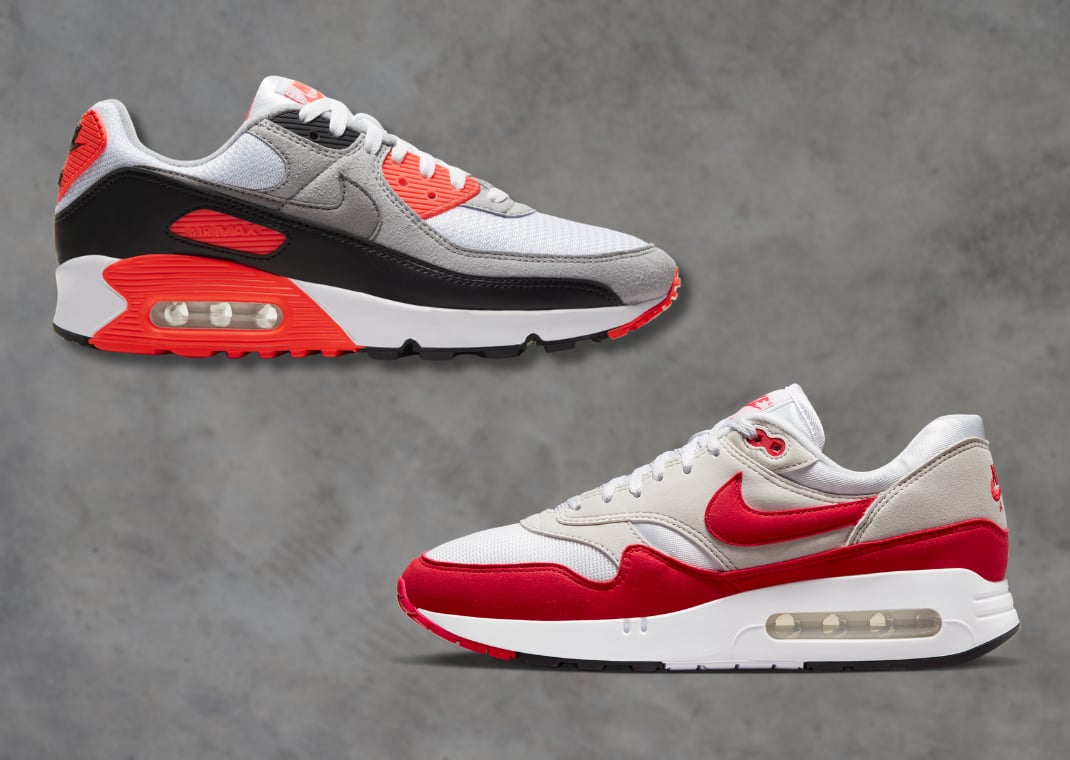
A few years after Tinker designed the Air Max 1, he would design the Air Max III, which we know today as the Air Max 90. The shoe fits true to size, just like the Air Max 1, and thanks to the updated cushioning, it is a bit more comfortable than the OG. Whatever size you wear in one shoe, you will be able to wear in the other.
Air Max 95 vs. Air Max 1
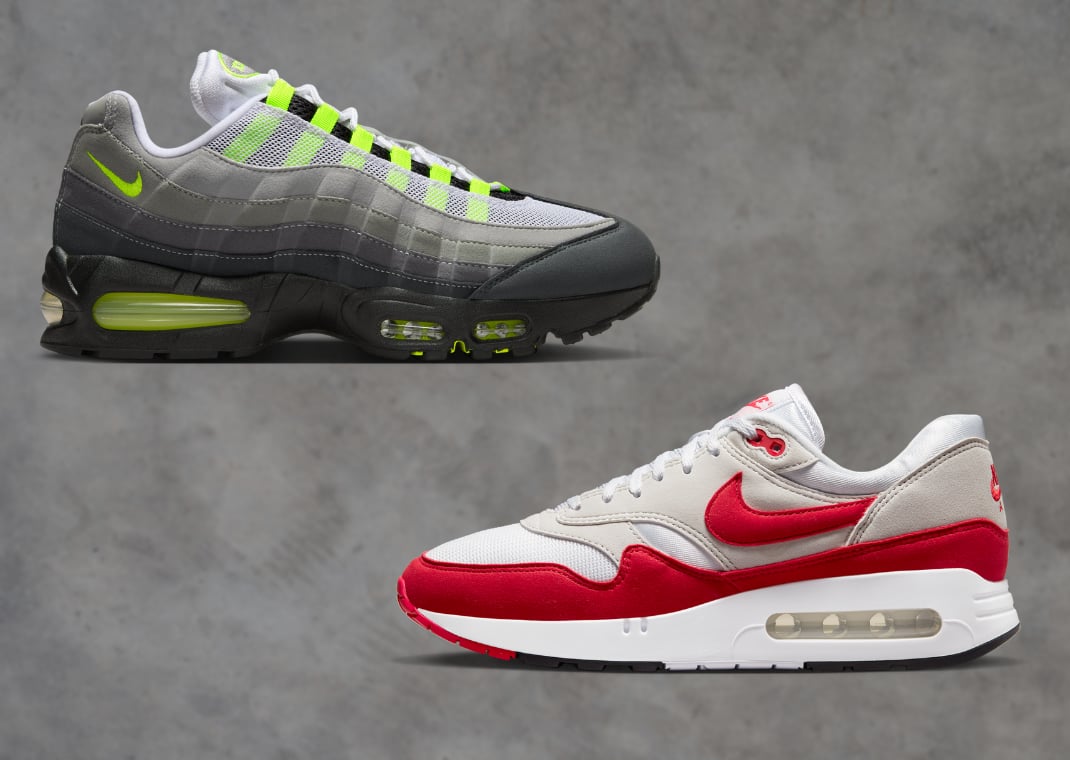
Tinker would leave the Air Max line, which meant new creative juices would flow into the design language of later models, including the Air Max 95. Sergio Lozano took inspiration from the human body for the shoe, representing skeletal features like ribs and lungs with the design. Older versions of the Air Max 95 (the non Big Bubble releases from before 2025) will fit a tad tight, so we recommend going a half size up if you’re reaching back.
However, for releases listed as “Big Bubble,” which accounts for virtually all Air Max 95s after the Neon 95 release in 2025, you can go true to size just like the Air Max 1. And with more Air units and updated cushioning, the AM 95 is going to be more comfortable compared to the AM 1.
Air Max 97 vs. Air Max 1
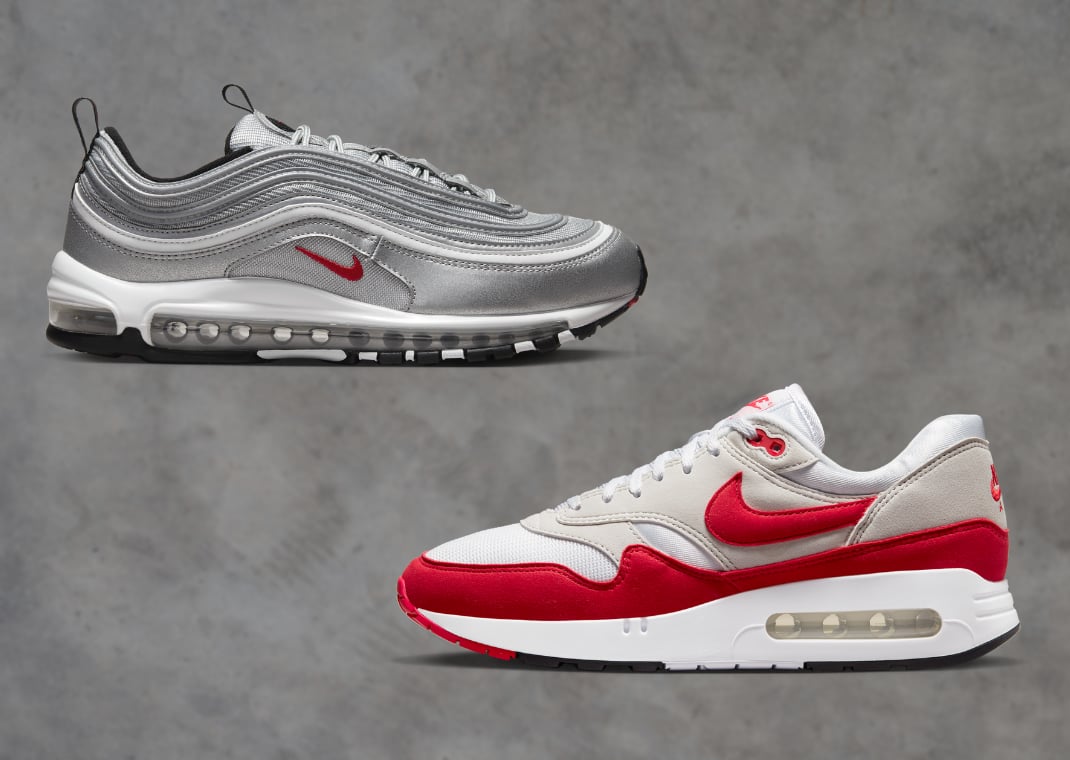
Like the Air Max 95, the Air Max 97 features updated cushioning, so the model will be more comfortable compared to the Air Max 1. It’ll also fit true to size for most people, though some online have reported that it fits a tad snug. If you have wider feet, going up a half size in the Air Max 97 is not a bad idea.
Air Max Plus vs. Air Max 1
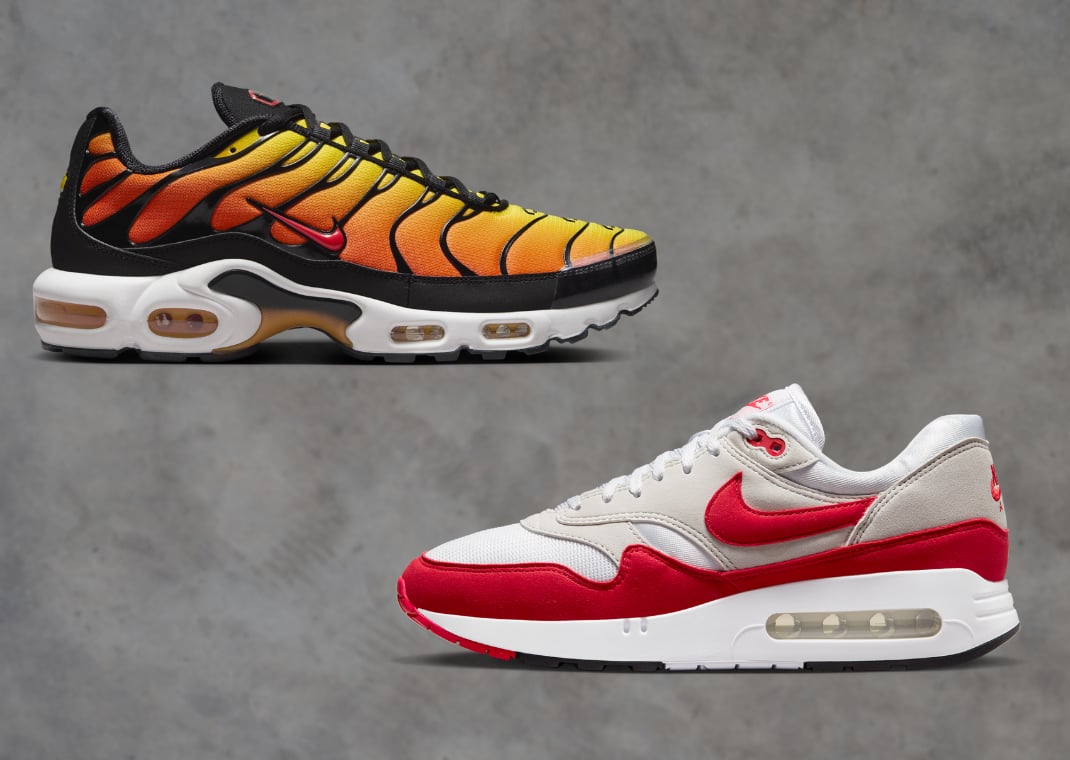
Sean McDowell’s Air Max Plus came over a decade after the original Air Max 1, so you know it’s got more technology within. The standard Air unit is upgraded to feature Tuned Air, which is more comfortable, and there are more Air units throughout the midsole. This model will fit true to size just like the Air Max 1.

Sneakerhead from South Florida who turned his passion into a career. When not writing for Sole Retriever, I enjoy watching films and discovering music. Follow me on Letterboxd @nickvlah For tips, reviews, or any shoes in a size 13, email nick@soleretriever.com