10 Infamous Trading Cards Errors
PublishedQuick Facts
- Trading card errors can occur for a variety of reasons
- Errors on trading cards can range from print defects to text mishaps to wrong images
- While many error cards go unnoticed, a select few have reached iconic status
- The common throughline of error is that breakthroughs are the stories behind them
This content may contain affiliate links. If you make a purchase through these links, we may earn a commission.
In 2006, I discovered what I thought was going to be a sports card error to end all sports card errors: an Upper Deck Exquisite Rookie Patch Autograph card of Danny Granger without a serial number. Projecting that Granger had All-Star potential at the time, I sent the oddball card in to be authenticated by Beckett Grading Services so that I could cash in at a future date.
Unfortunately, the allure of a quick cash-in meant that the card disappeared from my possession as fast as I bought it. But fortunately, I don’t have regrets looking back because Granger did not elevate to Hall of Fame status as I had imagined. In today’s sports card landscape, a 2005 Exquisite rookie card of a Hall of Fame player with a glaring error like a missing serial number might just be good enough to be featured in a Fanatics Premier auction. But because Granger became a footnote in NBA history, it’s a unique piece that might go for slightly above what I paid for it ($150) back in 2006.
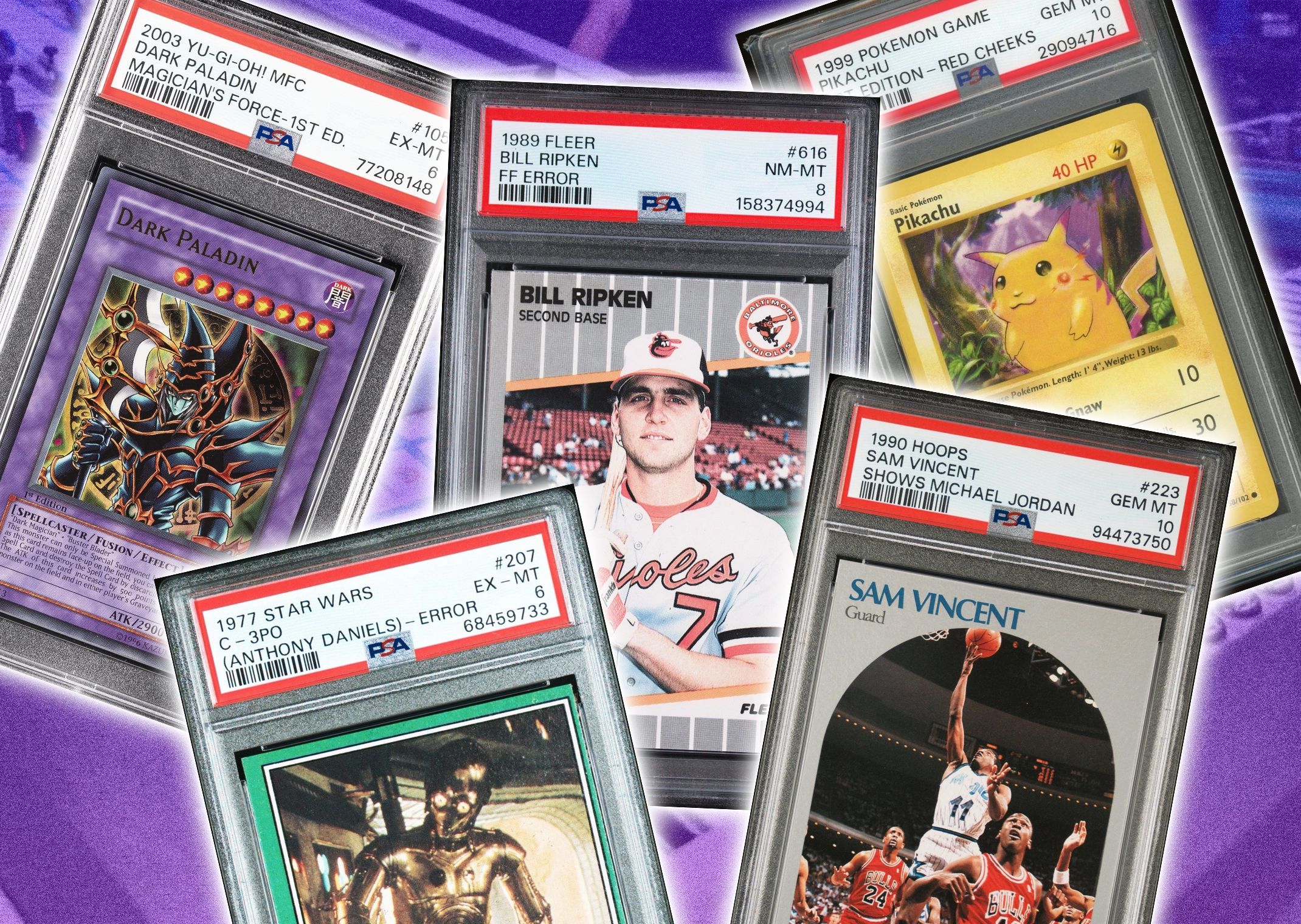
The spot error cards in the hobby are every bit as erratic as the mistakes that end up being printed on the cardboard. Quality control probably prevents thousands of flawed cards from ever escaping the offices, and the ones that do make it into packs don’t always immediately become iconic right away. There are plenty of cards with glaring imperfections as a result of a factory error or a fumble in the copy edit rooms, but it takes a special type of goof to stand out from the rest.
Like a Jordan retro that revolves around a certain theme or a story from Michael Jordan’s past, it’s a combination of the sneaker itself and storytelling that will ultimately convince the public if the error card elevates itself to a new level. The Blood Mew error card in Pokémon’s 30th Celebration set is currently trending, but time will tell if that card becomes iconic or the next Danny Granger.
From sports cards to trading card games, the most infamous card blunders brought something new to the card that enhanced them instead of lowering them down to a trash pile. As the Pokémon community awaits the fate of the Blood Mew from the 30th Celebration set that has become a must-own for collectors and investors alike, here’s a look at some of the more notorious trading card errors in history.
2001 Pokémon Neo Revelations Double Holos Errors
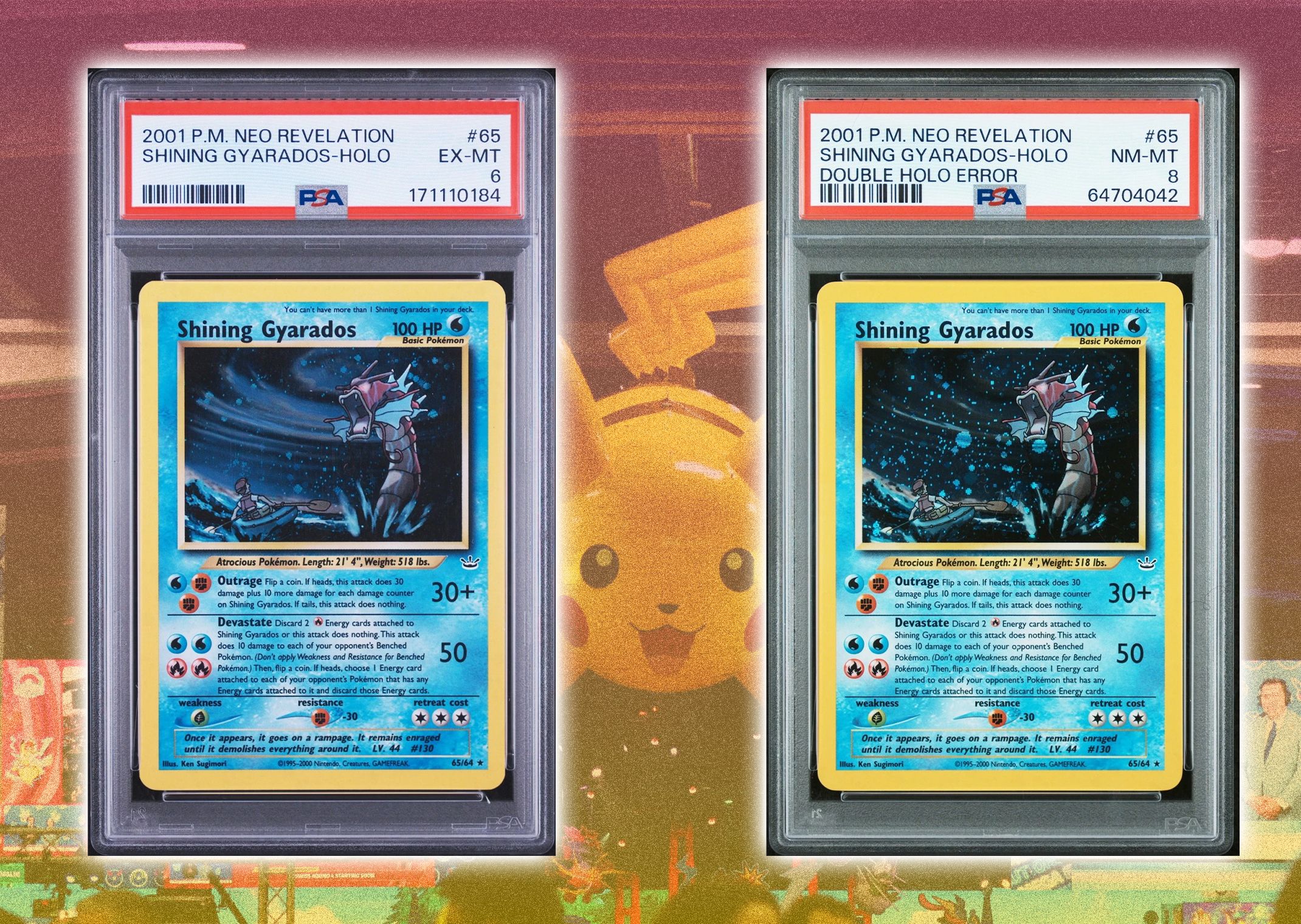
An error set that has become more prominent over the past several years, as grading card companies have started to separate them from the regular holo cards, is the double-holos from the Neo Revelations set released in 2001. Due to a change in the layering during the printing process, the holo cards in Neo Revelations came in two flavors: the standard holos that most people would recognize, and the rare double holos where the holofoil effect can be seen all over the card art. In some cases, the error actually makes the card more visually appealing, helping give the errors a level of legitimacy that is rarely afforded to other cards.
1997 Magic: The Gathering Tempest Medallions “Charlie Brown”
With so much drama in the WoTC (sorry), is it really that shocking that Charlie Brown would have their own crossover collab with Magic: The Gathering? From Final Fantasy to Marvel to The Hobbit, Magic’s forays into pop culture have been met with mixed results. What people might not realize is that the first time - and so far only time - the Peanuts crew became an unofficial part of the game was back in 1997, with Ruby, Sapphire, and Emerald Medallion cards in Tempest. In the background of these cards is artwork that vaguely resembles Charlie Brown and the comic strip's boxes. The working theory is that the printing presses used to create the cards from Tempest were not cleaned properly, and leftover ink from the Peanuts comic book made its way onto the Medallion cards.
2003 Yu-Gi-Oh! Magician’s Force Dark Paladin #105 “Wrong Art”
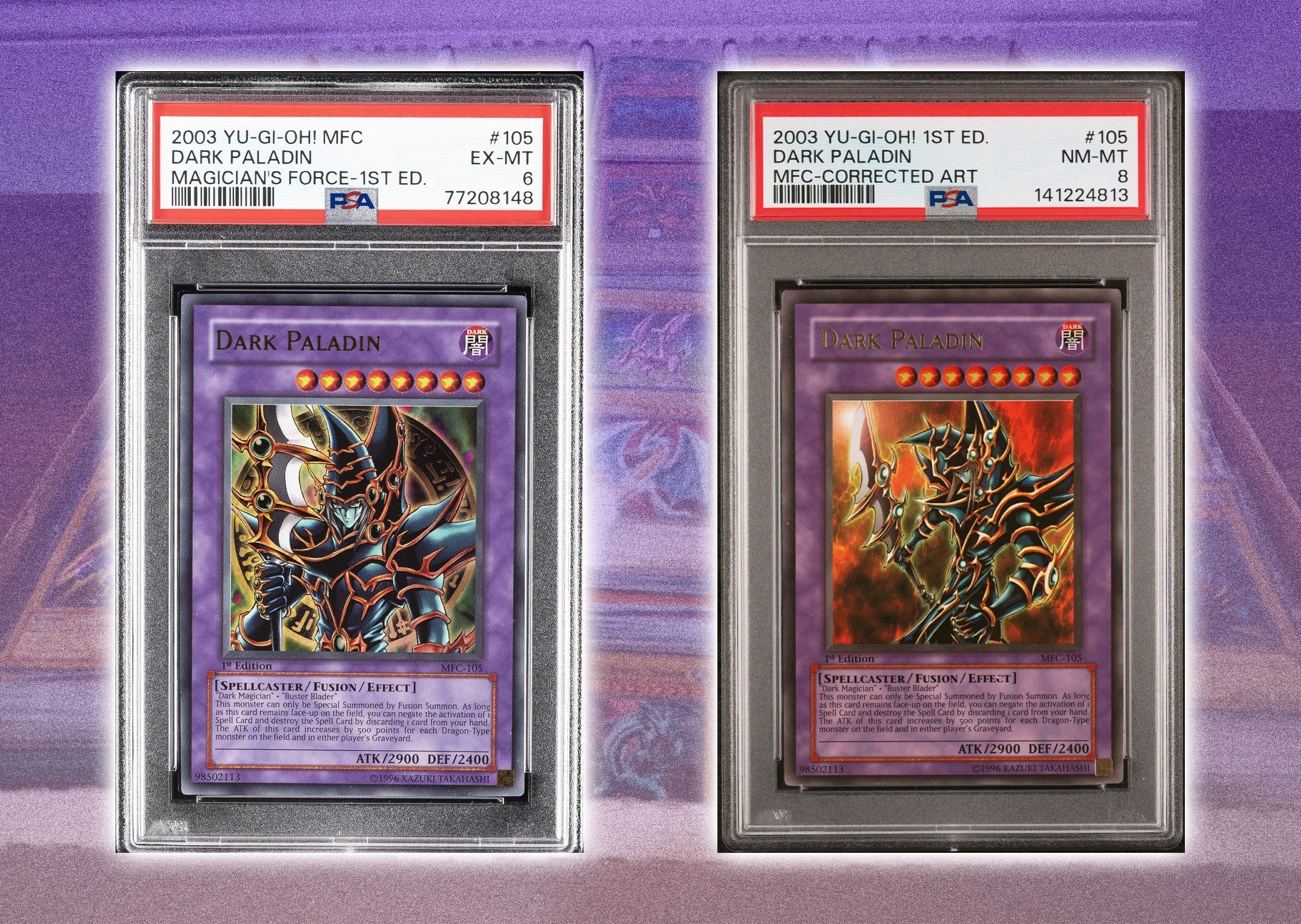
An error so stunning that Upper Deck had to acknowledge the flub and offer a replacement, the first-edition Dark Paladin from the Magician’s Force set featured artwork that was meant for a different release. While the mistake was caught and the correct artwork would be featured in the Unlimited printings of Magician’s Force, the error cards were already out in the wild and in the hands of players. Upper Deck would announce the error on their website and in various trading card game publications to get the word out.
Unlike the 2025-26 Topps Chrome Basketball Blue X-Fractor Mega Box controversy that everybody knew about because it was blasted on social media, word of the Dark Paladin replacement program was not widespread. And according to fans at the time, those who did know were hesitant to send their cards in for fear of losing them in the mail. As a result, the error card with what fans argue has better art is actually worth less than the corrected one with slightly less cooler art.
1990-91 NBA Hoops Sam Vincent #223 “Michael Jordan Wearing #12”
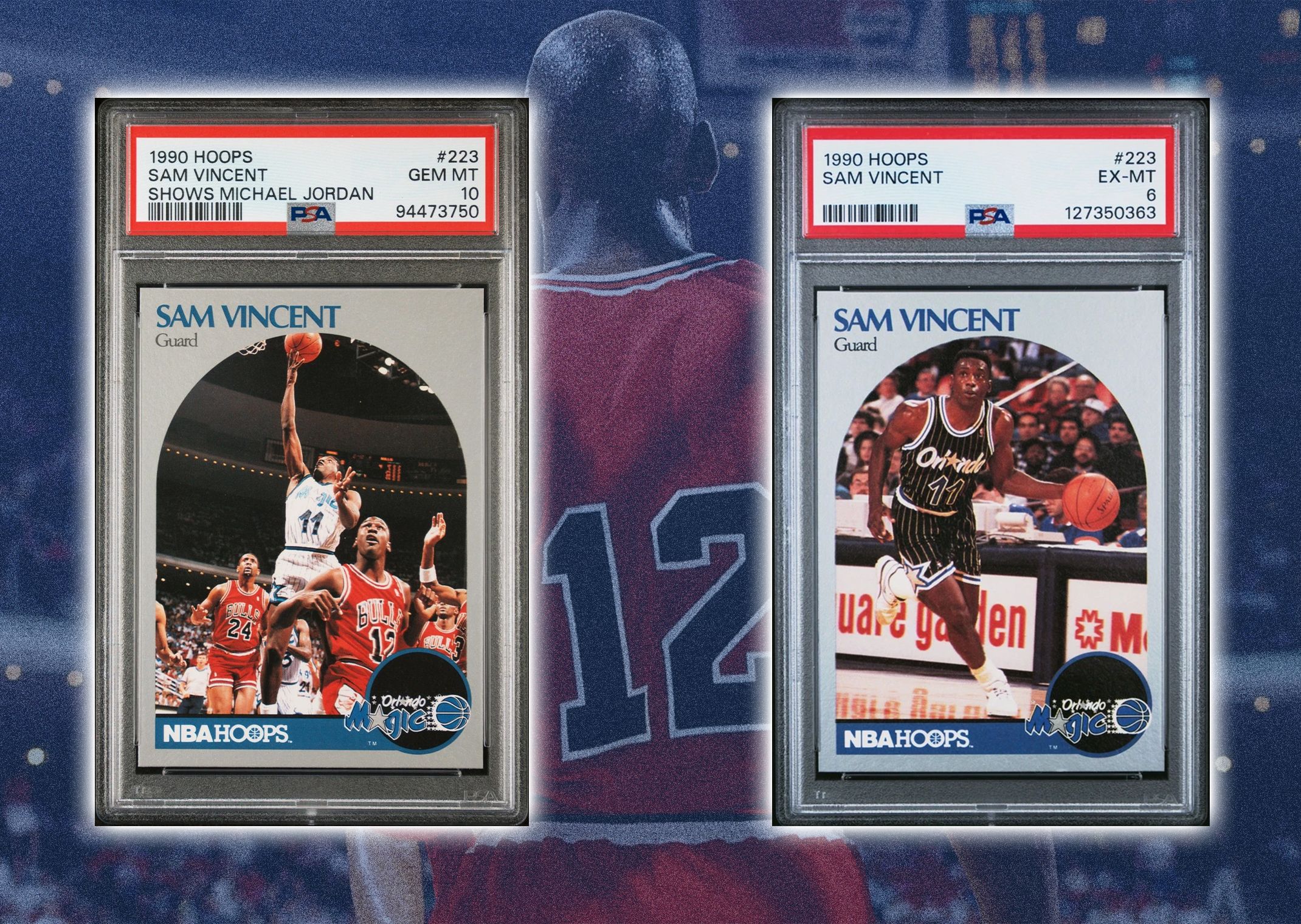
A wild Michael Jordan story that hasn’t been turned into a sneaker is about as rare as a Jordan autograph these days, but this story has become the stuff of cardboard legend. During a February 1990 game between the Chicago Bulls and the Orlando Magic, a member of the arena security stole Jordan’s #23 game jersey. Unable to retrieve the jersey in time (it was later discovered hidden behind a ceiling tile), officials scrambled to find a replacement as the Bulls did not have a spare #23, going so far as to look for fans in the stands with Jordan jerseys to borrow from. An upset Jordan had to settle for a generic #12 jersey with no name on the back. Despite the incident, Jordan would score 49 points and beat the Magic in overtime. Something about taking it personally, probably…
Anyways, the moment would be immortalized in cardboard several months later with the release of 1990-91 NBA Hoops Series 1, a set that’s more famous for Mark Jackson’s card that has the Menendez brothers looking like totally normal fans in the background than anything else. Vincent’s card might be the second most famous card as he’s soaring through the lane for a layup while Jordan looks out of sorts wearing the #12 jersey.
For reasons unexplained to this day, Hoops issued a new Vincent card with the same number as the version with MJ, but with Vincent dribbling by his lonesome and MJ nowhere to be found. Despite the lower print run of the “corrected” Vincent card, the “error” with Michael Jordan wearing the “error” jersey can command a premium price in graded form, despite being produced during the junk wax era.
1994 Magic: The Gathering Revised Edition Serendib Efreet “Wrong Art”
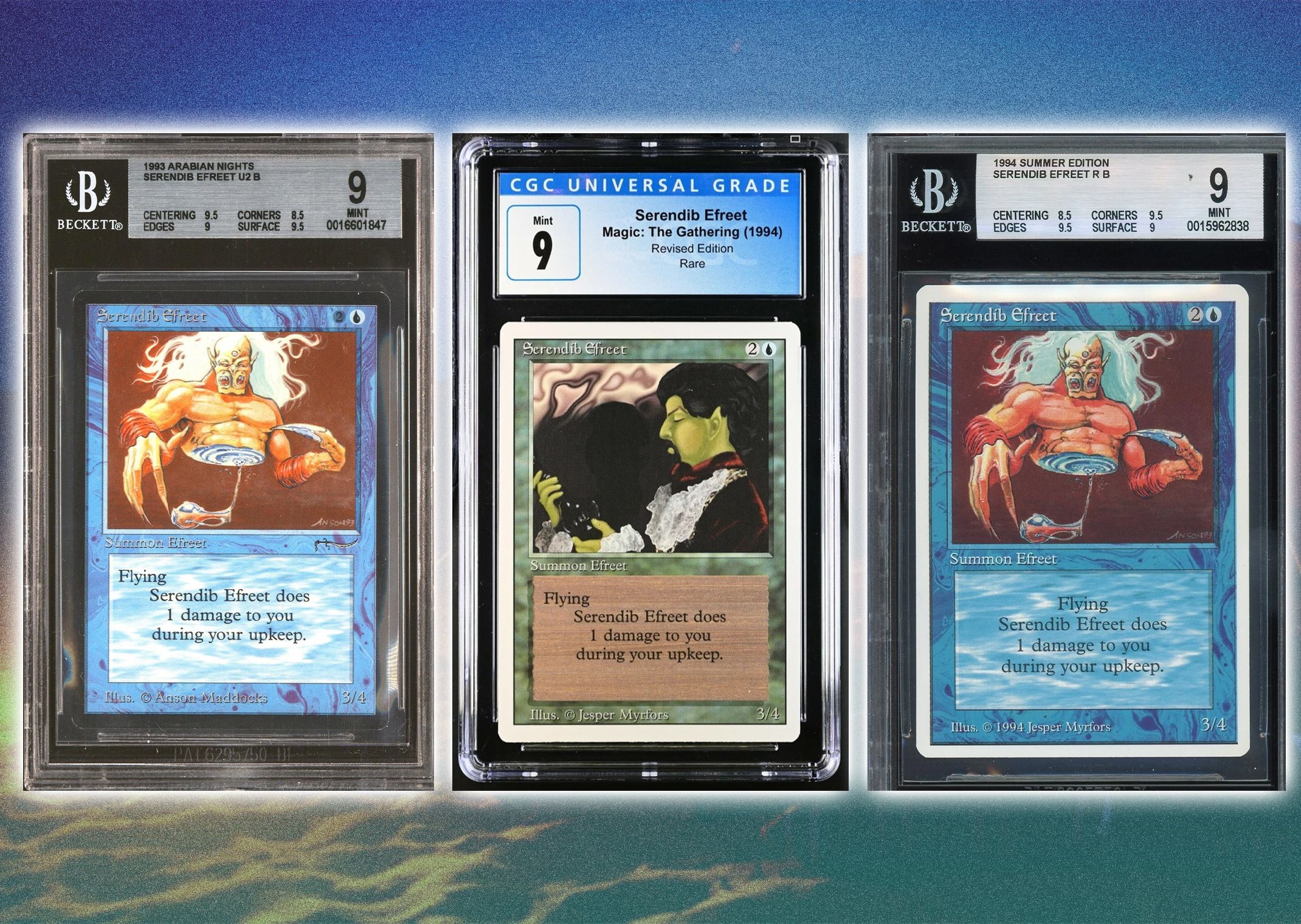
A popular card during the early days of Magic: The Gathering, Serendib Efreet from 1993’s Arabian Nights expansion was also a part of 1994’s Revised Edition. Well, the text and mana cost for Serendib Efreet made it to Revised, but the artwork that accompanied it belonged to Ifh-Bif Efreet, a green creature. Despite the wrong art, the card was counted as a Serendib Efreet in actual gameplay. A correction with the proper art was issued in the second printing of Revised, which is affectionately called Summer Magic, but because that printing had its own gaggle of mistakes, there was a massive recall that led to the destruction of a lot of cards. However, a few Unlimited Serendib Efreets did make it out in the wild and now sell for even more than the first edition Efreet.
1990 Topps Frank Thomas #414 “No Name”
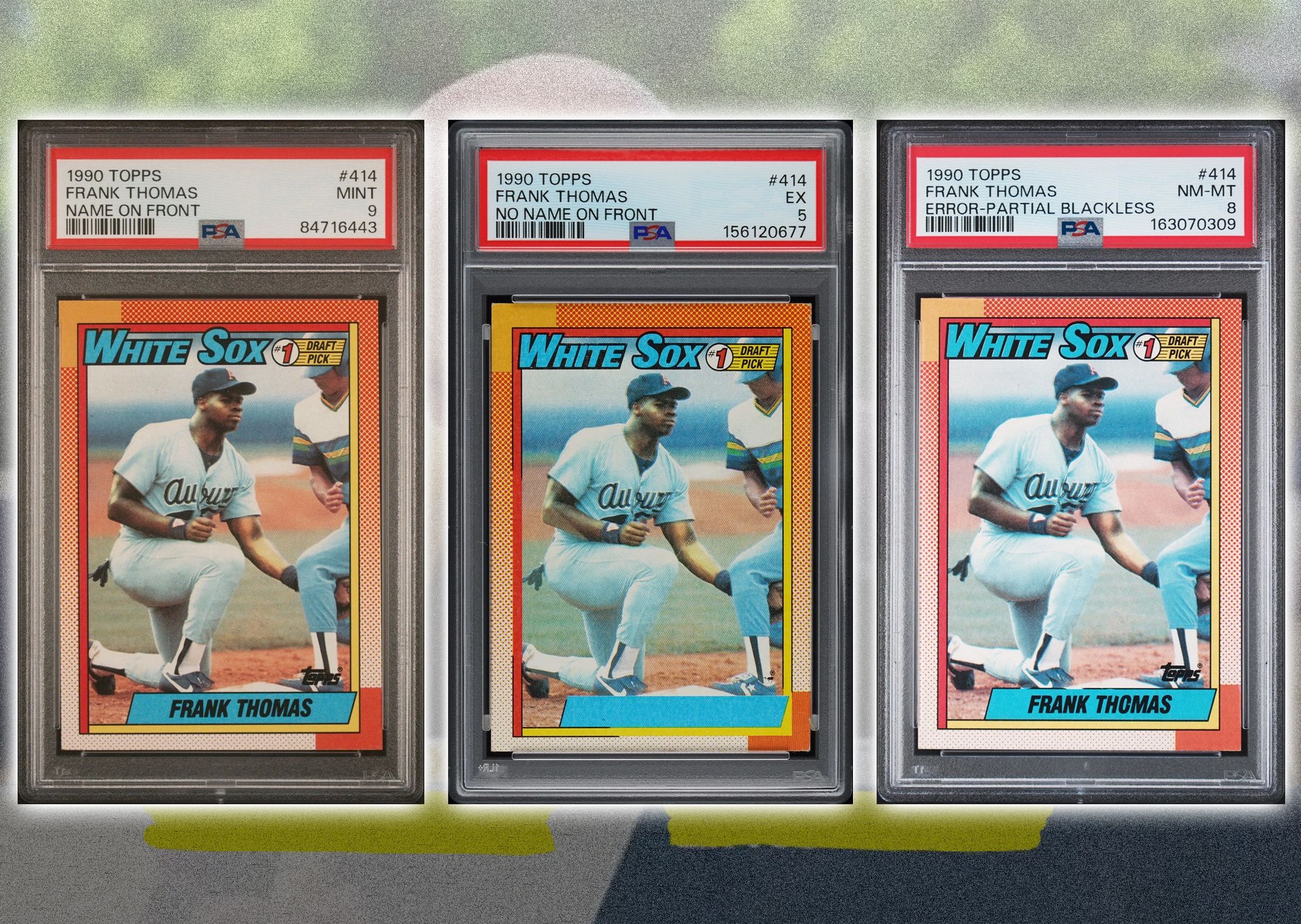
If you’re a baseball fan of a certain age, there’s a chance you might have a box of cards stored in an attic or a storage unit filled to the brim with cards from the junk wax era. Like the 1990-91 NBA Hoops Sam Vincent card with Michael Jordan wearing #12 in the foreground, millions of each card was produced, blunting any chance they have of retaining any value… unless a rookie card of a future Hall of Famer has a printing error that is caught early enough to be corrected, but not so soon that erroneous copies don’t make it out in the wild.
That’s the story of the 1990 Topps Frank Thomas rookie card: while copies of the normal version of the card can be had in ungraded form for the price of a venti tall cup of coffee at Starbucks (thanks, inflation!), there are very few Thomas cards that do not have his name on the front due to a printing error. While there are other error cards in the set, most notably the Partial Blackless that left parts of the card where black ink was supposed to land blank or chipped, the Thomas No Name stands out above the rest.
1999 Pokémon Pikachu #58 “Red Cheeks/Yellow Cheeks”
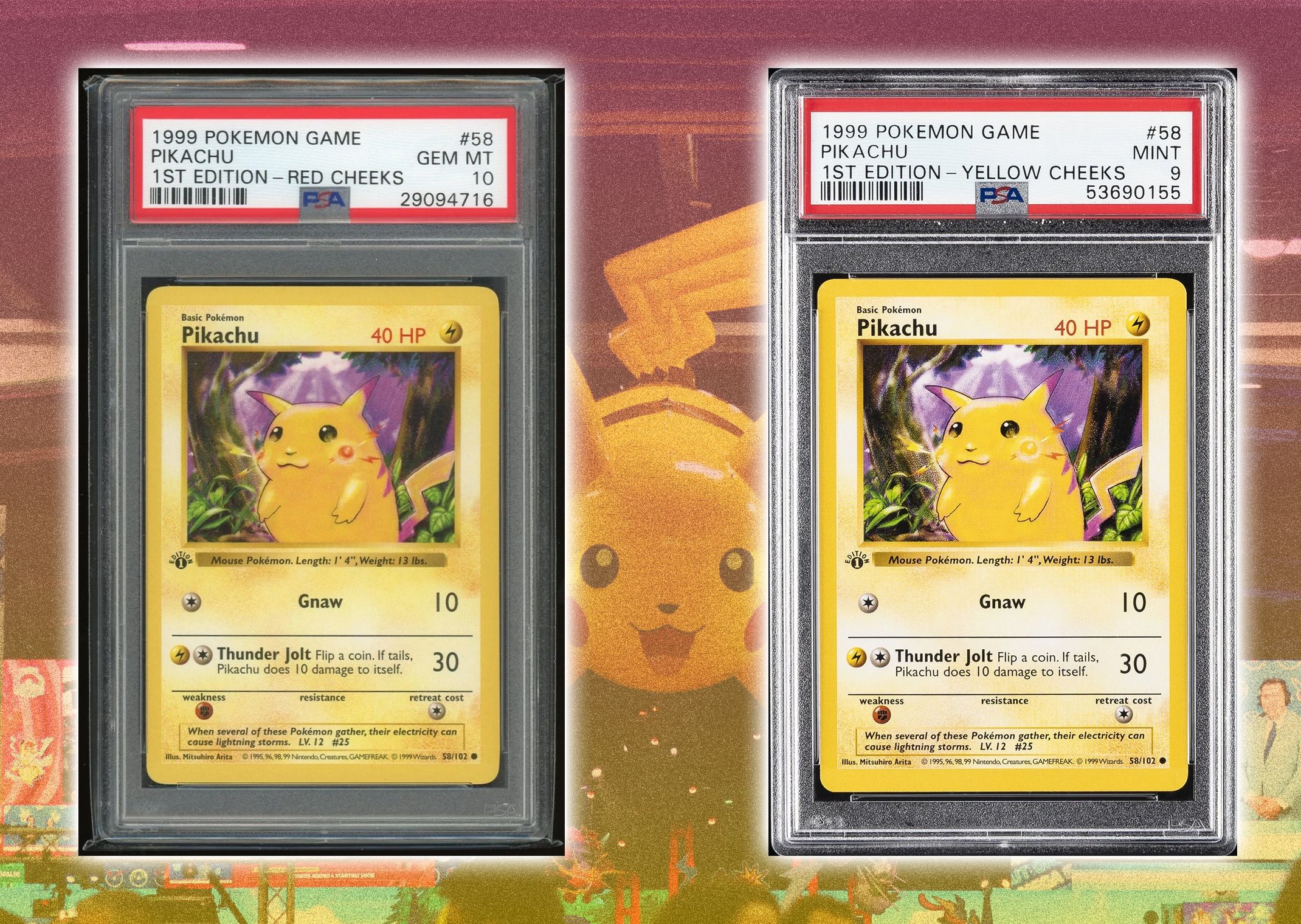
When Wizards of the Coast saw the card art for Pikachu that was going to be included in the 1999 Base Set, they thought something was wrong with Pikachu’s cheeks. In the anime and other forms of media, Pikachu’s cheeks are red. However, artist Mitsuhiro Arita colored the cheeks yellow to convey the electricity and sparks. WoTC did not know this was an intentional move by Arita-san, so they recolored the cheeks red and printed the cards to be included in the Base Set. The correction to the correction would be settled in future releases, with Pikachu’s red cheeks only appearing in early sets and random promos, while yellow cheeks are more prominently featured in major releases like the Classic Collection edition found in the Pokémon 30th Celebration set.
1977 Topps Star Wars C-3PO #207 “(Redacted)”
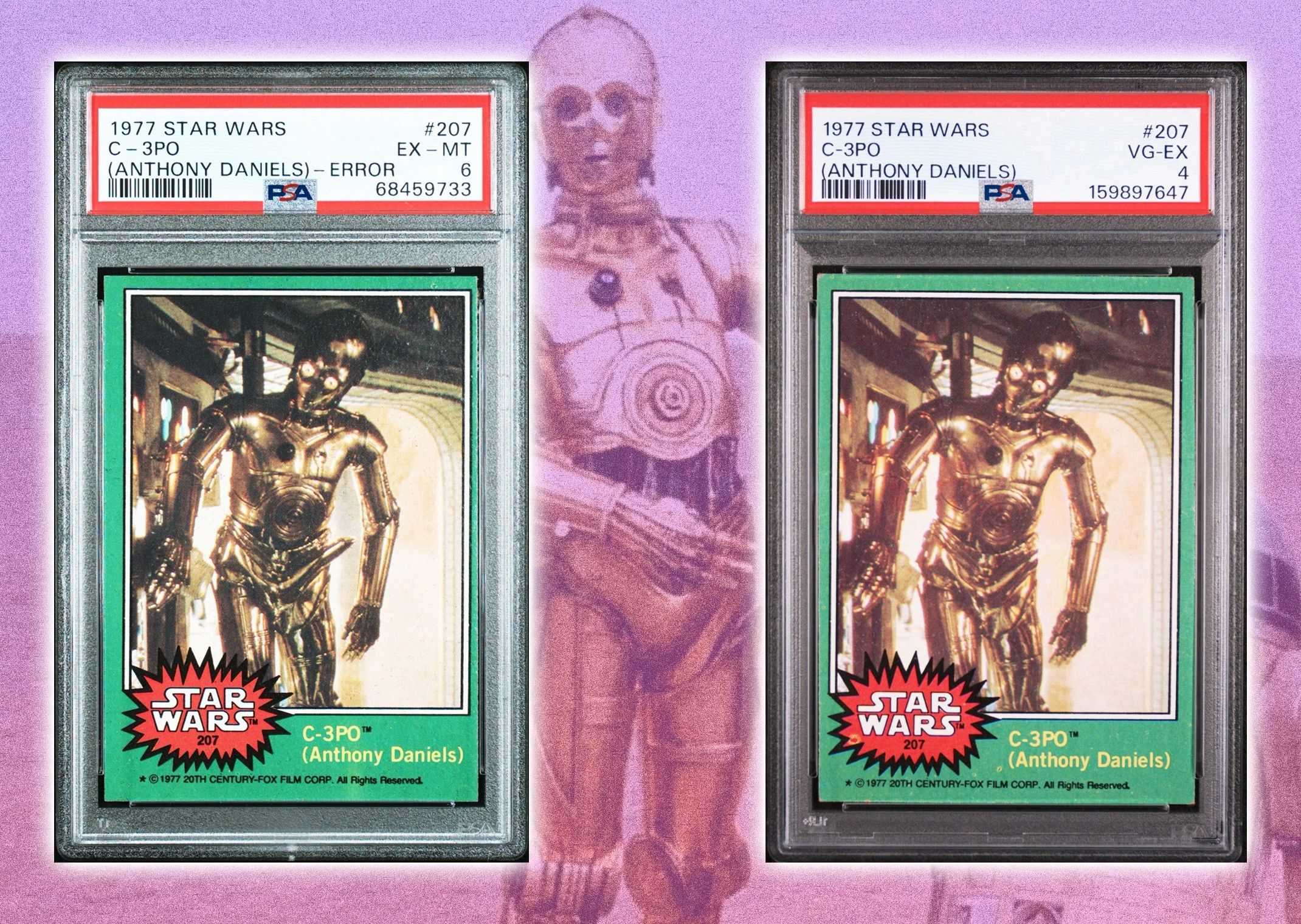
Look, we can be mature adults about this and not laugh at this card image that appears to show C-3PO in a previously undisclosed extended form. We can also acknowledge that the people who worked at Lucasfilm saw nothing bursting in the image and sent it to Topps without realizing what they had sent, the people who worked at Topps saw nothing popping out in the image and sent it to the printer without realizing what they had sent, and the printer saw nothing splayed on the image and sent it to card packs and eventually children without realizing what they had sent.
Needless to say, parents were not happy with C-3PO’s protruding state, and Topps would fix the issue in future releases. Meanwhile, the blame game between Topps and Lucasfilm was like a game of hot potato as nobody wanted to admit fault for literal decades. It was not until 2007 when the studio theorized that it was a piece of 3PO’s costume falling off at the right (or wrong) time that it made it look like The Force was with the droid in ways nobody could have ever imagined.
1989 Fleer Randy Johnson #381 “Marlboro Sign”
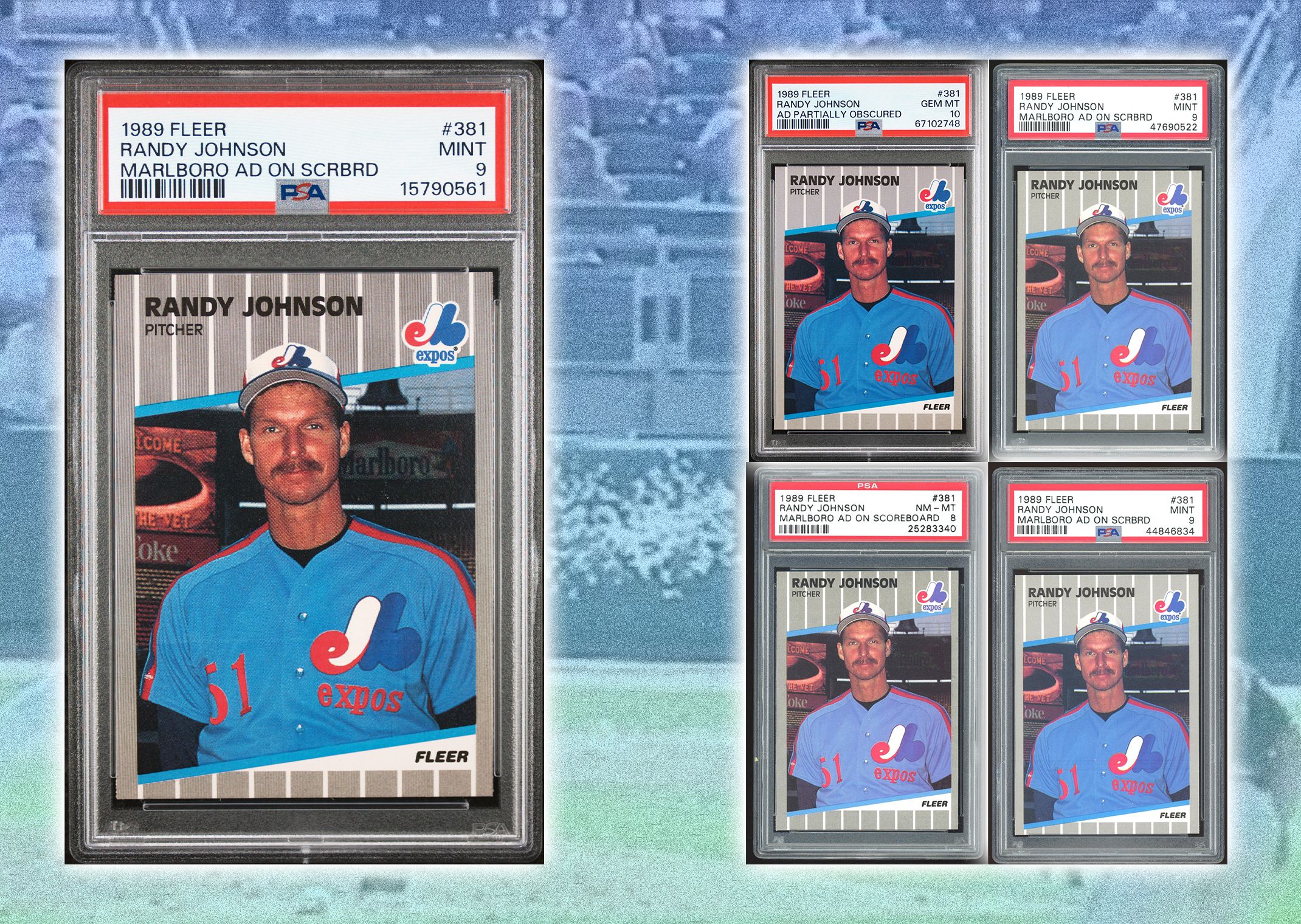
Similar to Frank Thomas, Randy Johnson’s rookie card values are peanuts compared to players today with a fraction of the accomplishments, thanks to the junk wax era. And just like Thomas’ Topps No Name card, it would take an iconic blunder to turn one of Johnson’s most easily accessible rookie cards into legendary status. While it might seem obvious to anybody, even in 1989, that printing a trading card with a cigarette ad in the background is bad form, Randy Johnson’s 1989 Fleer rookie card has a full-blown Marlboro ad in the video board display behind him.
Fleer caught the error, but not before a handful of cards made it out of the printers and into packs. As more cards were printed, Fleer would try various techniques to block out the image, with results varying from total success to hilarious failure. With over a dozen variations of Fleer trying to block out the ad, the card that everybody wants and will probably never own because there are so few out there is the unvarnished version that features the big Marlboro sign and cowboy for all to see and cough up a lung to.
1989 Fleer Bill Ripken #616 “F**k Face”
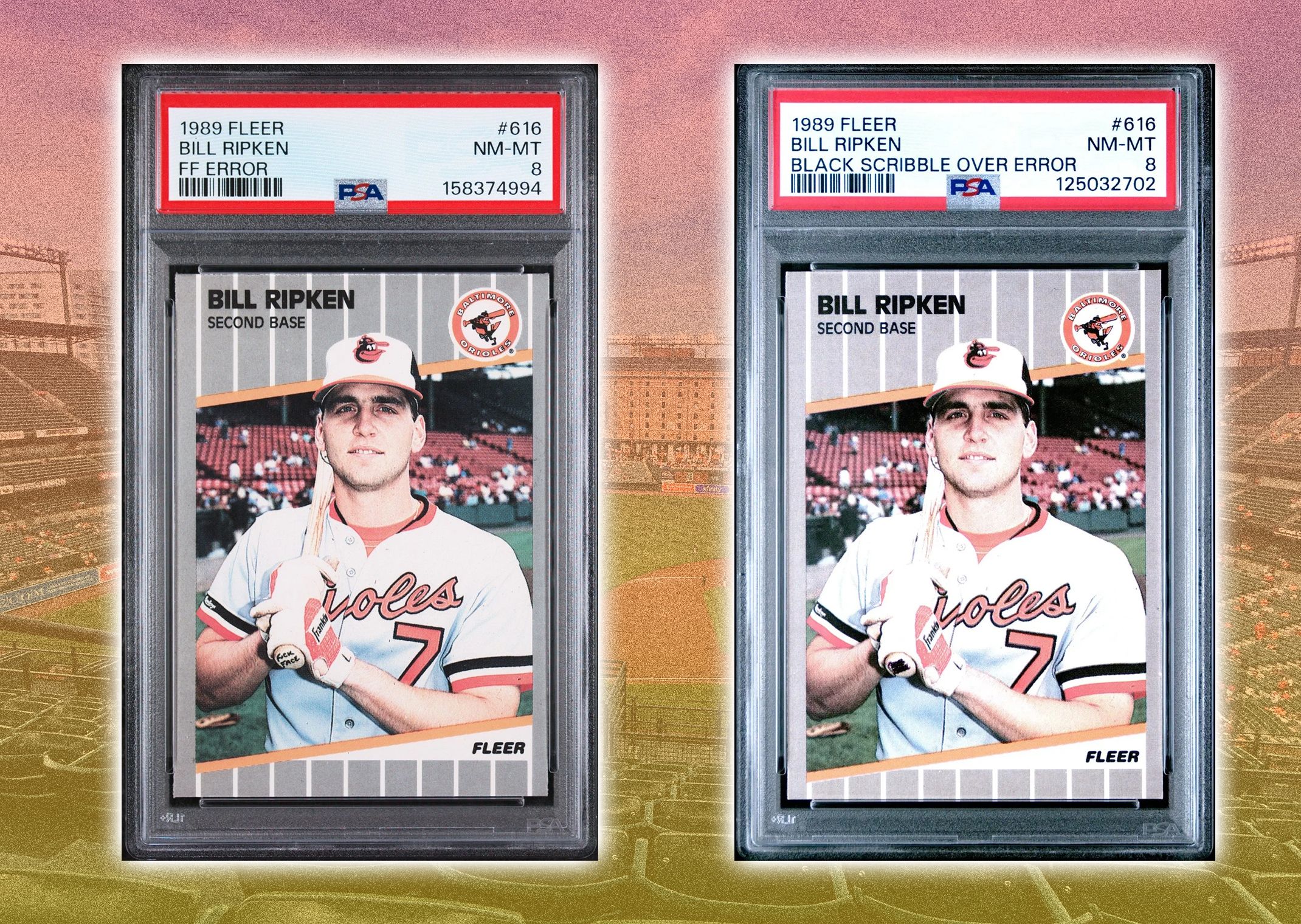
For 20 years, Bill Ripken passed the buck when asked if he wrote the profane message on the knob of his batting practice bat that would end up in a picture that would be used in the 1989 Fleer Baseball set. He would finally admit to the deed back in 2008, saying that he wrote the message on the knob as a way to easily find his specific bat from whatever pile it might be in. Regardless of his reasons, there’s no way that card should have made it past the initial checks by Fleer. But apparently, the same proofreaders on Randy Johnson’s card were apparently on Bill Ripken duty as well, and “F**k Face” was printed in large quantities and made its way onto packs.
Like the Johnson card, attempts to block out the image had varying degrees of success. While the “F**k Face” variation is the most desired of the millions of Ripken cards out in the wild, some of the corrected cards have started to develop their own following and the occasional sale price that actually surpasses the OG. Topps even went as far as to parody the moment decades later with Jackson Holliday but with a nicer message.
From video game journalism to veteran of the sneaker blog era to podcasting about well, everything, Juan is smiling through it all and can't believe this is his life. His current hot take is that people are really underrating the Psyduck trading card market. Email: juan@soleretriever.com Instagram | Twitter | Bluesky | Threads : @ezyville