The Messy History of Sneaker Brands Honoring Indigenous Peoples
PublishedQuick Facts
- Indigenous Peoples Day is celebrated on the second Monday of October
- Through the years, sneaker brands have worked with indigenous artists and communities that go beyond the typical collaboration
- Nike’s Native American initiative dates back to the late 1990s when employee Sam McCracken drafted the business plan that would become N7
- Kyrie Irving has used his platform and privilege to give back to the Standing Rock Sioux Nation, where his late mother was a member
This content may contain affiliate links. If you make a purchase through these links, we may earn a commission.
The value of Indigenous Peoples Day or Columbus Day to any particular community around the country comes down to what their states choose to acknowledge. In some states like Montana, Pennsylvania, Alabama, and others, they celebrate and recognize both on the second Monday of October, along with being a paid holiday. Other states, like Arizona, choose to only recognize Columbus Day, while California does not celebrate either day but recognizes Indigenous Peoples Day through proclamations. The yearly confusion, inconsistency, and apathy are part of a wider concern by Native Americans that they are consistently taken for granted and patronized with nothing more than symbolic gestures.
So this is the part where we talk about how sneaker brands have swooped in to save the day, right? Of course not. Changes to the conditions of impoverished Native Americans will not happen because Nike or Jordan Brand releases a sneaker designed in partnership with a creator with Indigenous heritage. The trap that we sometimes fall into is that when we see products with the co-sign, we think that buying them is going to save the day. The reality is that actual change takes place when people become aware of an issue, mobilize, and take action to affect things on a federal level.
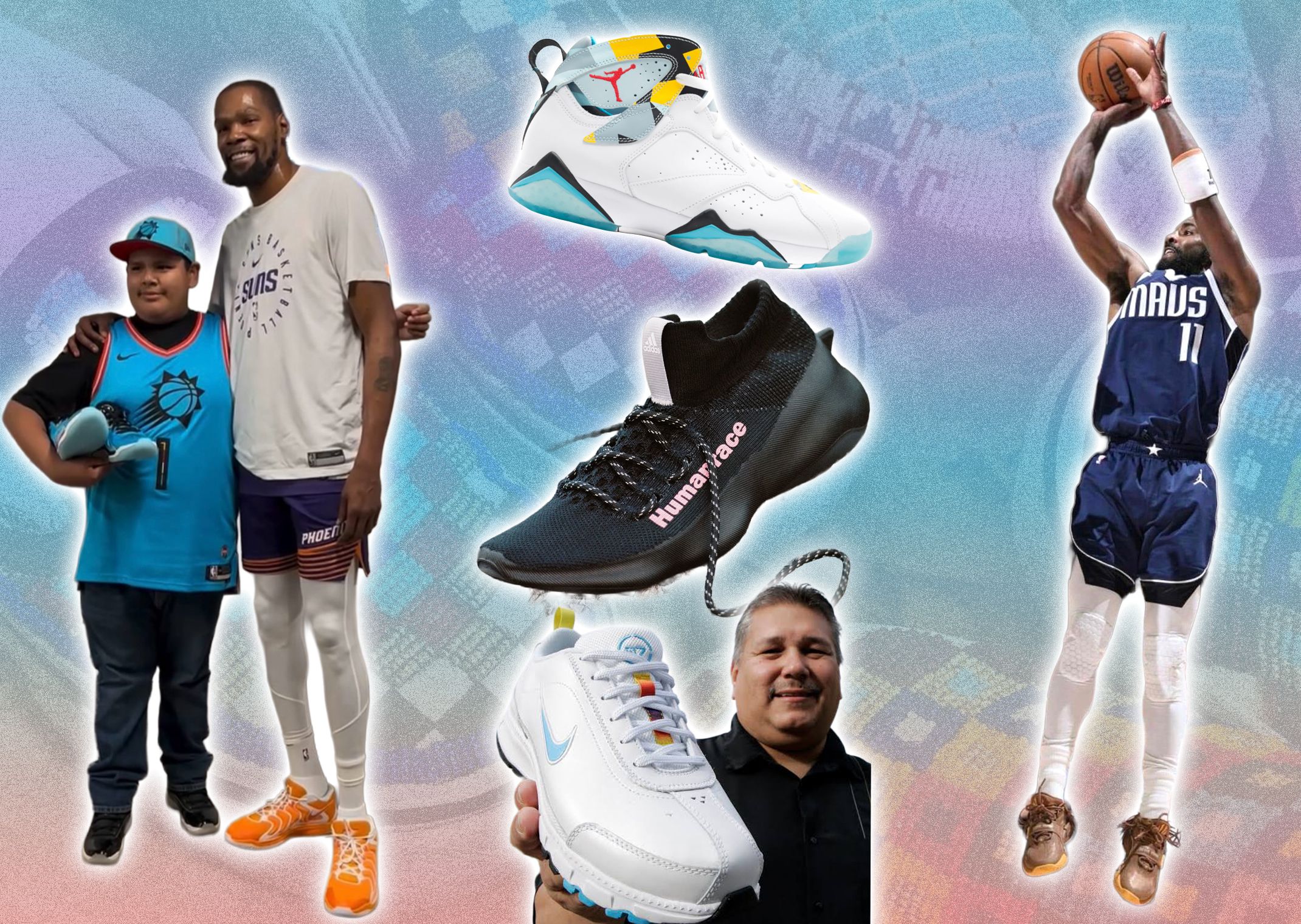
Through these collaborations, the brands do play a role in building awareness for the struggle of Native Americans and providing communities with much-needed assistance through the sales of their sneakers. It’s far from perfect as the line between appreciation and appropriation can be messy, but the projects help humanize a group of people that, for a lot of the country, either does not know about or were never even given the chance to learn. It’s meeting people where they are, and in this case, the people are sneakerheads who might reside in a state that doesn’t recognize Indigenous Peoples Day. There might not be a lot of kids who own N7 or Kyrie Irving’s Hélà who actually take the time to find out about the why of these products, but it is also not zero. Whatever that number can be a huge help.
Nike
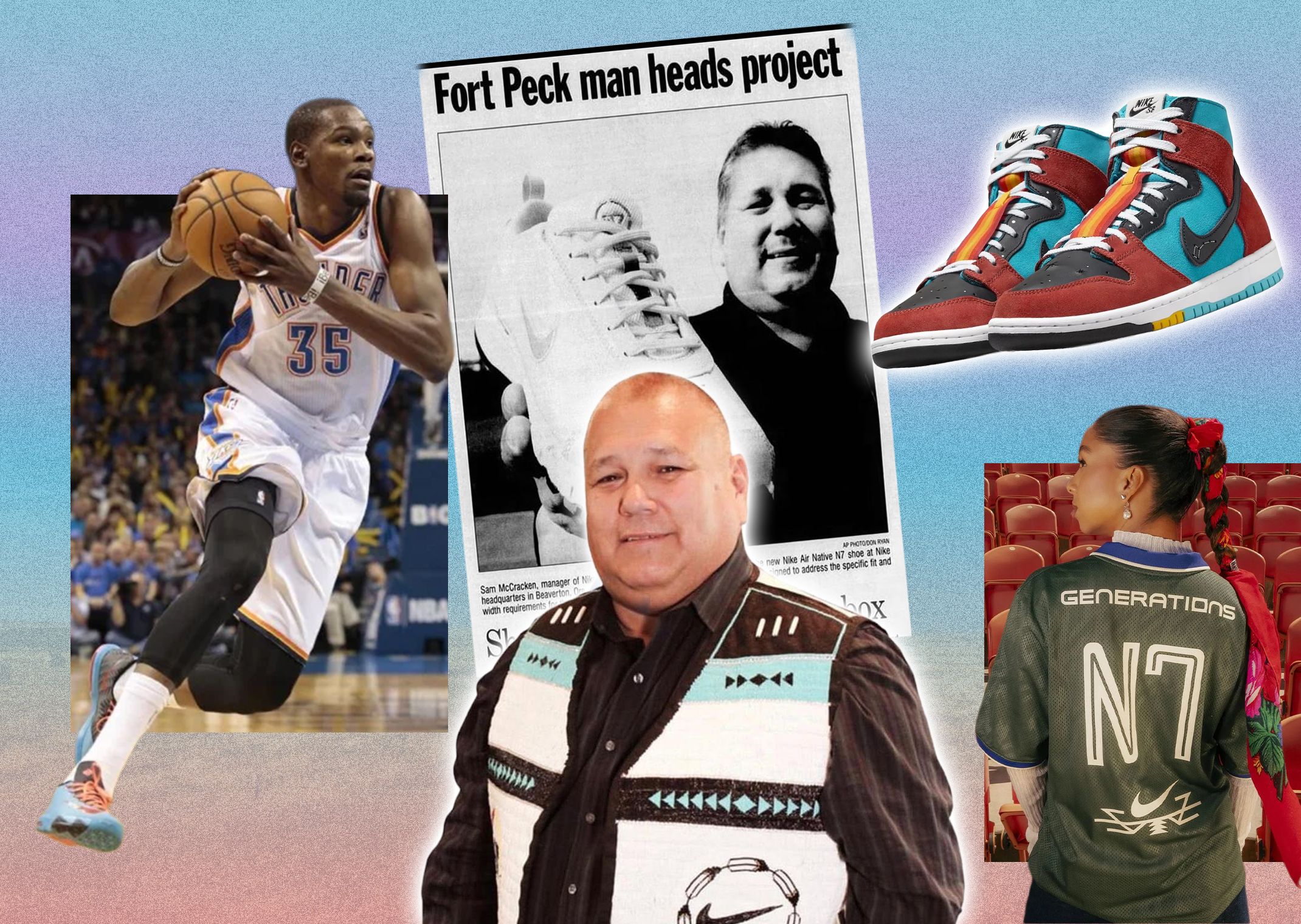
Nike’s N7 initiative dates all the way back to 1999, when Sam McCracken was working at Nike’s distribution center in Oregon. Tasked with restarting the brand’s Native American outreach, McCracken drafted a proposal with the intent of helping his community and others through sports and physical activity. The business plan was approved in 2000, which led to McCracken organizing events to get people active and healthy, as Nike offered free or deeply discounted products to give people the push that they might need. For McCracken, who saw his community deal with a diabetes epidemic and whose mother passed away from complications with type 2 diabetes, this was personal, as he saw how inactivity and lack of resources can ravage a community.
N7, where the “N” stands for “Nike” but McCracken prefers “Native,” comes from the idea that anything that happens today must take into consideration the impact it will have for seven generations. The first sneaker from the initiative was the Nike Air Native N7 in 2007. Designed with a wider foot fit to accommodate Native Americans dealing with obesity and diabetes, the sneaker was distributed exclusively to tribes. Many people were able to receive the sneakers for free because they were paid for by wellness groups that bought them from Nike at wholesale prices. This would be followed up in 2009 by the first N7 sneakers to receive a retail release, the Nike N7 Air Huarache and the Nike N7 Air Pegasus 26. The early N7 releases were notable to the sneaker community for their availability only at Nike Factory Stores.
During his time in Oklahoma, a state that is home to 39 federally recognized tribal nations, Kevin Durant was the first Nike signature athlete to release a sneaker with N7 iconography. Like other early N7 sneakers, the only place they could be found at launch was at the Nike outlets. Released in two colorways, the star pattern found on the ankle of the shoes represents the Pawnee Nation of Oklahoma. Kyrie Irving’s final seasons with Nike would include a handful of N7 releases that reflected his growing connection to the Standing Rock Sioux Nation, to which his late mother belonged.
A signature feature of Nike’s first N7 releases was the color turquoise, which carries special meaning to the Indigenous Peoples. Later releases would highlight collaborations with Indigenous designers like Chelysa "Chief" Owens-Cyr, who helped design the Nike KD 17 N7 along with a full apparel collection in 2024. Turquoise can also be found on Diné artist and skateboarder Di’orr Greendwood’s SB Dunk sneaker and apparel collection that same year. While we are a few years away from the seven generations that Sam McCracken integrated into the philosophy of N7, it’s safe to say his impact will continue on generations more.
Jordan Brand
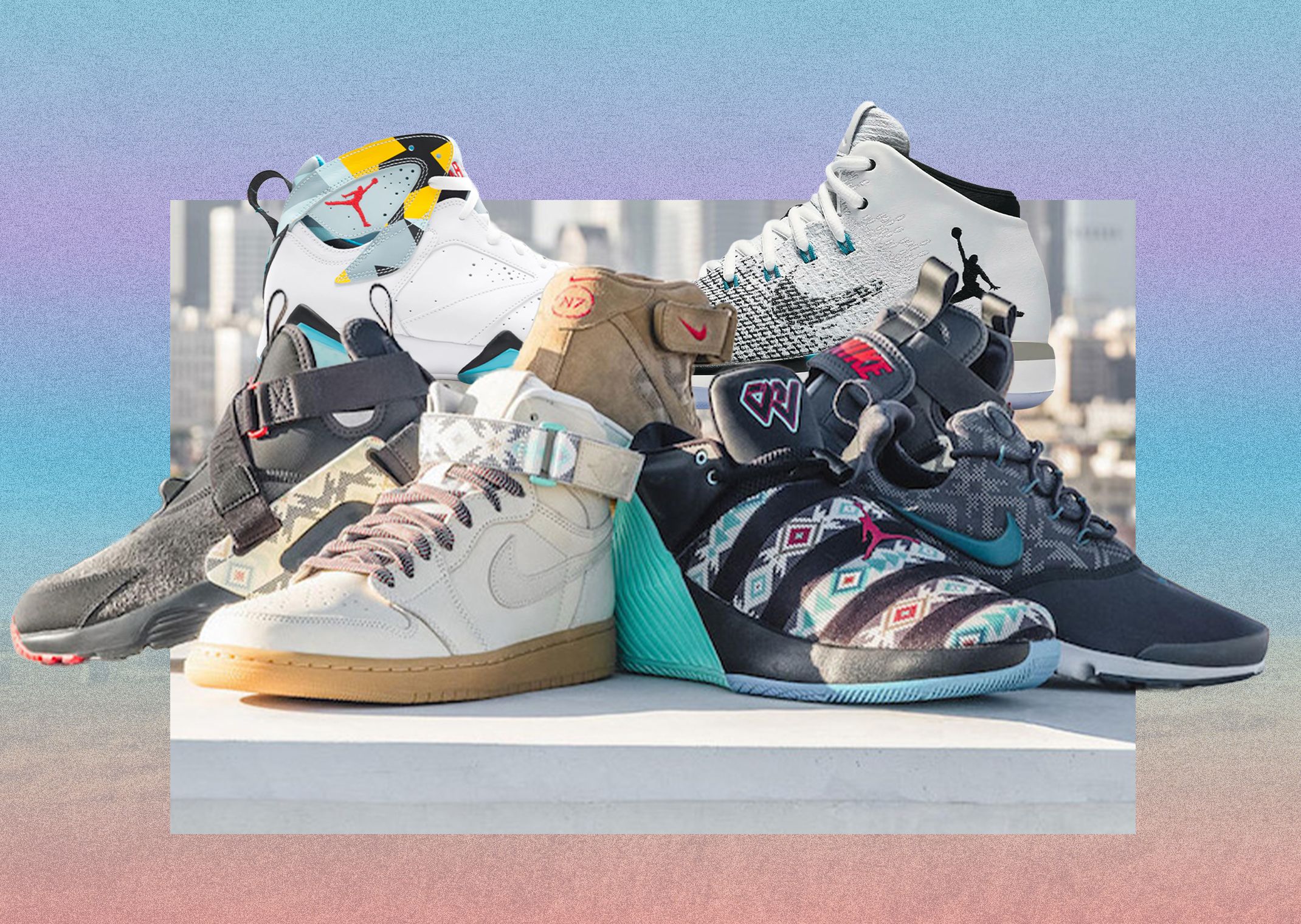
As Jordan Brand is looking to scale back its retro output in 2027, one initiative they might want to revisit is N7. Released over a decade ago, the 2015 Air Jordan 7 N7 featured many of the aesthetic choices that we saw from Nike’s side, including the use of the color turquoise. Other N7 releases around that included the Air Jordan 31 and the Jordan Super.Fly. Only a handful of Jordans would follow in the preceding years, including an Air Jordan 1 High Strap and an Air Jordan 8 that uses premium Pendleton Wool*.
*This is the part of the article where I mention that Pendleton is not owned by a Native American tribe. It is a privately-held family business started by Yorkshire-born Thomas Kay in the late 1800s. Pendleton’s slate, which includes blankets that are inspired by Indigenous art and culture, have become tradition and heirlooms among some Native communities. At the same time, ongoing criticisms about Pendleton include cultural appropriation, inadequate compensation for work done by Native designers, and controversies over products possibly misrepresented as being Native-made.
Adidas
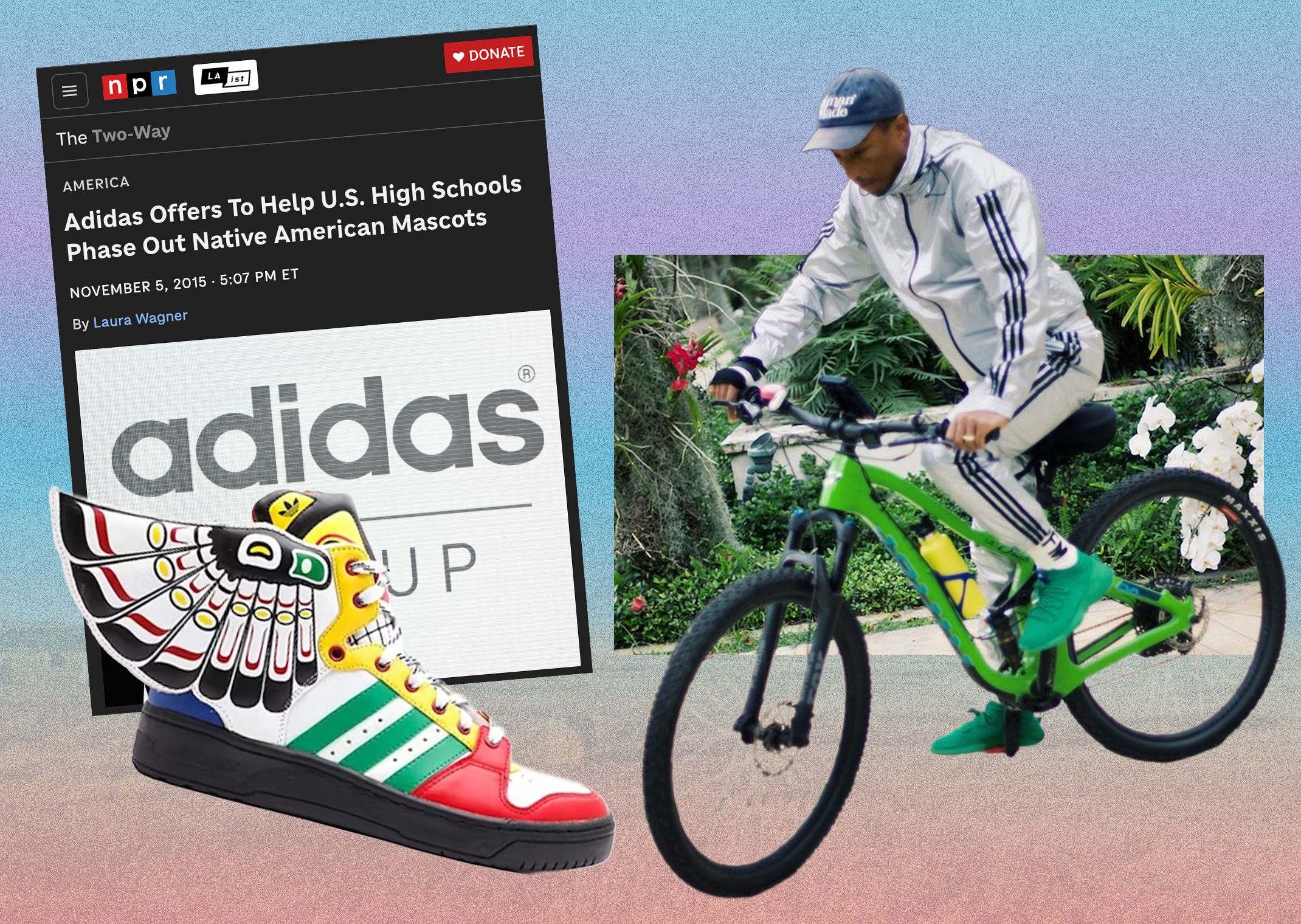
In 2015, adidas announced on the same day of a White House Tribal Nations Conference that they would offer free design resources and cover the cost of rebranding for schools that agreed to remove their offensive Native American mascots and imagery. While the brand never revealed how many schools accepted the offer, it was an interesting move for adidas. Back in 2013, the brand caused a stir among critics when frequent collaborator Jeremy Scott released a tracksuit and Eagle Wing sneaker in 2013 that appeared to have been inspired by totem poles from tribes located in the Pacific Northwest.
The Pharrell Williams x adidas Humanrace Sičhona was inspired by the artist’s connection to the Dakota tribe through his friendships with their members. The name was chosen in collaboration with Native artist Dee Jay Two Bears, with an assist from a Dakota Elder named Tim Mentz. Williams was also a prominent celebrity voice who expressed his support of the Dakota Access Pipeline protests back in 2016.
Adidas has also released sneakers tied to Indigenous Peoples culture for Native American Heritage Month in November. Some of the releases include a ZX1000 in 2020 that features art and patterns inspired by Native American works and a collaboration with Street Folk (a brand that is impossible to search for nowadays) on the Superstar and NMD.
Vans
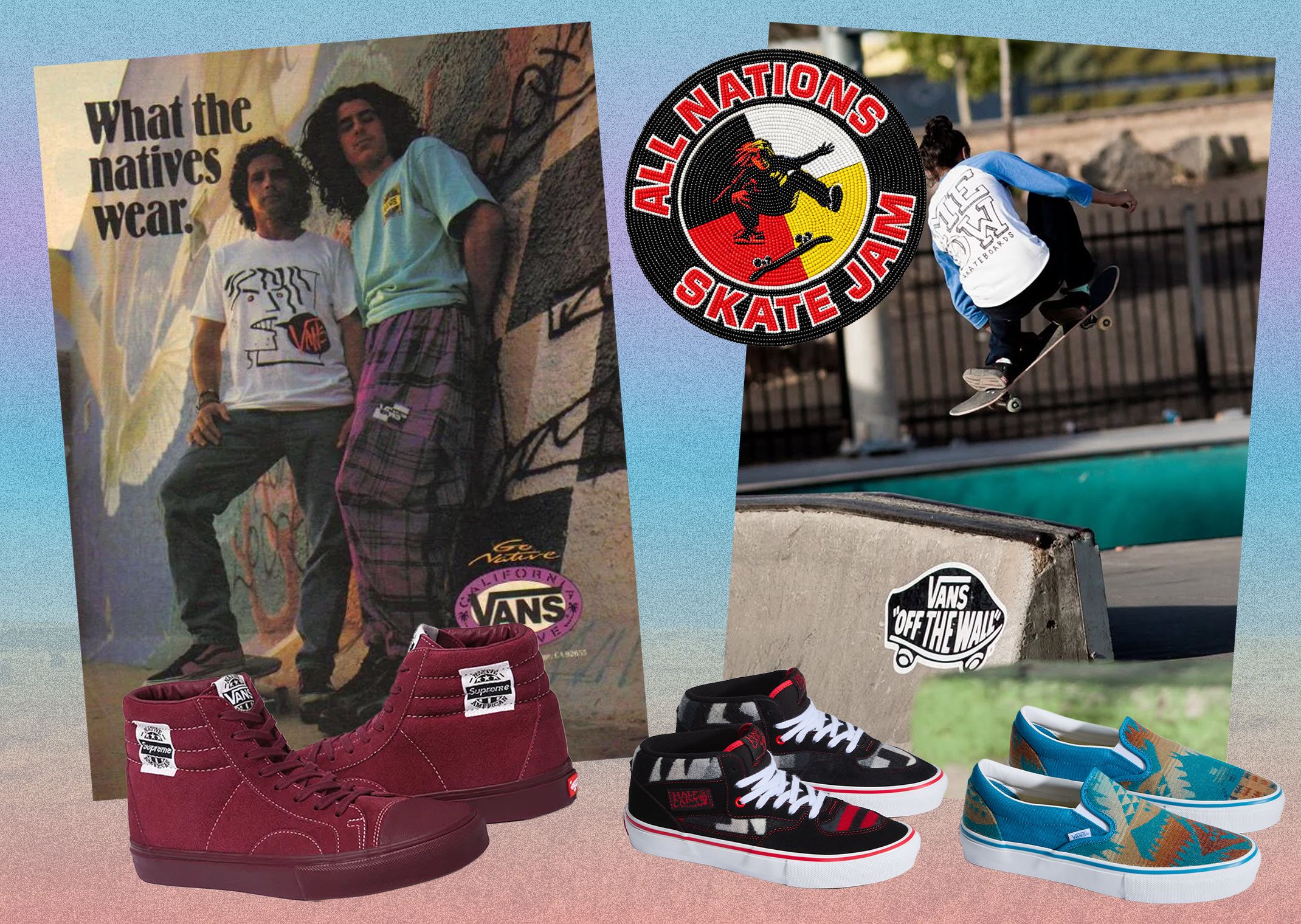
On one side of the spectrum, we’ve got Vans releasing a mid-top skate shoe in the 1980s called the Native American. There was even an ad in Thrasher Magazine with the tagline “What the Natives wear.” The Vans Native American returned in 2014 for a Supreme collaboration. Because, of course, Supreme would bring back a silhouette called the Native American.
On the other side is the All Nations Skate Jam, the largest event for Native American skaters in Albuquerque, New Mexico, that coincides with the Gathering of Nations. Vans is a longtime sponsor of the event and has released exclusive sneakers in collaboration with the event, including Old Skool sneakers laced with Pendleton Wool hand-selected by Steve Van Doren.
While not an official collaboration with Vans, although she has been featured on their socials, Standing Rock Lakota Sioux Tribe member Charlene Holy Bear went mainstream a few years back for her hand-beaded Vans. She was featured by news outlets like Vogue and The Today Show as demand for her custom work grew.
ANTA/Kyrie Irving
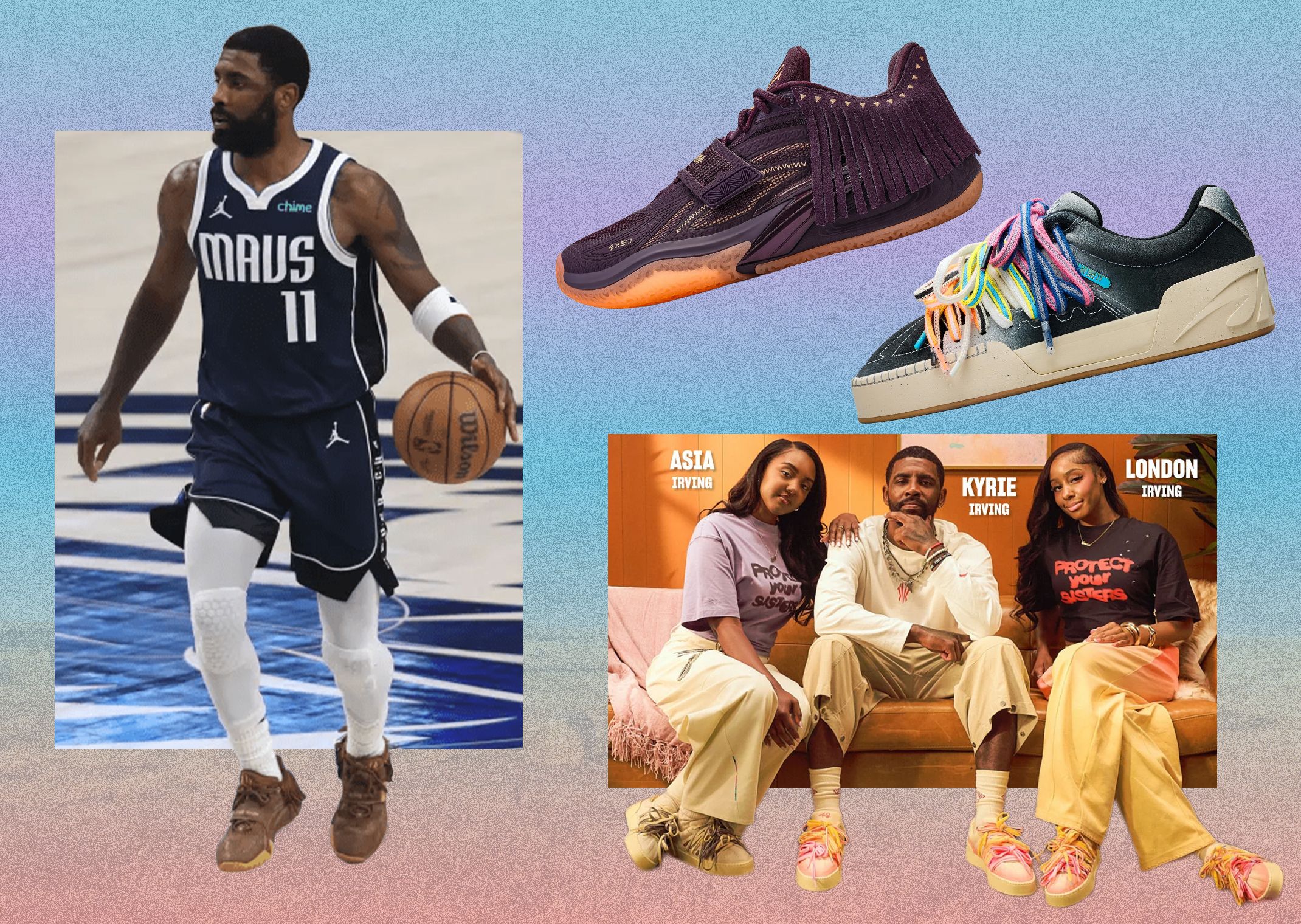
In 2018, Kyrie and his sister Asia Irving participated in a naming and homecoming ceremony with the Standing Rock Sioux Tribe in North Dakota. Irving would be given the name “Little Mountain,” or “Hélà” in the native language. Prior to the ceremony, Kyrie revealed his connection to Standing Rock in 2016 and expressed his support for the Dakota Access Pipeline protests through social media and through his money, donating $100,000 to the tribe. He also made a multi-million dollar donation to Standing Rock during the height of the pandemic, which included food, Nike gear, and masks.
While we got to see Kyrie join Kevin Durant in supporting Nike’s N7 initiative with his signature line, it was only a glimmer of what was to come when he signed with ANTA in 2023. One of the critical moments for the partnership was when he wore the ANTA Kai 1 in the Chief Hélà colorway, complete with tassels, during the Dallas Mavericks’ run to the NBA Finals in 2024. While the ANTA Kai line handles the performance basketball side, ANTA Hélà is the lifestyle component with classically-styled sneakers built for off-court.
From video game journalism to veteran of the sneaker blog era to podcasting about well, everything, Juan is smiling through it all and can't believe this is his life. His current hot take is that people are really underrating the Psyduck trading card market. Email: juan@soleretriever.com Instagram | Twitter | Bluesky | Threads : @ezyville