The Legend of Zelda Tier Rankings
PublishedQuick Facts
- The Legend of Zelda: Ocarina of Time remake releases on November 5
- Starting in 1986 in Japan, the Zelda games have been one of Nintendo’s most enduring franchises
- For 40 years, the Zelda games have been a source of joy for the fans and inspiration for developers around the world
- There are no bad Nintendo-developed games, but there are definitely ones that could be skipped in a playthrough of the series
This content may contain affiliate links. If you make a purchase through these links, we may earn a commission.
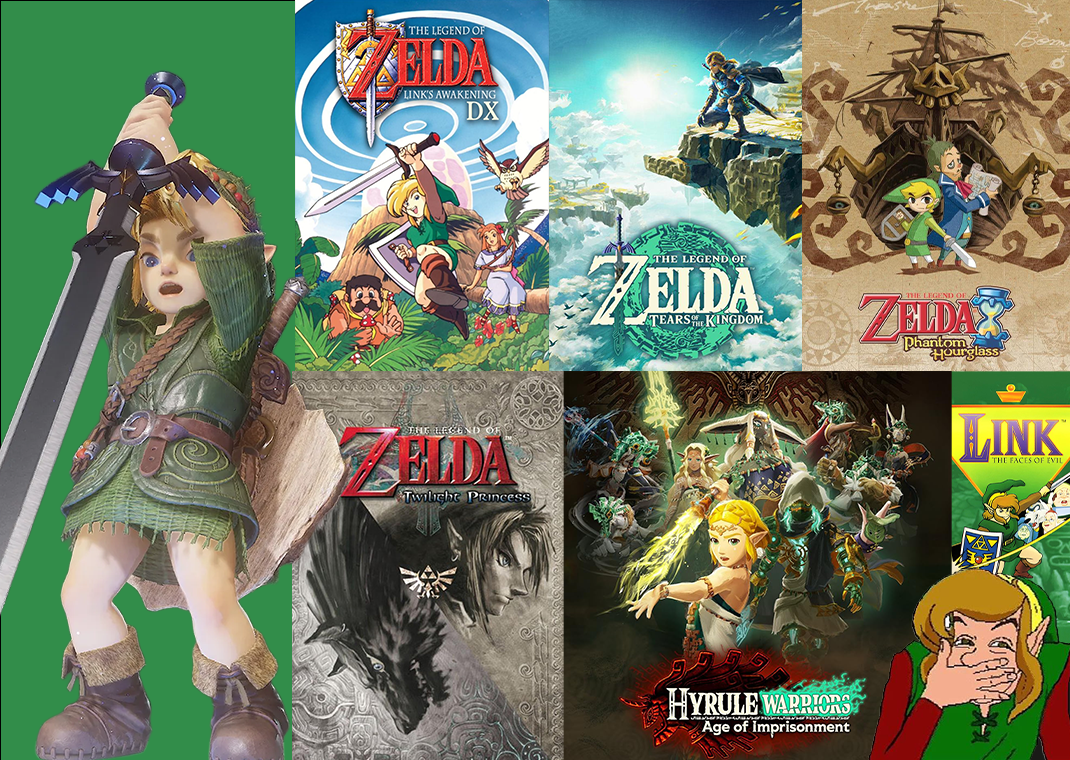
Come April 2027, the world will be treated to the first live-action movie adaptation of The Legend of Zelda. Comparing whatever director Wes Ball and producer (and Zelda co-creator) Shigeru Miyamoto have in store to 40 years of legendary video games would be unfair to this new journey that the franchise is undertaking. In other words, don’t expect the movie to crack any kind of ranking of the best Zeldas, just like you wouldn’t expect people to compare the Super Mario Galaxy Movie to the Super Mario Galaxy game. But you never know with the Zelda fandom sometimes, which is one of the most passionate (positive and negative) in all of gaming culture. It’s one that was built game by game, going all the way back to 1986 when the original Zelda debuted on the Japanese version of the NES, the Family Computer, and its Disk System add-on.
From the fantasy setting to one of the first examples of free roaming where the game could be completed in a non-linear fashion, the Zelda series has been leaving gamers in awe and inspiring generations of developers. Games like Okami, Elden Ring, and Darksiders have cribbed directly from Zelda, with Darksiders being maybe the most shameless of the bunch with its weapon selection and lock-on targeting. Even the 2D Zeldas have their “clones,” although calling Tunic as nothing more than a Zelda clone would be doing it a disservice, as it has its own level of complexity that not even the most obtuse of Zelda games have ever dared to breach. Every Zelda game has dropped knowledge for developers to soak up, with lessons of what to do and how to improve upon it. More importantly, it also taught them what not to do, like using badly animated cutscenes where Link talks.
Ranking the Zeldas is far from easy, but what makes it a little bit easier compared to other iconic franchises is that the duds are limited to one very specific era, and Nintendo barely had anything to do with it. While not every game is essential for someone to get a grasp on the franchise, there’s going to be plenty of homework for people who want to jump in after they’ve completed the new Ocarina of Time remake that is dropping on November 5.
CD-I Tier - Only Built For The Philips CD-I Games
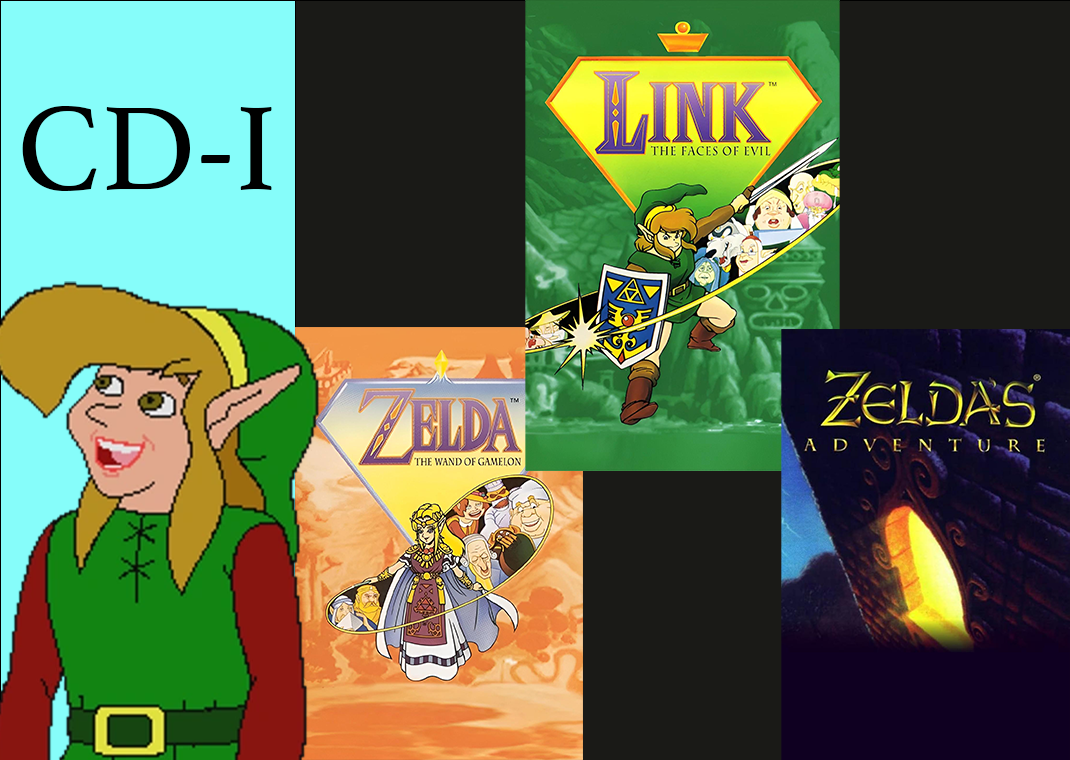
Games: Link: The Faces of Evil (Philips CD-I), Zelda: The Wand of Gamelon (Philips CD-I), Zelda’s Adventure (Philips CD-I)
The failed Nintendo and Sony CD-ROM partnership of the early 1990s that could have led to a Nintendo PlayStation competing with the Sega CD is the stuff of video game legend. But what has slowly been forgotten was the second attempt by Nintendo to jump into the CD-based add-on world with Philips. When that deal broke down after Nintendo saw the disastrous reception to the Sega CD, Philips was granted a make-good: the rights to develop a handful of games for their own multimedia gaming console called the CD-I. Needless to say, the three Zelda games developed by independent contractors for the CD-I were, in the words of Joe Budden, a two-pack of ass.
Hyrule Warriors - You See What They’re Going For Here
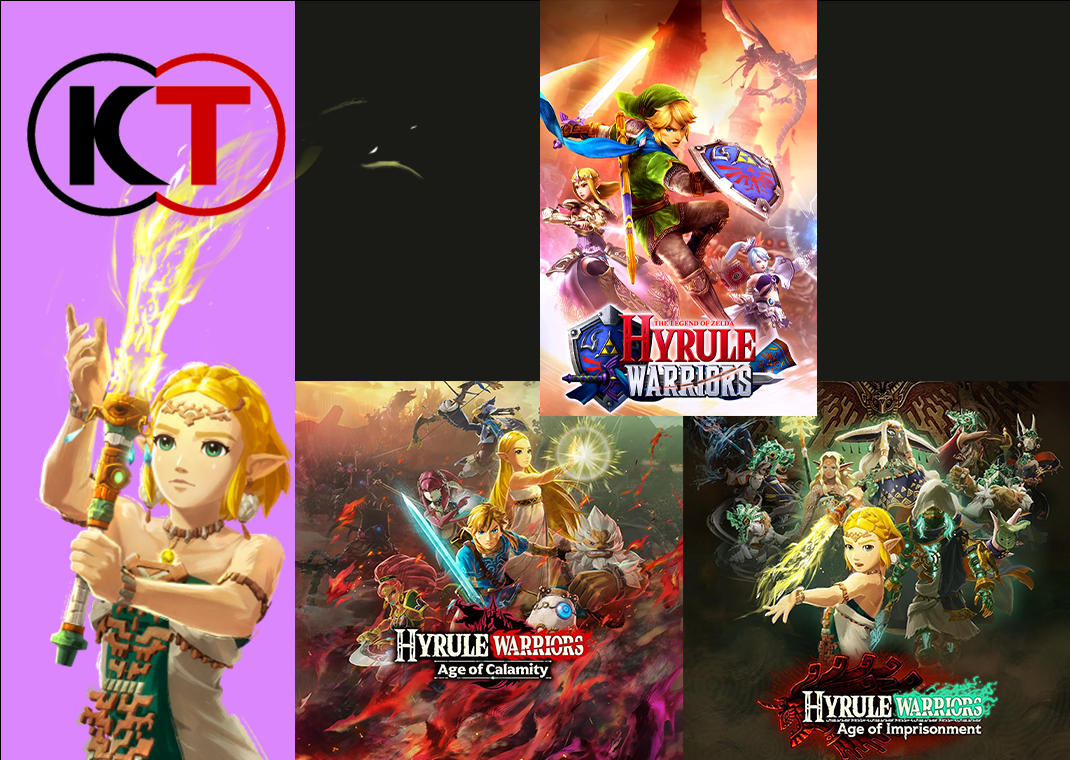
Games: Hyrule Warriors (Wii-U), Hyrule Warriors: Age of Calamity (Nintendo Switch), Hyrule Warriors: Age of Imprisonment (Nintendo Switch 2)
The Hyrule Warriors games might look like modern Zelda games, but their gameplay is entirely different. Developed by the Dynasty Warriors house over at Koei Tecmo, these spinoffs of mainline Zelda games pit the heroes of Hyrule against hundreds of grunts all at once in battles that thrive in full-screen chaos before dealing with a super strong and super big boss at the end of the level or map. Without the dungeons and puzzle-solving elements, it tends to feel like a Zelda game in name and look only, but the Hyrule Warriors games have earned their own dedicated fan base who love to see Link, Zelda, and a vast cast of characters just wreak havoc all over set pieces in familiar, but different, locales.
C-Tier - Needed An Editor
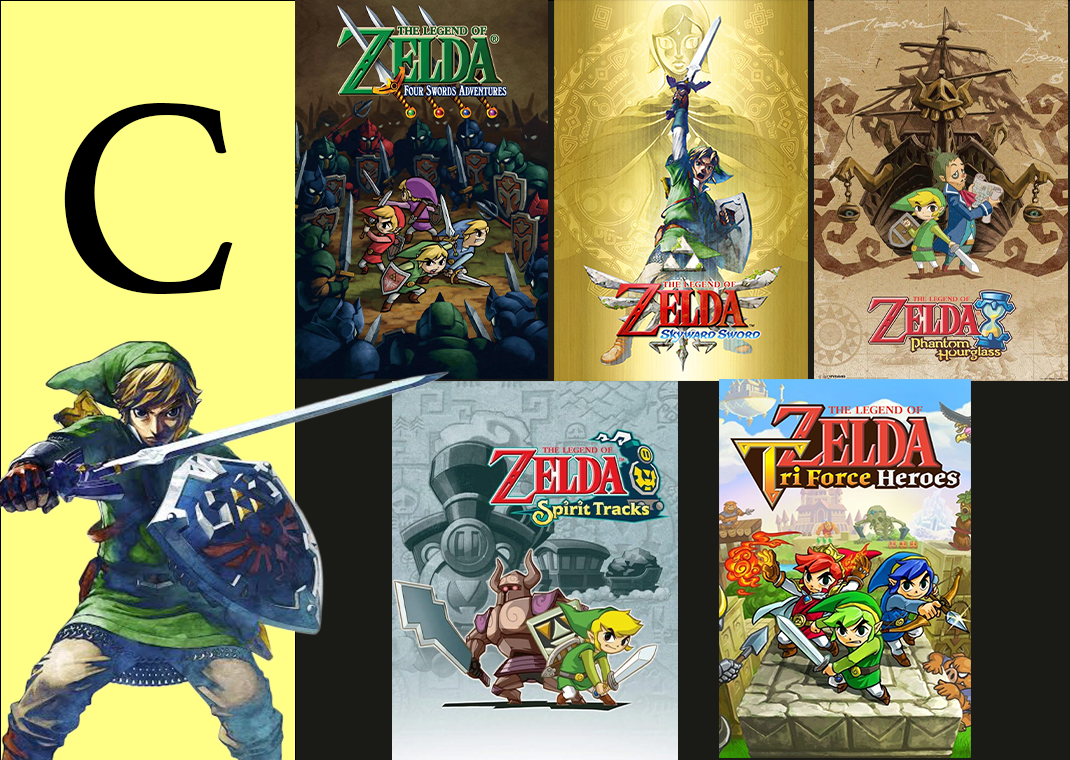
Games: The Legend of Zelda: Four Swords Adventures (GameCube), The Legend of Zelda: Phantom Hourglass (Nintendo DS), The Legend of Zelda: Spirit Tracks (Nintendo DS), The Legend of Zelda: Skyward Sword (Wii), The Legend of Zelda: Tri-Force Heroes (Nintendo 3DS)
Let’s get this out of the way first. Nintendo’s great accomplishment with the Zelda franchise is that none of the games are fundamentally bad. They have always had a baseline of quality where most people should be able to pick up and play a Zelda game without feeling too bogged down by overly complicated systems. This applies to veterans of the franchise or new players who maybe saw a meme on TikTok and wanted to hop on and see what the fuss is about. The games that occupy the C-Tier are not mechanically bad or unplayable, but they do wear out their welcome faster than the games we’ll be discussing later in the rankings.
Depending on your friend group, Four Swords Adventures was either the best and most unique gaming experience you’ve ever had, or it destroyed bonds that took years to recover from. The novelty of gathering four people together, each with their own Game Boy Advance plugged into the GameCube, is magic, especially when you are working in tandem to solve puzzles and take down bosses. But it could also break down if you have that one Link in purple who constantly picks up their buddies and throws them into pits or steals their Rupees.
Before trolling was a catch-all term for messing with others, the older generation called it griefing because the look on your friend’s face after you took their loot for the 93rd time was one of grief. Nintendo could have balanced the game to make it less prone to being ruined by shenanigans, but that makes it less interesting. Tri-Force Heroes, the 3DS successor to Four Swords, falls into the same traps as its predecessor but without any inventive mechanics to keep you going. The addition of online play (but without voice chat) also eliminates the need to get together with friends in the same room, blunting the social aspect that made Four Swords great and infuriating at the same time.
Despite the Nintendo DS being the breakaway success that, for all intents and purposes, killed the Game Boy, they did not always have the easiest time bringing over their marquee franchises to the dual-screen platform (hi, Metroid Prime Hunters). On two different occasions with Phantom Hourglass and Spirit Tracks, Nintendo implemented stylus-only controls, forcing movement and attacks to all happen on the touchscreen half of the DS. There are games like Elite Beat Agents and Planet Puzzle League that benefit greatly from the touchscreen controls, but it’s hard to argue that Nintendo was able to do the same for the Zelda series, at least for the titles that popped up on the DS.
So you might assume that Skyward Sword is in the C-Tier because of the Wii MotionPlus waggle-style control scheme? Not really, because I somehow developed an even lazier way of playing games using the Wii Remote (with MotionPlus) by holding the nunchuk by my chin and doing the bare minimum waggle when I have to swing the sword with some level of precision. The laziness was broken by having to recalibrate the remote from time to time, but those slights could be forgiven if the game was not a slog in its opening hours. Releasing towards the end of the Wii’s life cycle, we were hitting the end point of what the Wii was capable of, and it was reflected in the performance and gameplay.
B-Tier - A Triforce Short Of Legend Status
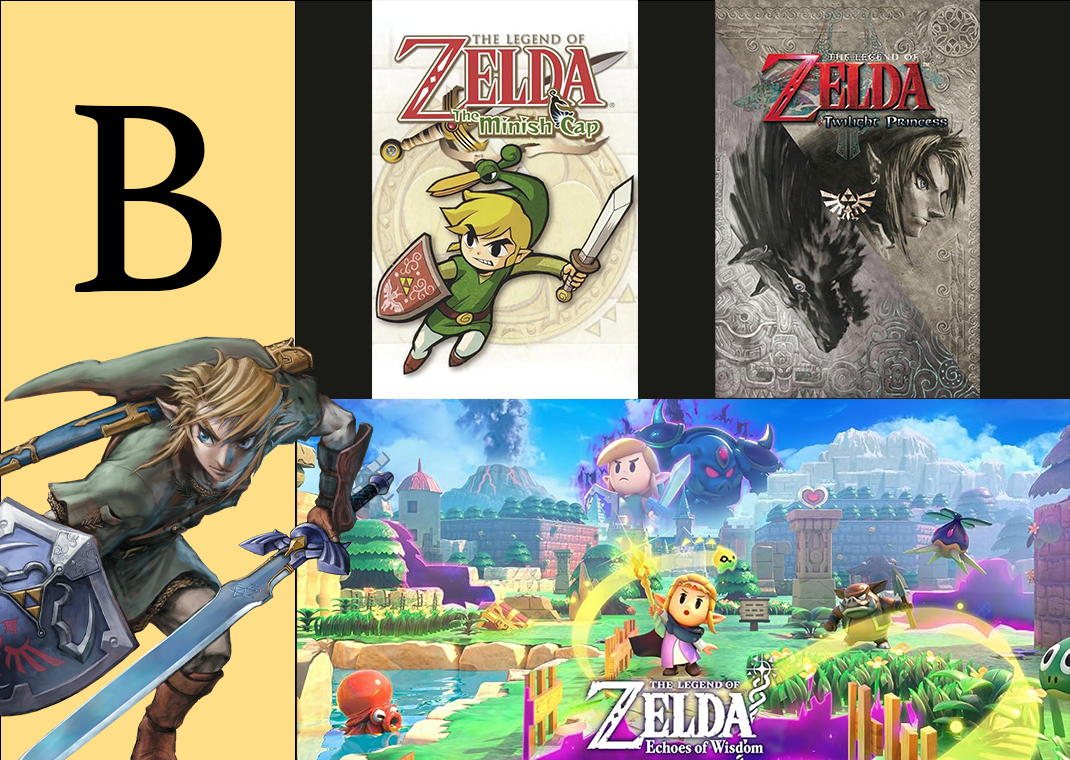
Games: The Legend of Zelda: The Minish Cap (Game Boy Advance), The Legend of Zelda: Twilight Princess (Wii), The Legend of Zelda: Echoes of Wisdom (Nintendo Switch)
Both Minish Cap and Echoes of Wisdom had the somewhat unenviable task of trying to follow well-received updates to two of the most beloved Zelda games ever made, A Link to the Past and Link’s Awakening. Minish Cap is a fun prequel to the Four Swords games (yes, all of these games do have an overarching timeline that connects them all), but the relative brevity of the game, which still manages to throw in monotonous grinding that can be frustrating for someone who enjoyed the banger-per-minute ratio of A Link to the Past. Echoes of Wisdom’s mechanics (and protagonist) are novel for Zelda games, but it also plays like a draft for something that could be very awesome should Nintendo decide to iterate on the echo mechanics.
The reputation of Twilight Princess ranges from all-time classic to mediocre entry that overstays its welcome. There's an unusually large number of people who cannot be normal about this game. A large part of the defense for Twilight Princess is that it was the game that was going to give us the mature Link that was teased in 2004 when the demo reel included the hilarious tagline “Blades Will Bleed” and “Shields Will Shatter.” Unfortunately for those diehards, the blades did not bleed in Twilight Princess or in any preceding Zelda game, although shields started to shatter, especially in Breath of the Wild. Like Skyward Sword, Twilight Princess takes several hours before what feels like the introduction of the game is over, and the pacing was not refined yet to the level of future entries. The Wii U remaster reduces some of the game’s more tedious parts, but it was never going to be enough to truly fix all of the problems.
A-Tier - System Sellers
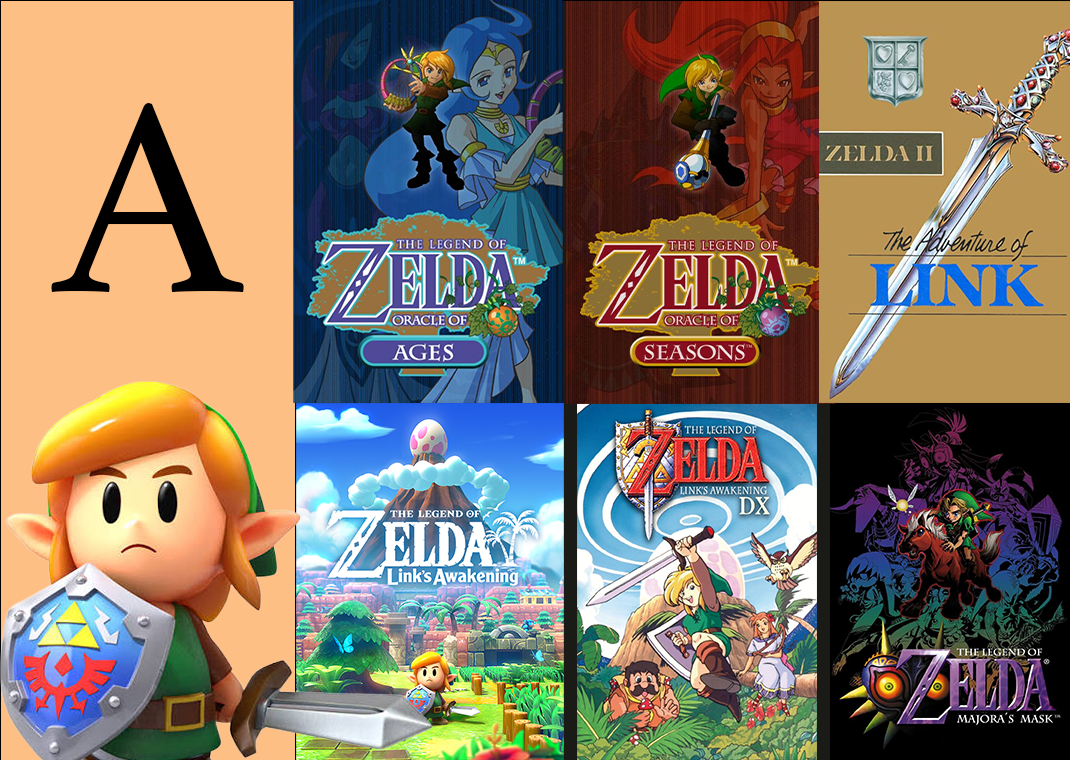
Games: The Legend of Zelda: Zelda II: The Adventure of Link (NES), Link’s Awakening (Game Boy), The Legend of Zelda: Majora’s Mask (Nintendo 64), The Legend of Zelda: Oracle of Seasons and Ages (Game Boy), The Legend of Zelda: Link’s Awakening (Nintendo Switch Remake)
Here’s a mildly warm take: The Adventure of Link might be the most skippable game in the Zelda franchise, but it should be rewarded for expanding upon the original by introducing new concepts and gameplay systems that not only carried over into later titles but also influenced non-Nintendo games. There’s a lot in The Adventure of Link that Nintendo has not revisited, and it’s arguable that Majora’s Mask falls into the same bucket of good games with interesting ideas that ultimately did not win over a majority of the fandom. As someone who was locked out of Majora’s Mask originally because they couldn’t convince their parents to buy Donkey Kong 64 that came with the necessary Expansion Pak, being able to play it on the GameCube as part of the Legend of Zelda Collector’s Edition was an eye-opener, even if the emulation was not up to the challenge back in the early 2000s.
There’s a not-so-small number of Zelda fans who ride or die with the take that Link’s Awakening is actually the best Zelda game in the series. It’s not unlike people who say that a self-contained bottle episode of their favorite TV show is the best in the series. With Link washed away on a previously unmentioned island that’s filled with an entirely different cast and a rogues' gallery that includes Goombas from the Mario series, it feels like a perfect snack-sized entry for the Game Boy handheld. The only thing that keeps both the Game Boy original and the Switch remake from cracking S-Rank is that the snack-sized length means a relatively quick ride that leaves people wanting more.
The “more” would arrive a few years later with the Flagship-developed (a sub-brand of Capcom) Oracle games for the Game Boy Color. It had some of the quirkiness of Link’s Awakening but ultimately felt more like a follow-up to the mainline Zelda games like the NES original and Link to the Past. Despite having different narratives, the idea of treating the Oracle games like they were dual Pokémon releases did feel a little excessive and could have been easily worked as just one cartridge.
S-Tier - Most Crowded Rushmore Ever
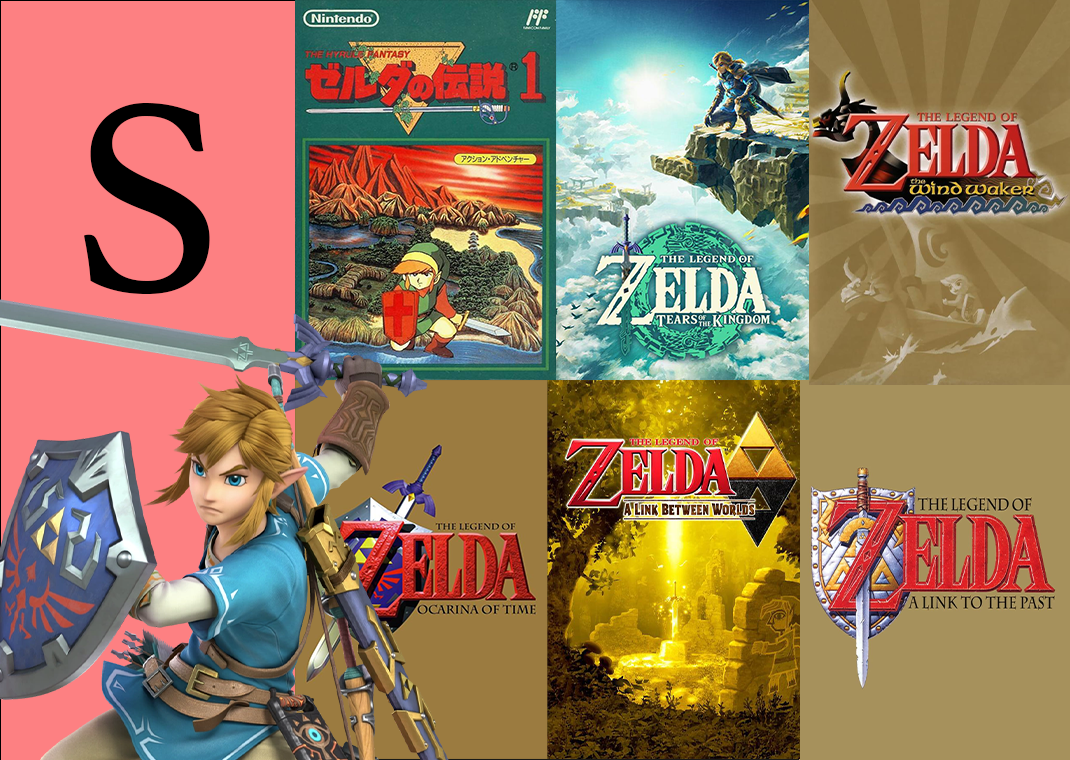
Games: The Legend of Zelda (NES), The Legend of Zelda: A Link To The Past (Super NES/Game Boy Advance), The Legend of Zelda: Ocarina of Time (Nintendo 64), The Legend of Zelda: The Wind Waker (GameCube), The Legend of Zelda: A Link Between Worlds (Nintendo 3DS), The Legend of Zelda: Breath of the Wild (Nintendo Switch), The Legend of Zelda: Tears of the Kingdom (Nintendo Switch)
No skips when it comes to the S-Tier of Zelda games. Any gamer who was not around for the evolution from the proto-open world of the original Zelda on the NES to defeating Ganon within an hour in Breath of the Wild would do themselves a favor by going through all of the games in the S-Tier over the course of a few months. Look, I’m being generous with the months part, not because Breath of the Wild and Tears of the Kingdom are that huge, but because it might take you that long to explore the open seas of Wind Waker.
That’s a little facetious, of course, but that was the biggest drawback to Wind Waker, not the cel-shaded art style that caused a significant number of nerds to break down in tears because their beloved Link looked less like Duke Nukem in a Peter Pan outfit and more like someone who could hang on the Going Merry. What did not get any pushback was the gameplay itself, as Wind Waker built upon the foundation that was set by the original Ocarina of Time. The Nintendo 64 controller might be the most divisive in Nintendo’s history, but there’s no denying that the use of the Z-button to lock on to an enemy during combat influenced all future games with 3D battles.
As the first 3D Zelda game, Ocarina also gave us the first popular example of the “pan out into a vast open world where you could roam free” trope. It looks so barren and lifeless compared to today’s game, but that was life-changing stuff in that era. Upon completing the tutorial area and the first dungeon in Koikri Forest, Link makes his way to Hyrule Field and realizes that he is now on his own and free to go where he wants. Eventually, you realize that there are guardrails and you have to actually play the dungeons and temples in a particular order to progress, but the illusion of freedom was mind-blowing back in the late 90s. What was a little surprising is that every time they did it after Ocarina, it worked. It would take them nearly 20 years in Breath of the Wild and again in Tears of the Kingdom before they could actually give us an adventure that gave us the day to exist in a world and spend dozens of hours or days or months before finally getting around to finish the story, even though Zelda was basically waiting the whole time.
As an old head with a fondness for the 2D Zeldas, the pinnacle of the series can be found on the Super NES and Nintendo 3DS. A Link to the Past is about as perfect a video game as could be achieved in that era, as every single mechanic, story beat, and musical cue works together to create a masterpiece. Elements that were introduced in Link to the Past, from the dual worlds to the Master Sword and block puzzles that infuriate at first glance but induce euphoria upon completion, have gone on to become staples of the franchise.
Despite numerous 2D Zeldas that were released between Link to the Past and Link Between Worlds, the 3DS gem feels like the true successor from a pacing perspective. It even introduces a clever mechanic that lets you rent out weapons initially, so the Rupees that eventually feel pointless in other Zelda games retain their importance for far longer until you get the option to buy them permanently. Even the 3D part of the 3DS gives the game a different vibe from any other entry, as the diorama aspect of the 2D Zeldas takes on an elevated feel.

From video game journalism to veteran of the sneaker blog era to podcasting about well, everything, Juan is smiling through it all and can't believe this is his life. His current hot take is that people are really underrating the Psyduck trading card market. Email: juan@soleretriever.com Instagram | Twitter | Bluesky | Threads : @ezyville