The Definitive Guide to Sports Cards Terminology
PublishedQuick Facts
- Trading cards are experiencing a wave of popularity unlike any it’s ever experienced
- New collectors are joining the hobby every day as cards evolve into assets
- Like any subculture, knowing the terminology is very important to appear credible
- Knowing the basic card terms with some context will help a great deal
This content may contain affiliate links. If you make a purchase through these links, we may earn a commission.
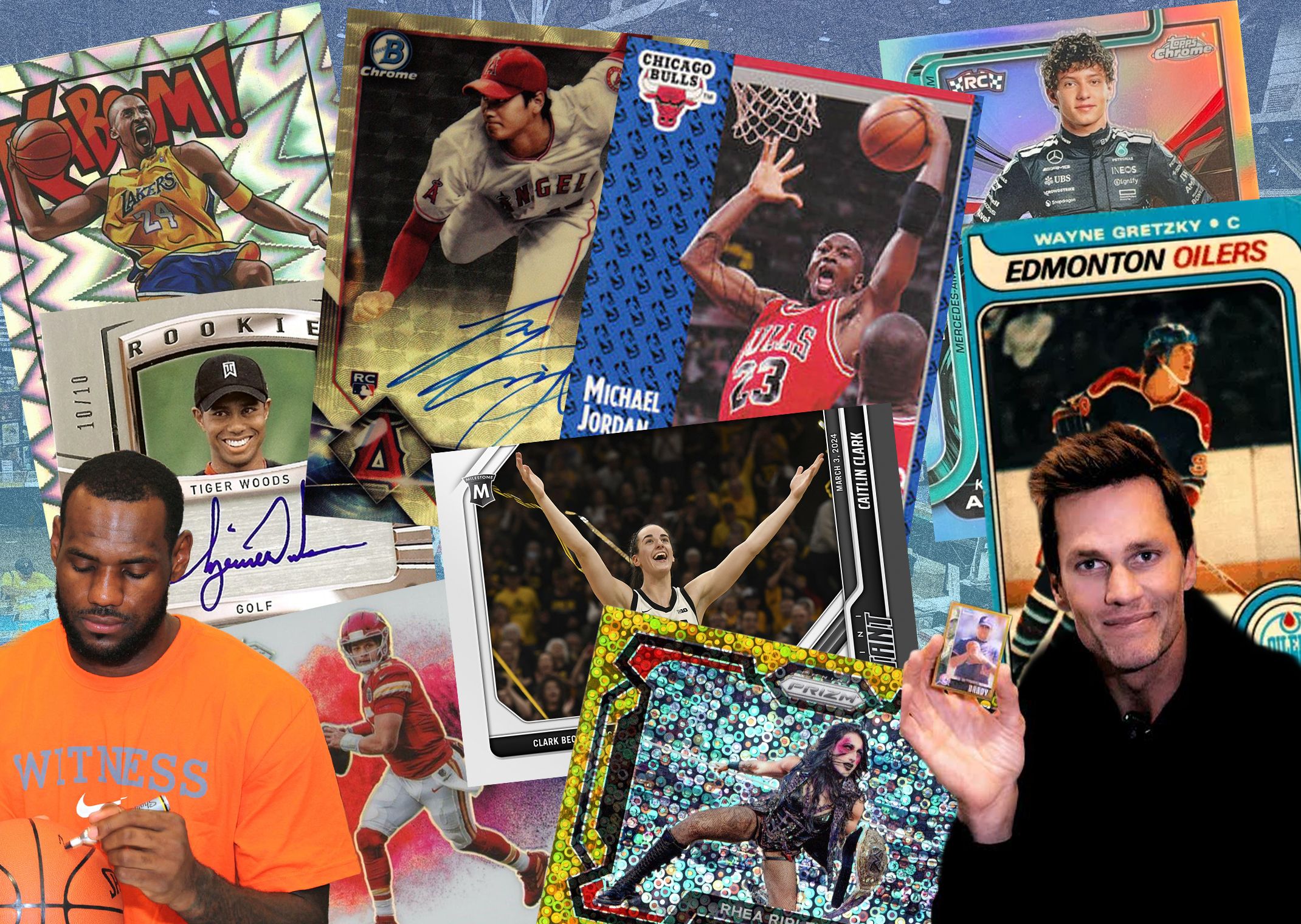
The proliferation of trading cards into the mainstream has been an interesting journey. From a niche hobby that had very limited appeal to influencers and billionaires joining in on the wave, there has never been more attention and money being poured into cardboard. The optimistic view about all of this is that companies will not only cover the usual suspects of the NBA, MLB, Disney, Marvel, Star Wars, DC, and other instantly recognizable properties, but they will branch out and find the next big thing. No one wants to miss out on the next Pokémon or One Piece
And with so much energy, attention, and money being invested into trading cards, it can be confusing for newcomers who have to deal with a brand-new nomenclature that they have to learn. As a public service, because we are very cool people who actually are into the hobby beyond just trying to score internet points and cashing in, here’s a quick cheat sheet for new collectors to get started in the world of sports cards.
The Basics
Base Cards
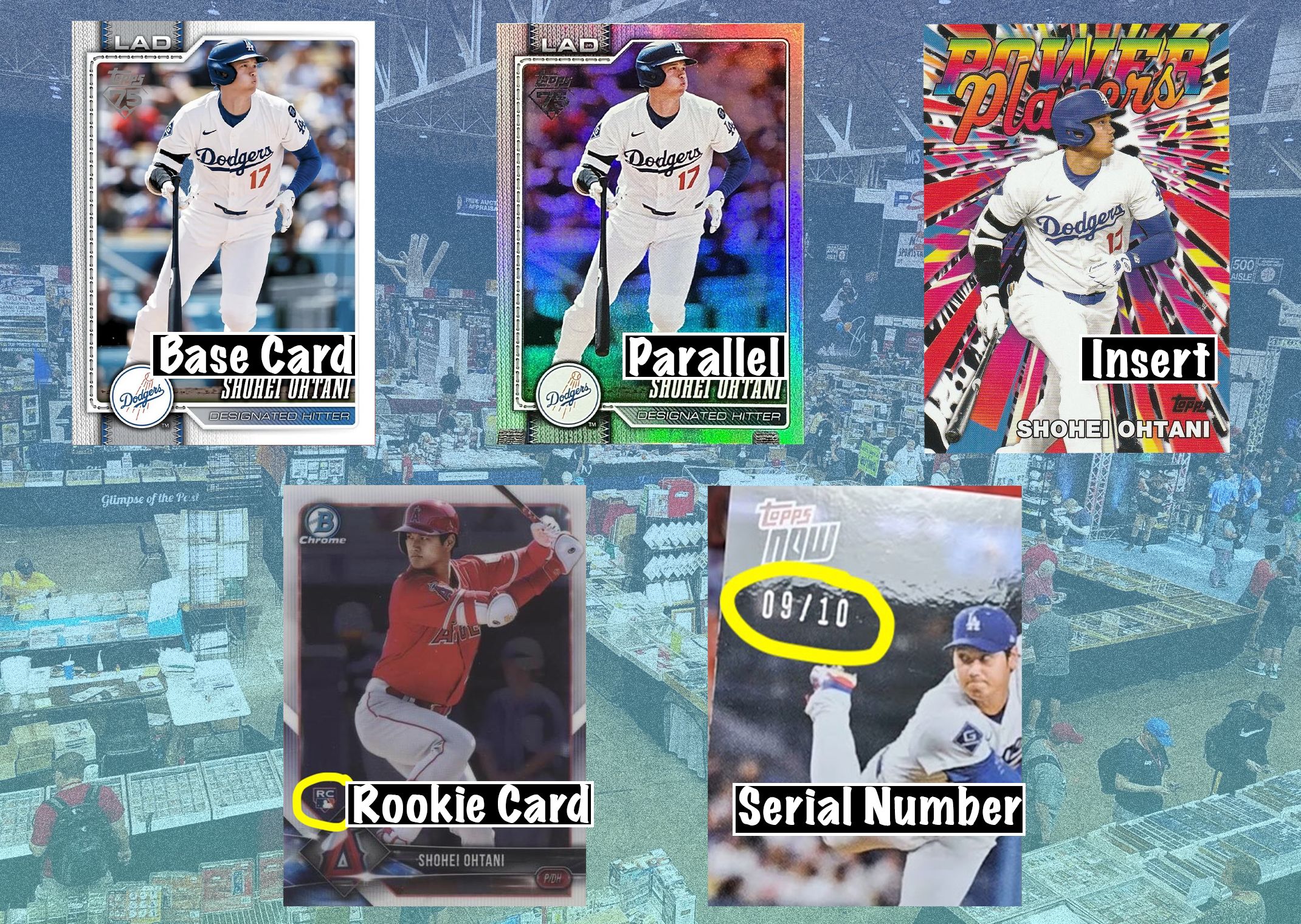
Also known as commons, these are the cards that comprise the main set of any product. A standard modern trading card pack will often consist of one or two special cards, while the rest are base cards. Today’s base cards do not command premium prices, but the most iconic vintage trading cards of all-time were all easy to pull commons.
Rookie Cards
The first card in every base set from a professional athlete’s first season. Recently brands have started to include rookie card logos to help clarify for collectors what they are holding.
Inserts
Inserts are uncommon cards that add variety in design and energy to a trading card product. Found at varying rates of rarity, like one per pack or one per box or even rarer, these cards typically feature star players and top rookies in themed sets that highlight their skills or pay homage to a classic design from the past. Inserts also use autographs, pieces of memorabilia, or special printing technology to separate their look from base cards.
Parallel
Cards that use the same design but with printing differences that alter the final look of the card. Examples include changing the color of the foil used on a player’s name, adding a rainbow-like effect to the card’s background, or embedding a relic piece or autograph. Parallels vary in rarity from the thousands to one-of-a-kind variants.
Serial Number
Oftentimes paired up with parallels, cards with a serial number are a reflection of that card’s rarity and exactly how many specific copies were made. Serial numbered cards can range from the thousands to the single digits and finally to one-of-ones.
Chase Cards
Short Print (SP)/Super Short Print (SSP)/Case Hit
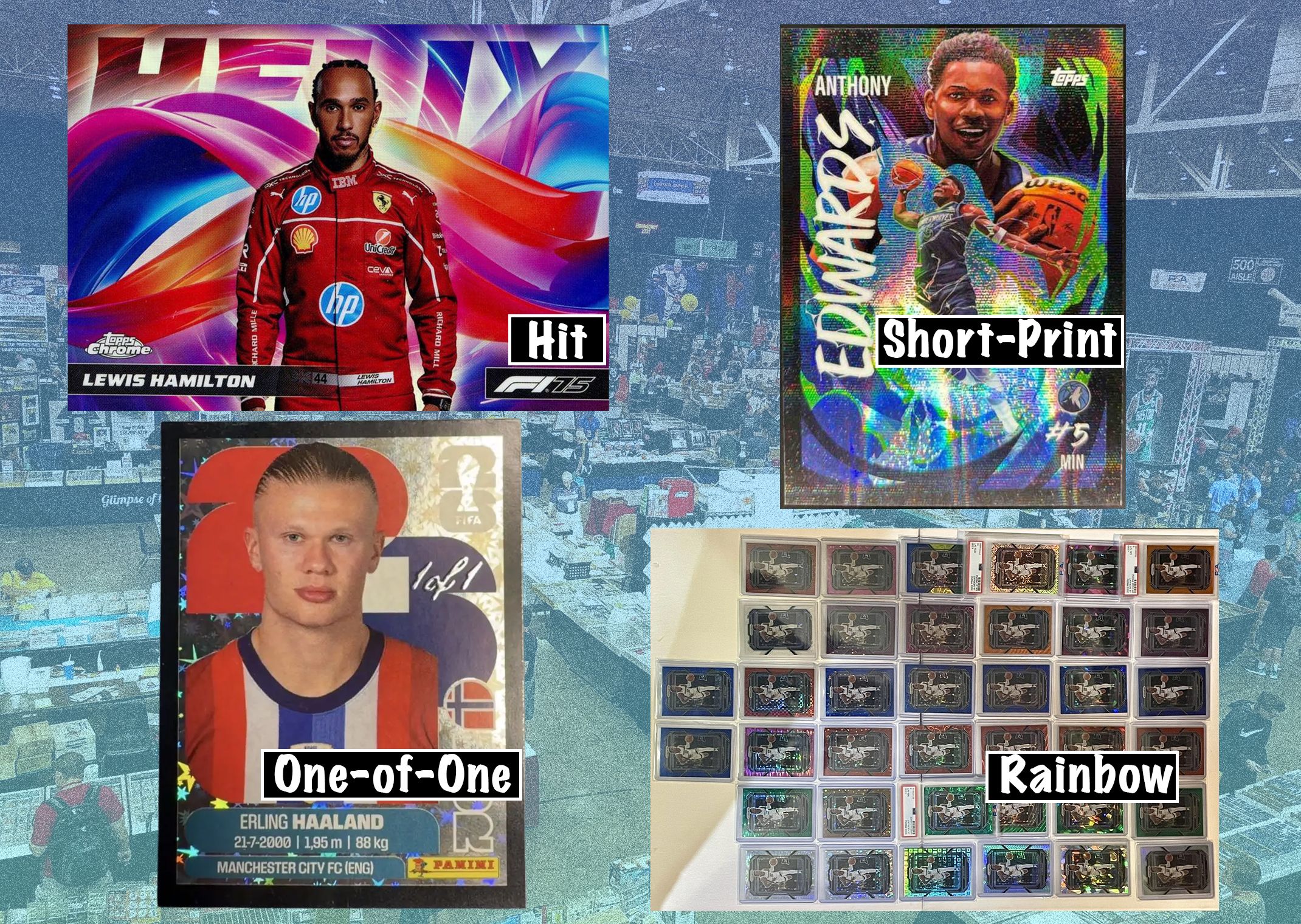
Very rare cards that can be found anywhere from one per box to one per multiple cases. Unlike serial-numbered cards, where collectors can easily figure out how rare a card is, Short Prints usually do not include serial numbers, leaving their rarity a mystery for collectors to figure out.
One-of-One
While self-explanatory, there are two types of one-of-ones. The more “common” one-of-ones are one-of-a-kind parallel versions of cards that have a bigger print run. The other one-of-one is what some consider to be the true type of one-of-one card because only one card with that design was ever made.
Rainbow
Cards with parallel versions will have anywhere between 5 and 50 variations, and the term "rainbow" refers to a complete set that runs the gamut from the base card to the specifically marked one-of-one card.
Hit/Nuke/Mojo/Booms/Megas
The cards that collectors spend hundreds, if not thousands, of dollars looking for. Hits are the catch-all term for desirable base cards, inserts, and parallels. Most trading card products advertise how many hits they have per box on average. Depending on their rarity, the cards might be called a box hit or a case hit.
The Minutiae
Redemption
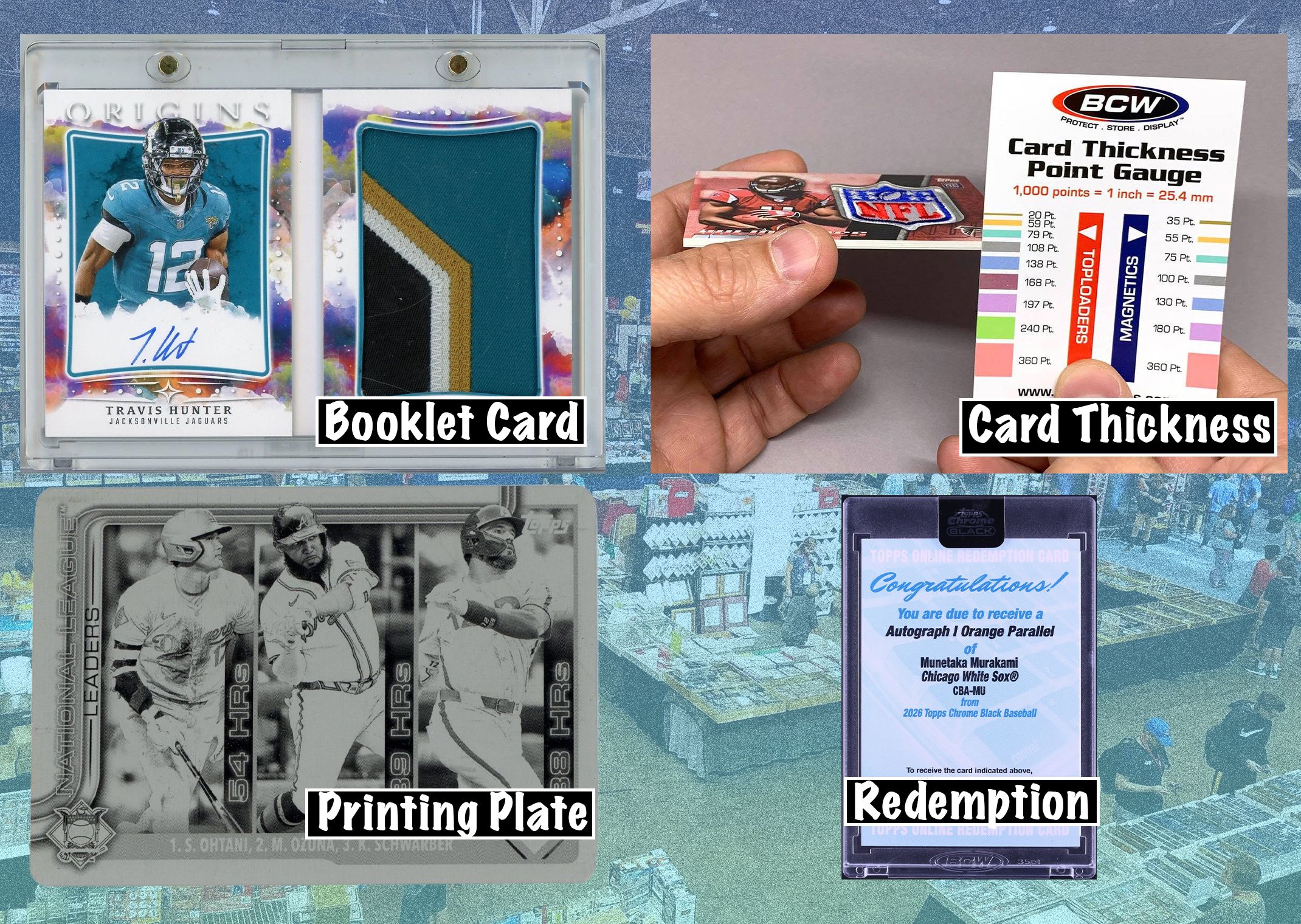
A ticket for a card that could not be included in the final boxed product. Redemptions are usually for autographed cards that were not signed on time to be inserted into boxes, but they can also be used for oversized cards that would be easily detected in a pack. The redemptions will either contain a QR code or a unique identifier in order to claim the card.
Card Stock/Point
Refers to the thickness of the card. Standard cards are usually 35pt in thickness, while thicker cards and cards with relics can range from 55pt to 360pt.
Booklet Cards
Multiple cards that are attached and folded onto each other to achieve a booklet-style look.
Printing Plate
Actual printing press plates used to print the cards are inserted into packs, sometimes in groups of 4 to represent the process, or individually to add value to a particular product.
The Vessels
Pack
It’s where everything begins. Once viewed as a trivial pursuit, nowadays a sealed pack and the contents inside hold the difference between life-changing money and feeling like you burned a hole through your wallet.
Hanger Box
A larger pack that is housed inside a small box that is literally hanging on a store peg.
Box
The sealed container that holds the packs with the cards. A box can have anywhere between 36 wrappers and a single pack.
Case
The sealed container that holds the boxes, which contain the packs with the cards. Cases usually have between 16 to four boxes inside, with super premium products having even fewer.
Hobby Box
Boxes that are made exclusively for trading card shops. Will often contain inserts and hits not found in other product types.
Blaster
Mini-boxes found at retailers like Target, Wal-Mart, Best Buy, Dick’s Sporting Goods, and even Ace Hardware (no, seriously). Previously, purchases of blaster boxes were locked out of the biggest hits as companies reserved them for hobby boxes. As an incentive to make people buy everything, blaster now have their own exclusive inserts and parallels while also giving them a chance to pull some of the biggest cards like one-of-ones.
Mega Box
A middle ground between blaster and hobby boxes, the retail-exclusive mega box has around double the content of blasters and has better odds of pulling desirable hits while also sporting its own exclusive inserts and parallels.
Break
Breaks are the opening of trading card products. Typically the breaks are done by the collectors themselves, but thanks to social media and various platforms that break products themselves, people can also participate in themed breaks where they either bid on or pay a certain amount of money for every card that features a particular player, team, or insert.
Breakers Delight
An exclusive version of the hobby box that features only one pack is filled with all of the hits plus a few extras that are not in a regular hobby box.
Autographed Cards
On-Card Auto
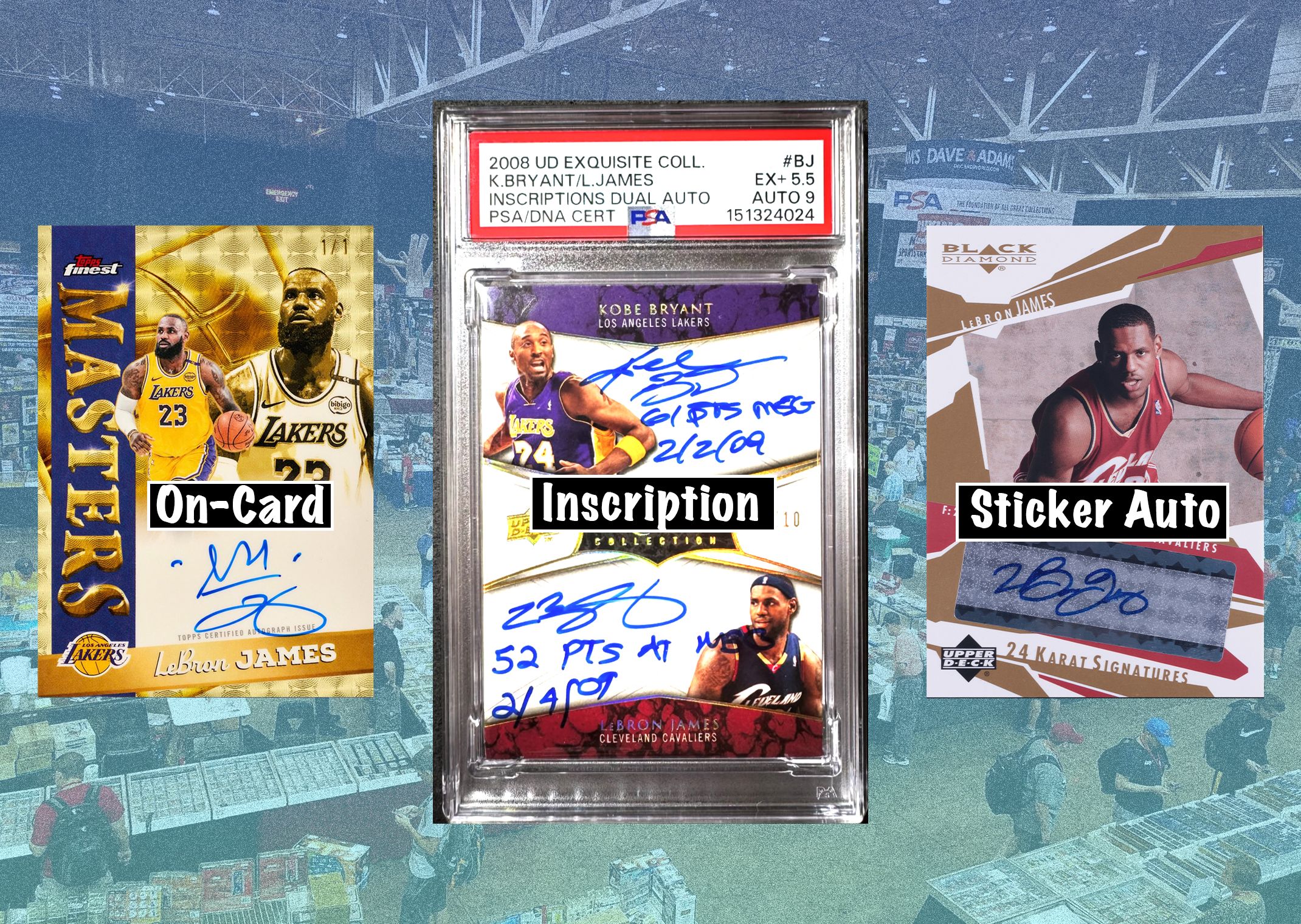
Also referred to as hard-signed autographs, these are cards that were actually touched and signed by the subject in person.
Sticker Auto
Sheets of stickers that are signed by the subject and then placed onto a card at a later time. Hobbyists' views on stickers range from calling them a necessary evil to a bane on the entire concept.
Inscription
Autograph cards that include a handwritten message from the signer. It could be a themed set where players added their nicknames or highlight special moments in their career. Cards with signatures and inscription are valued higher than regular autograph cards, especially if the inscription is an instantly recognizable phrase or moment.
Cards With Memorabilia
Relic
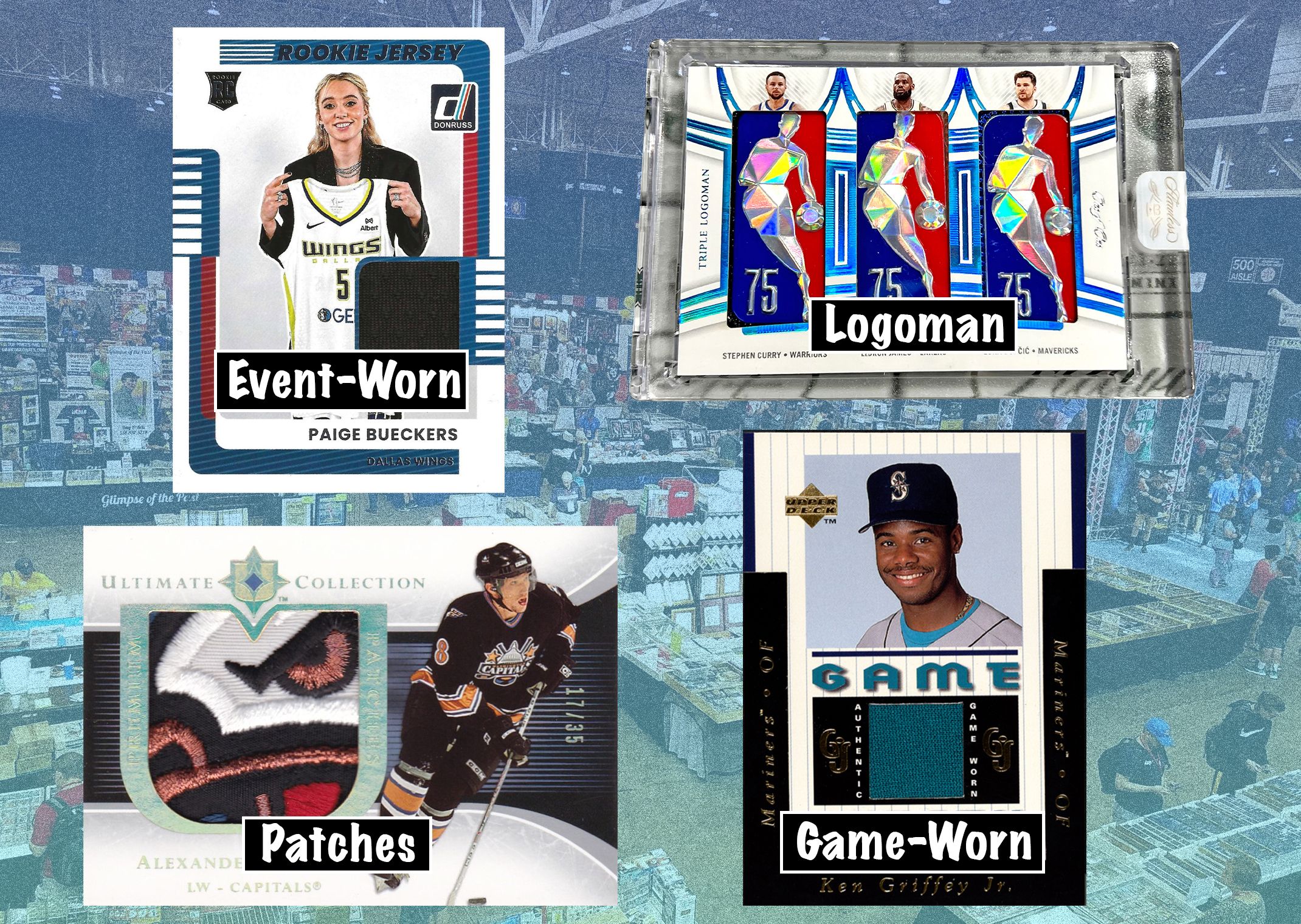
A piece of memorabilia embedded on the card. Examples of memorabilia that have been used on cards before include pieces of jersey, shorts, shoes, equipment, accessories, playing surfaces, and other items that were used by the athlete in some form.
Game-Worn/Game-Used
A relic piece that was actually used by the featured athlete in an official game.
Player-Worn/Event-Worn
A relic piece that was used by the featured athlete, but the “used” can range from being worn for a few seconds during a photoshoot to participating in a league-sanctioned event that is not an official game.
Jersey Card
The embedded relic is a one-color piece that is taken from the jersey that has no design or special stitching.
Patch Card
The embedded relic is taken from parts of the jersey that include the team’s logo, the player’s name, or jersey number.
Logoman
Cards that include a game-worn patch featuring the sports’ logo.
Manufactured Patch
An embedded memorabilia piece that the athlete has never seen, used, or touched, but is designed similarly to actual game-worn material.
Protecting Your Cards
Sleeve
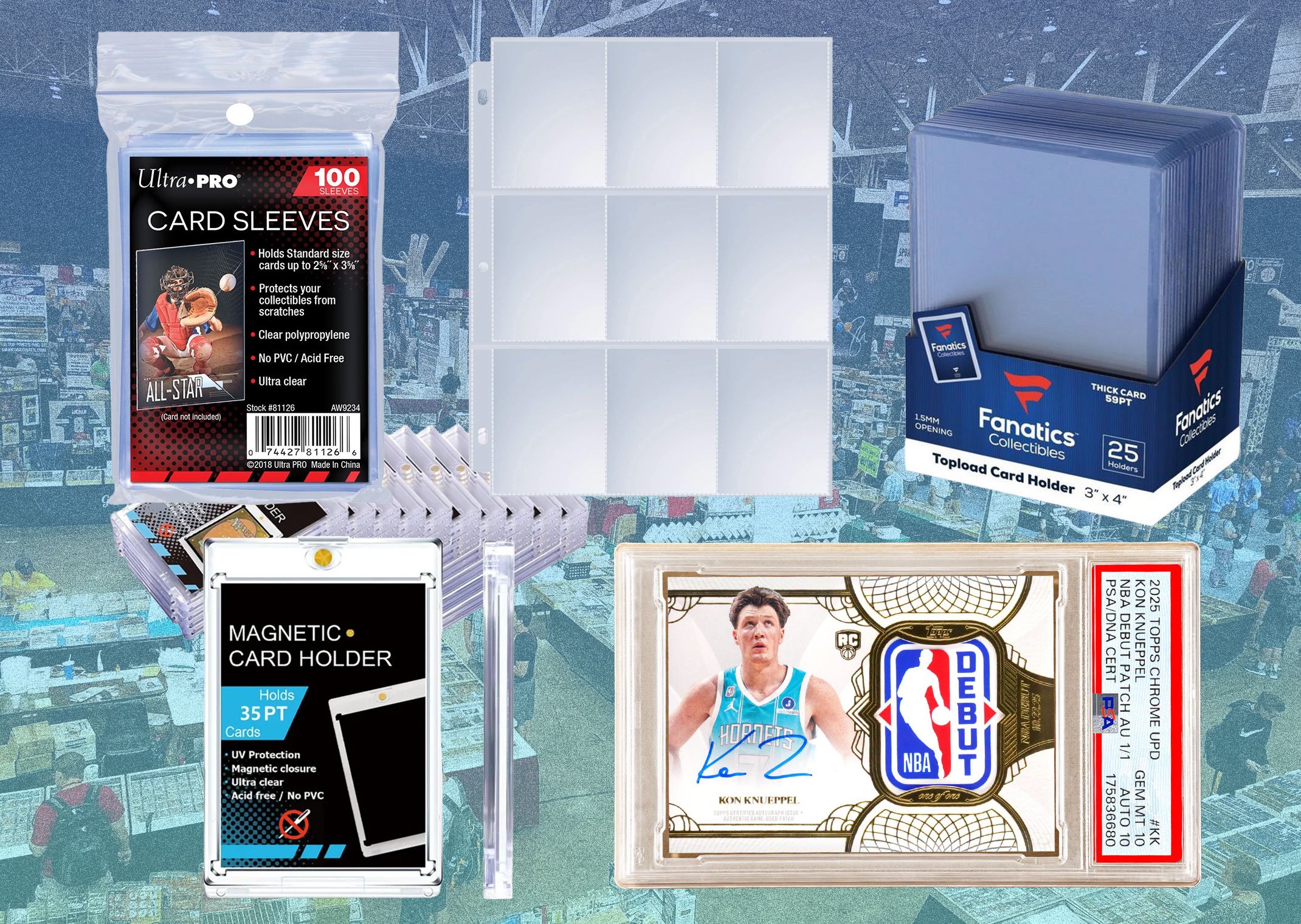
A thin piece of plastic that keeps the card safe from dust and moisture. It will not keep a card from bending, however.
Top Loader
Used in tandem with sleeves, top loaders offer an added layer of protection that prevents a card from bending or fraying by accident. Still relatively easy to bend if someone really wants to be a jerk about it.
Pages
The tried and true method of putting your cards on a 3x3 page to be placed in a binder for display.
One-Touch/Mag
Slabs of durable and clear plastic that are attached by magnets that keep the card locked into a secure holder. The additional steps that someone would have to take to open the case and damage the card mean that they are just plain mean and should not be someone you associate with.
Graded
A card that has been examined by a third party for its condition and authenticity. The card is then encased in a sealed holder and returned with a label that states the grade. Different companies have different quirks to grading, but the primary purposes of grading include cataloging in a collection, preserving historical pieces, or selling them for maximum profit when a high grade is achieved.
Know Your Shinys
Chrome/Prizm/Allure
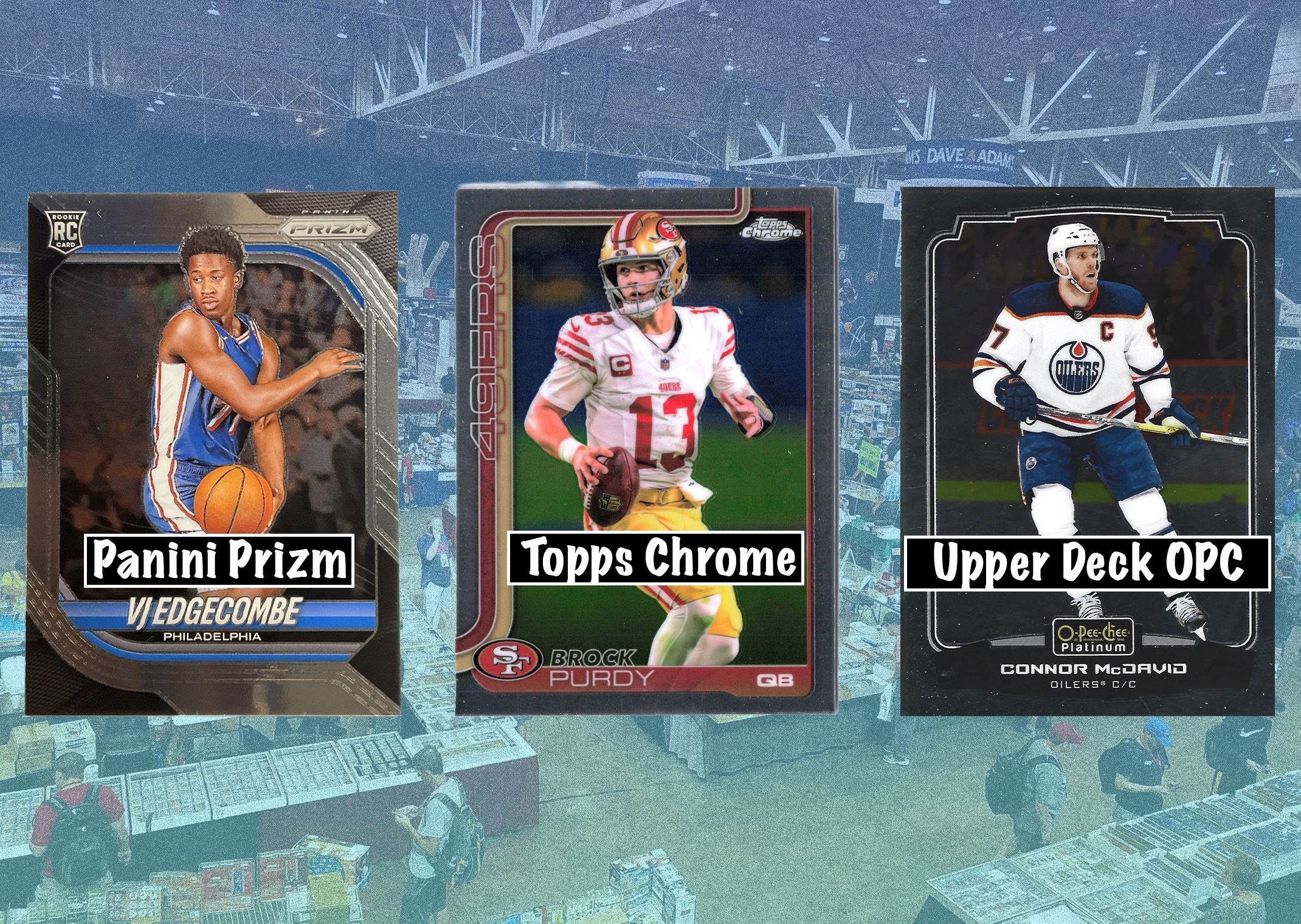
Cards that use a chromium finish to give them a metallic look. Topps uses them for products like Chrome, Finest, Pristine, and other offshoots. Panini features them in Prizm, Optic, Spectra, and many more.
Refractor/Prizm/Rainbow
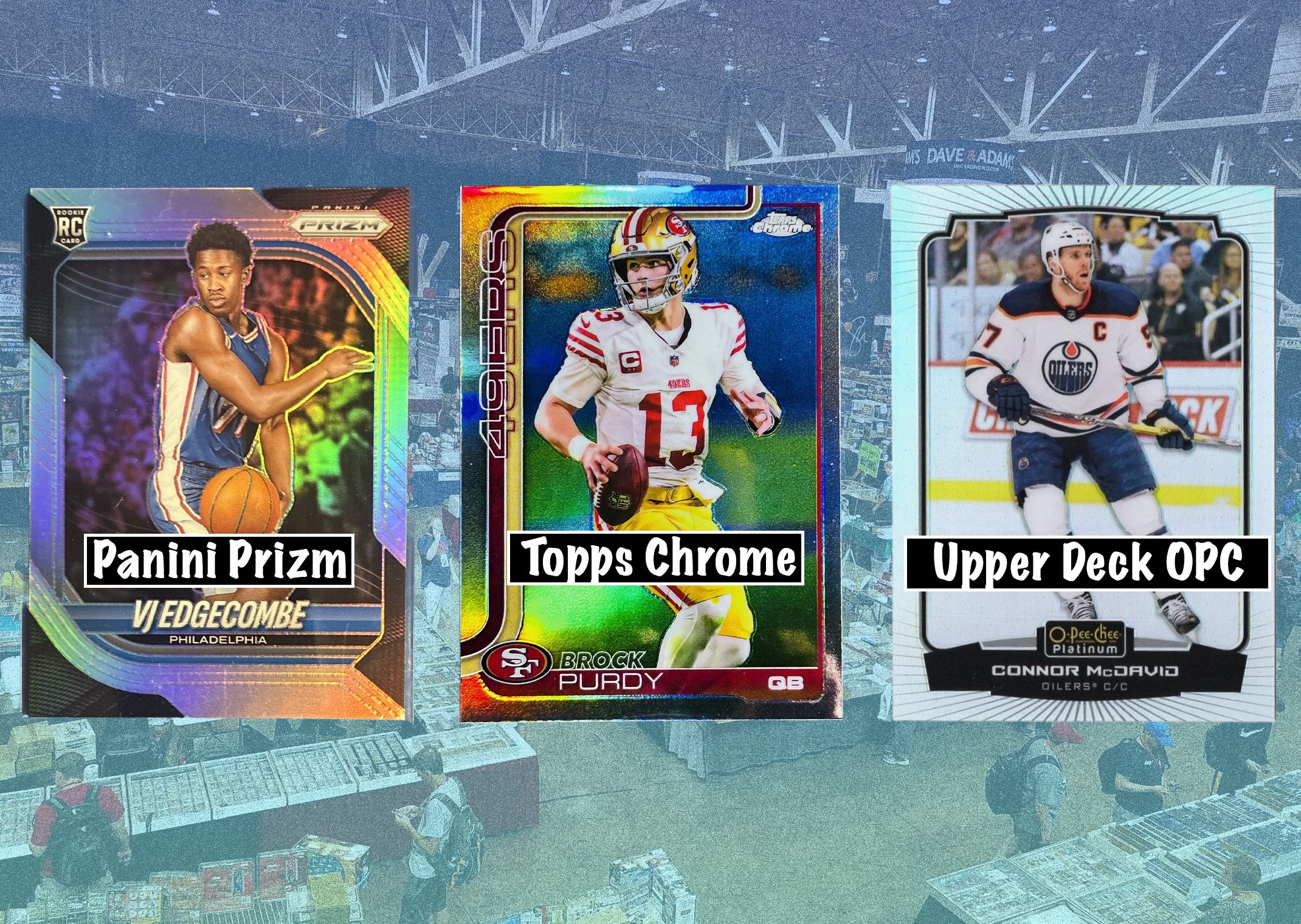
A type of parallel for cards with a chrome finish that produces a rainbow effect when the card is held to the light at different angles. Beginning with Topps in 1993 with their Finest Baseball set, refractors have become the de facto parallels that all collectors chase and value above all other types. Panini America adopted chrome cards and refractor parallels with 2012-13 Panini Prizm Basketball, but with the critical difference of calling their refractors prizms. Upper Deck, which ironically was the first company to produce baseball cards with a chrome finish in 1991 in sample form, would release its first chrome set with 2019-20 Upper Deck Allure Hockey.
Superfractor/Gold Vinyl/Gold Treasures
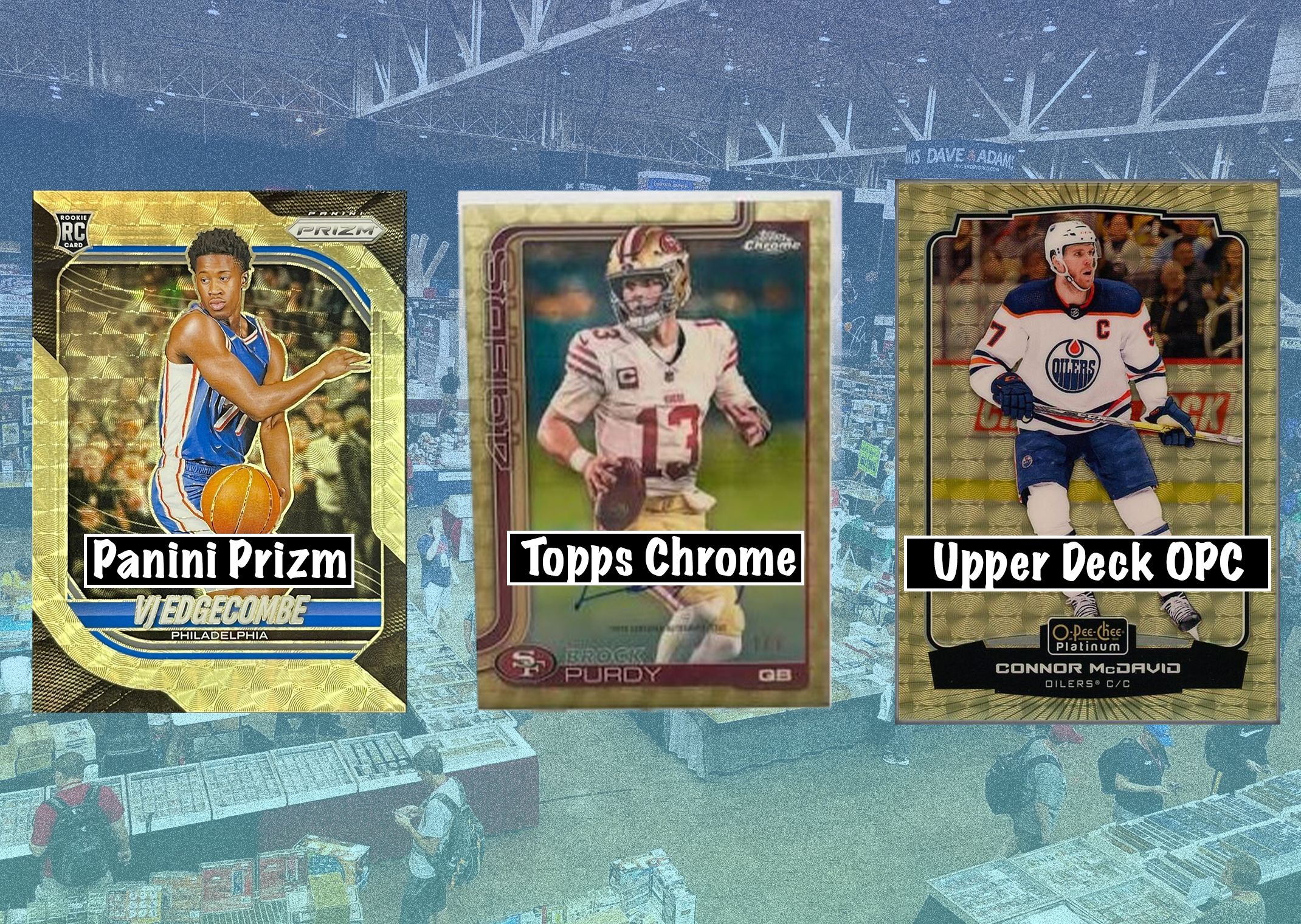
Introduced in 2005 in a variety of Topps products that used chrome printing, the one-of-a-kind Superfractor parallel was an instant hit with its unique circular pattern that produces a golden shine that was unlike anything in the market during that time. Topps would quickly adopt Superfractors as the one-of-one prize for all of their chromium card products, and it’s a practice that continues to this day.
When Panini America introduced its Prizm brand in the 2010s, Superfractors would soon follow, except they were called Gold Vinyls as the circular pattern of the golden cards did resemble the grooves of a vinyl record. Print runs of Panini Gold Vinyl cards would vary, as Prizm made five copies of each card while Spectra made them one-of-ones. Upper Deck’s Superfractors are called Golden Treasures and can be found on their Allure and Platinum products.
Panini-Specific Hits/Nukes
Kaboom!
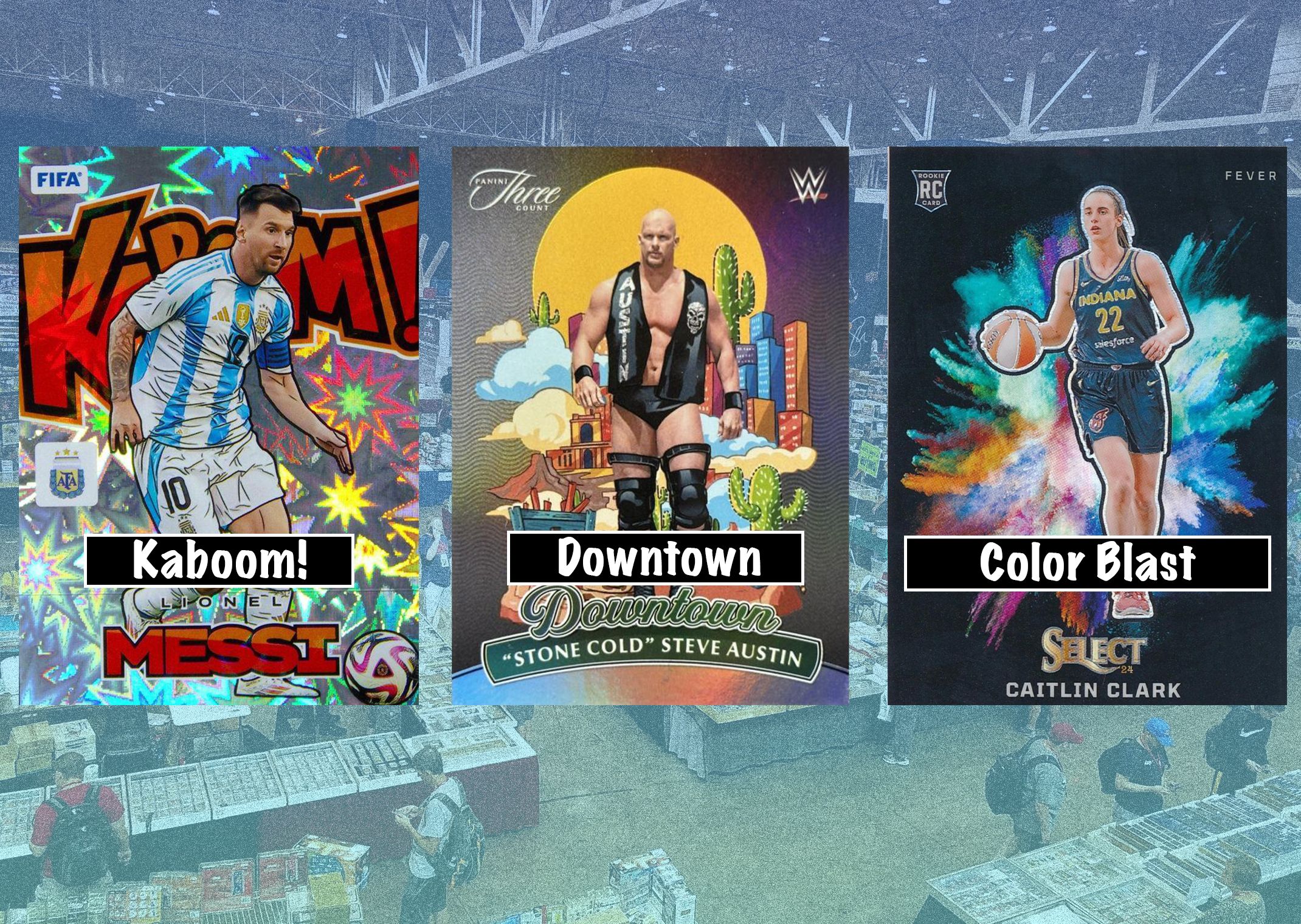
A Panini short-printed insert card, Kaboom’s legacy began in 2013-14 Panini Innovation Basketball featuring animated caricatures of Kobe Bryant, Dirk Nowitzki, and LeBron James seemingly jumping out of the card against an explosive background that looks straight out of a Looney Tunes cartoon. The novelty of the art, combined with their rarity, made them favorites among collectors looking for something outside of the typical action shot behind some nice graphics in the background type of cards.
Downtown
Unlike most insert sets that feature the different players set against a similar background on the card, Downtown creates unique art with landmarks that signify the city they play for. Downtown cards were also ultra rare, especially after they became a mainstay of Panini’s ultra premium One and One product, where each box only contained two encased cards total. Panini would later release an Uptown variant, but it would fail to appeal to the collectors in the same way.
Color Blast
Similar to Kabooms, Color Blast cards feature players bursting out of the card and into your hand while a puff of rainbow-colored smoke trails them. Initially a part of Panini Prizm and Panini Spectra sets, Color Blasts would soon be used by Panini’s various other cards with chrome backing, including Obsidian, Draft Picks Prizm, Phoenix, and many more.
Topps-Specific Hits/Nukes
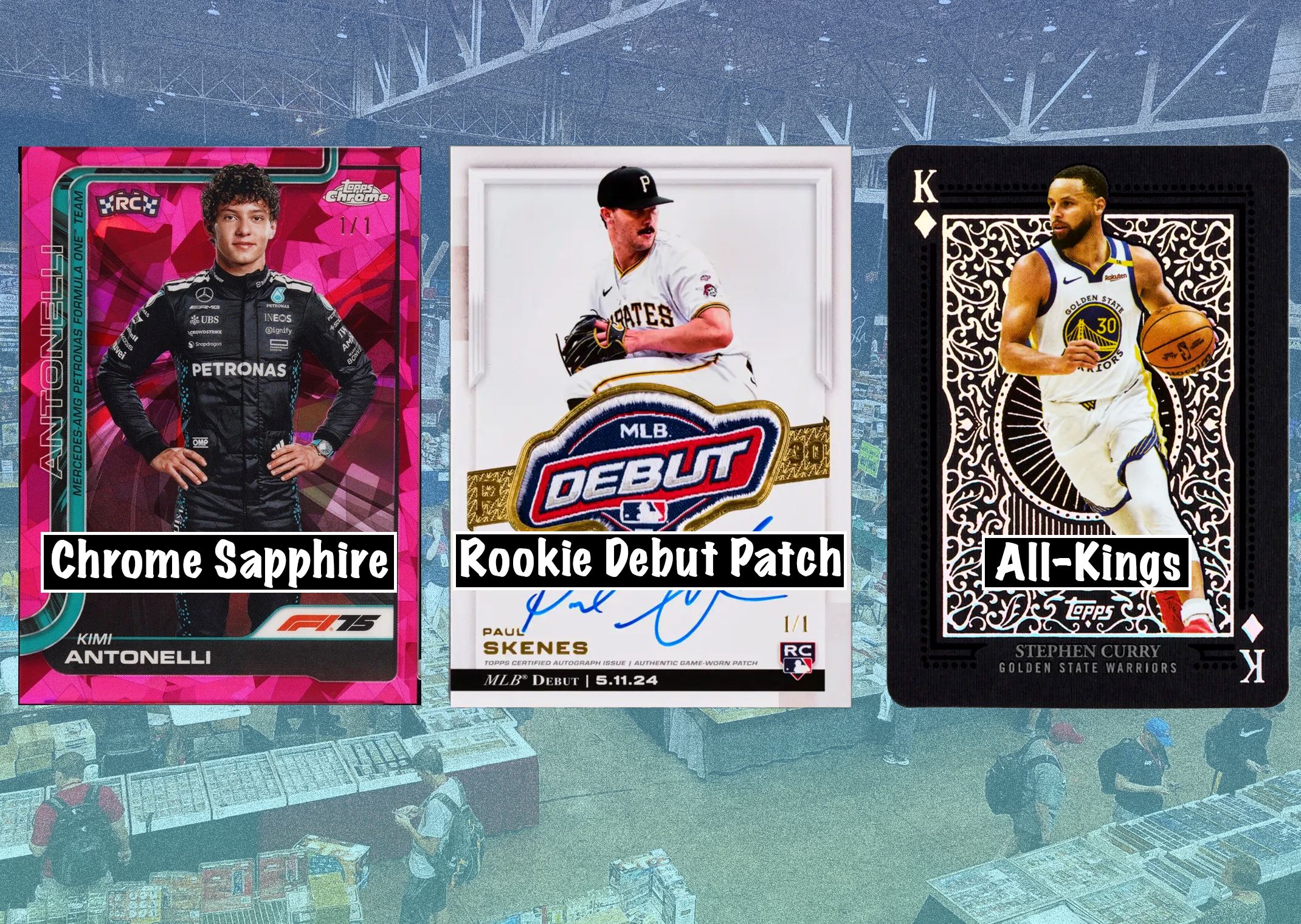
Chrome Sapphire
Fun fact: Topps’ iconic Chrome product began as a parallel set to the flagship 1996-97 basketball product that was only sold at retail stores, which contributed to their rarity and appeal as they were harder to find than the Finest set of that same year. Topps Chrome Sapphire is a parallel set to Topps Chrome that is hobby exclusive, very expensive, and very hard to find, and replaces the chrome finish with a diamond-like effect that sparkles under bright lights.
Rookie Debut Patch Card
An insert we have covered extensively as of late on this website, Rookie Debut Patches are literal patches stitched onto the jerseys of athletes s during their first official regular season game. The patches are removed post-game and embedded on a one-of-one trading card that will be signed by the featured player at a later time.
All-Aces/All-Kings
A playing card deck with all aces might ultimately sound boring unless you’re playing Balatro and you meant to do that on purpose, but All Aces is a Topps short print insert that began in 2023 Topps Baseball and has won the hearts and minds of collectors with its simple but elegant playing card design with a stylized Ace in the background. 2026 would swap out the Aces for Kings, the simple white background for black matte, and while baseball players would get All-Kings cards, basketball and football would get in on the mix with their own ultra-rare and high-priced short prints.

From video game journalism to veteran of the sneaker blog era to podcasting about well, everything, Juan is smiling through it all and can't believe this is his life. His current hot take is that people are really underrating the Psyduck trading card market. Email: juan@soleretriever.com Instagram | Twitter | Bluesky | Threads : @ezyville